
Scroll Saw Blades for Ryobi: TPI, Fit, and Choosing Right
Scroll Saw Blades for Ryobi: TPI, Fit, and Choosing Right
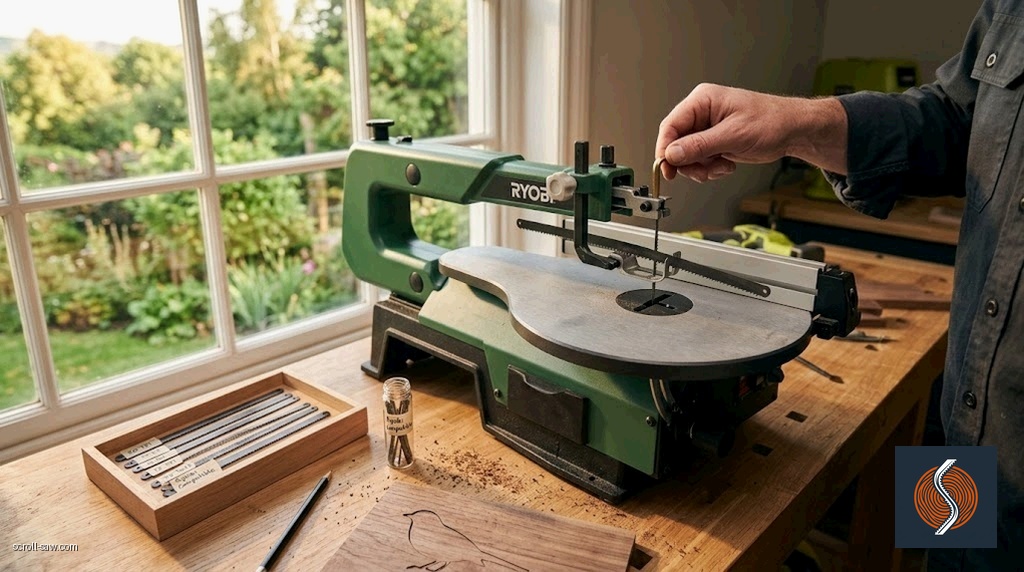
A Ryobi scroll saw is one of the friendliest budget-tier machines a hobbyist can own. Most Ryobi 16-inch scroll saws share the same essential blade layout: standard 5-inch blade slots, pin-end from the factory on the older SC162VS and its relatives, and pinless capability on later variants. That is helpful, because it means you are not buying “Ryobi blades,” you are buying universal scroll saw blades that happen to fit a Ryobi. The trick is knowing which TPI and which tooth style actually cut cleanest in the material you have in front of you.
Blade fit on a Ryobi scroll saw
Every table-top Ryobi scroll saw sold in the last two decades uses 5-inch scroll saw blades. Pin-end blades fit the classic Ryobi 16-inch pin-clamp arm without an adapter. Later Ryobi variants and any Ryobi scroll saw with a labeled pinless clamp also accept plain-end blades directly. If your Ryobi has been modified with a universal pin-to-pinless conversion adapter, the same saw runs both blade types.
Any quality universal 5-inch blade fits. Olson, Pégas, and Flying Dutchman are the three brands worth buying. Ryobi-branded blade blister packs at big-box stores are fine but cost more per blade than the equivalent Olson pack for the same universal blade.
What TPI actually means for you
Teeth per inch (TPI) is the count that decides how a blade cuts. High TPI leaves a smoother finish and cuts thin material without tearing. Low TPI clears chips faster and cuts thick material more efficiently. Scroll saw blades in the everyday range run from roughly 9 TPI at the coarse end to 25 TPI or higher at the fine end.
On a Ryobi, this translates cleanly into blade size numbers:
-
#3 blade, roughly 18 to 20 TPI: fine detail in wood up to 1/4 inch.
-
#5 blade, roughly 15 TPI: the everyday all-purpose blade. Wood up to 3/4 inch.
-
#7 blade, roughly 12 TPI: hardwood up to 1 inch, faster cuts in softwood.
-
#9 blade, roughly 11.5 TPI: thick hardwood up to about 1-1/2 inch.
-
Metal-cutting, 24 to 30 TPI: thin non-ferrous sheet.
The honest truth for most Ryobi owners: a single pack of #5 skip-tooth handles the majority of hobby work. The other sizes are specialty additions.
What to stock
The everyday assortment. Olson FR49400 5-inch skip-tooth blade assortment covers #5, #7, and #9 blades in one box, in pin-end format that fits any pin-end Ryobi. If your Ryobi is pinless, buy the same size numbers in plain-end packs.
Reverse-tooth for cleaner underside cuts. Olson FR49202 reverse-tooth pin-end assortment removes the fuzzy underside that plagues scroll-cut edges. This is the single upgrade that most changes how your work looks.
Fine detail. Olson FR44802 fine reverse-tooth blades for detail in thin stock.
Hardwood. Olson DT49300 double-tooth blades leave a cleaner finish in oak and maple than standard skip-tooth, at the cost of slightly slower feed.
Spiral for 360-degree cutting. If your Ryobi runs plain-end blades (natively or with an adapter), Olson SP46500 spiral blades cut in every direction without turning the workpiece.
Blade choice by project
Christmas ornaments in 1/8 to 1/4 inch basswood. #3 or #5 reverse-tooth. Slow the saw down slightly to avoid melting the sharp corners.
Sign letters in 3/4 inch pine. #5 skip-tooth. Standard speed.
Puzzle pieces in 1/2 inch birch plywood. #5 reverse-tooth. Cleaner bottom edge matters more here because the puzzle backs are visible.
Intarsia in 3/4 inch hardwood. #7 skip-tooth for the initial cuts, then a finer blade for detail work if the pattern requires it.
Portrait scrolling. Requires spiral blades and pinless capability. If your Ryobi does not run pinless, install an adapter first.
Small metal parts in thin brass or aluminum. Metal-cutting pin-end blade at the slowest speed with wax lubricant.
Where scroll saw blades go wrong
Blades break for the same three reasons on every saw, Ryobi included.
Tension is wrong. Over-tension snaps blades at the clamp face. Under-tension lets blades bow and snap in the cut. A properly tensioned blade rings a clear high note when plucked with a fingernail.
Feed is too aggressive. A scroll saw blade wants to be fed light. If you have to push, either the blade is dull or you are running the wrong tooth style for the material.
Blade is not seated square. The pin (or plain end) must sit flat in the clamp, not on an angle. A crooked blade snaps within minutes.
And there is a fourth reason specific to any pin-end saw including Ryobi: pin length variance in cheap blade packs. Real Olson or Pégas pin-end blades have consistent pin diameter and pin-to-pin spacing. Bargain packs from unnamed brands do not, and mismatched pins cause blade wander that looks like a saw problem but is actually a blade problem.
Ryobi-specific setup notes
Bolt the saw down. Any 16-inch Ryobi vibrates enough on rubber feet to affect fine cuts. Bolt or clamp it to a heavy bench.
Set tension by ear. The tension knob has a wide range. Trust the pluck test, not the knob number.
Wax the table. Paste furniture wax on the die-cast table makes feed noticeably smoother.
Update the light. The onboard light on most Ryobi scroll saws is dim. A Neatfi XL magnifying lamp at the bench edge puts real light and magnification exactly at the blade.
Comparison against alternatives
A Ryobi scroll saw with quality blades runs close to what a WEN 3922 delivers, and the two saws sit at similar prices. The WEN’s easy-access side panel for blade changes is a real convenience upgrade. The Ryobi’s advantage is availability at Home Depot and Ryobi’s warranty network. If you already own a Ryobi, feed it good blades and it will cut well. If you are choosing between a new Ryobi and a new WEN today, the WEN’s blade change design tips the decision unless you already have the Ryobi One+ ecosystem and prefer the brand consistency.
Against the Shop Fox W1872, the Shop Fox has a slightly better dust blower and a factory foot switch. Against the Rikon or DeWalt, the Ryobi is a budget saw and the comparison is not close on cut smoothness.
Who should skip Ryobi scroll saw blades entirely: no one. If you own a Ryobi scroll saw, the universal blade catalog is exactly what you want. Ignore the Ryobi-branded packs unless the price is competitive.
FAQ
What blades does a Ryobi scroll saw take? Standard 5-inch scroll saw blades. Pin-end on the classic 16-inch Ryobi arm, plain-end on later variants with pinless clamps. Universal blades from Olson, Pégas, or Flying Dutchman all fit.
What TPI is best for a Ryobi scroll saw? For general work, 15 TPI (a #5 blade). For thin material and fine detail, 18 to 20 TPI (#3). For thick hardwood, 11 to 12 TPI (#7 or #9). For metal, 24 to 30 TPI.
Are Ryobi-branded blades better than Olson? No. They are the same category of universal blade. Olson costs less per blade for equivalent or better quality.
Why do my blades keep breaking on my Ryobi? Over-tension, aggressive feed, or crooked blade seating. Fix each in that order.
Can I use pinless blades on a Ryobi scroll saw? On later Ryobi models yes, natively. On older pin-end Ryobi saws, add a universal pin-to-pinless conversion adapter.
What is the difference between skip-tooth and reverse-tooth? Skip-tooth blades have wider gullets that clear chips faster and cut aggressively. Reverse-tooth blades have some teeth pointing upward at the bottom of the blade, which cuts the underside cleanly and eliminates bottom-edge tearout.
What size blade for 3/4 inch oak? A #5 or #7 skip-tooth. Use reverse-tooth if underside cleanliness matters. Slow the saw to about 900 to 1,100 SPM.
Can I cut plastic with my Ryobi scroll saw? Yes, at the lowest speed. Use a #3 or #5 skip-tooth and leave the protective film on the plastic while cutting.
How thick a hardwood can a Ryobi scroll saw comfortably cut? Comfortable working thickness is 3/4 inch hardwood and thinner. The saw is rated higher but the cut quality drops off in thicker stock.
Do metal-cutting scroll saw blades really work on wood? They will cut wood but slowly and with excess chip build-up. Use them for the material they were designed for. Wood-cutting blades work better in wood.
References
-
Olson Saw scroll saw blade selection chart — the reference for TPI, blade size, and material match used throughout this guide.
-
Ryobi scroll saw product support — factory documentation for current and legacy Ryobi scroll saw models.
-
Scroll Saw Village archived Ryobi threads — practical field notes on blade fit and setup.


