
How to Set Delta 20 Variable Speed Scroll Saw for Cleaner Cuts and Longer Blade Life
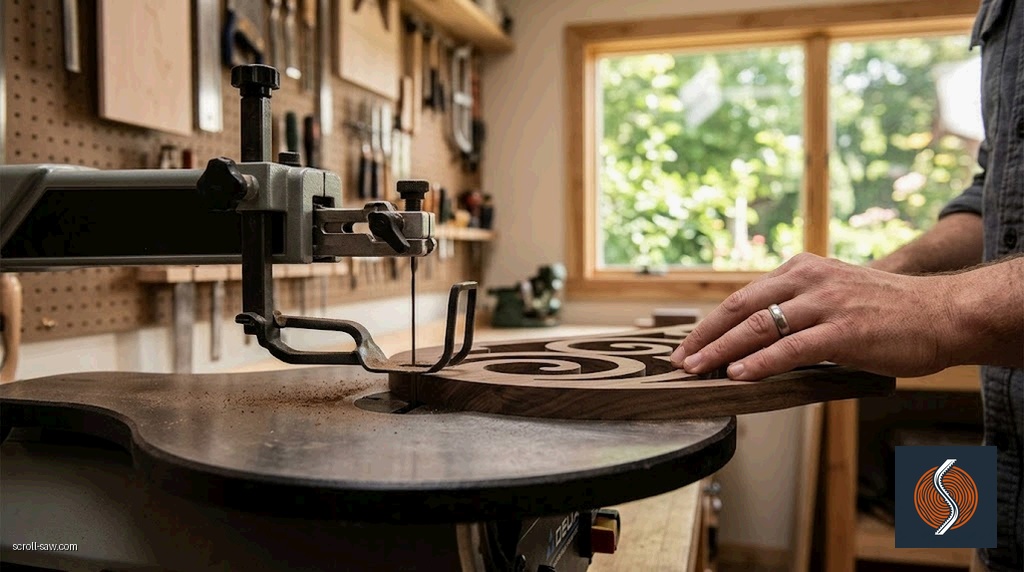
How to Set Delta 20 Variable Speed Scroll Saw for Cleaner Cuts and Longer Blade Life
The Delta 40-694 is the saw most people mean when they say “Delta 20 variable speed scroll saw.” It has been in the catalog for years, it costs enough to feel like a real machine, and it delivers a stroke that is measurably smoother than the Delta 16-inch saws that came before it. What it does not do is make a good cut on its own. Every clean cut comes from setup, speed, and blade choice. This is that guide.
What the saw actually is
The Delta 40-694 is a 20-inch throat parallel-arm scroll saw with a 1.3 amp motor, a variable speed range of roughly 400 to 1,750 SPM, a 3/4-inch stroke, and a cast-iron table that tilts 45 degrees left. It accepts standard 5-inch pin-end and plain-end blades from any quality maker. The tool-free blade clamp is a single-lever tensioning design that drops tension quickly for interior cuts. There is a dust blower, a work light on some variants, and onboard blade storage.
The saw is aimed at serious hobby scrollers and small-shop production. It is not a Hawk and it is not a Hegner, but at its price band it is one of the better scroll saws you can buy new.
First-session setup
Unbox and inspect the arm. Sight the arm from the front. Upper and lower blade holders should be in the same vertical plane. Shipping damage is rare but not unknown.
Level the saw. The 40-694 has real mass. Bolt or clamp the base to a solid bench. Vibration drops noticeably.
Square the table to the blade. Install a fresh blade and hold an engineer’s square against it. Adjust the tilt lock until the blade sits flush along the square with the table at nominal zero. The factory tilt zero mark is close but not perfect. Mark the true zero position with a paint pen so bevel cuts do not lose their reference.
Set blade tension by ear. Pluck the blade after tensioning. A clear high note is right. The 40-694’s tension mechanism supports real tension, and the blade will ring higher on this saw than on a budget machine. If the note is dull, tension more. If it is shrill, back off.
Set the pressure foot. It should touch the workpiece at the top of the stroke without pressing down hard. On the 40-694 the foot pivots for angled cuts, keep it aligned.
Wax the cast-iron table. Paste furniture wax makes feed noticeably smoother.
Aim the dust blower. The stock dust blower tube is decent but bends easily. Aim it exactly at the cut line on the near side of the blade.
Add real light. The onboard work light is fine but a bench-mounted Neatfi XL magnifying lamp at the near edge puts full-spectrum light and 2.25x magnification directly at the blade. This is the single biggest visibility upgrade the saw accepts.
Speed by material and thickness
A variable-speed range from 400 to 1,750 SPM covers every hobby scroll saw material. Match speed to what you are actually cutting.
| Material | Thickness | Speed (SPM) | Blade |
|---|---|---|---|
| Softwood | Under 1/2 in | 1,300 to 1,500 | #5 skip-tooth |
| Softwood | 1/2 to 3/4 in | 1,200 to 1,400 | #5 or #7 skip-tooth |
| Hardwood | Under 1/2 in | 1,000 to 1,200 | #5 reverse-tooth |
| Hardwood | 1/2 to 1 in | 900 to 1,100 | #7 skip-tooth |
| Hardwood | Over 1 in | 800 to 1,000 | #7 or #9 |
| Plywood | 1/4 to 3/4 in | 1,000 to 1,300 | #5 reverse-tooth |
| Acrylic | 1/8 to 1/4 in | 600 to 800 | #5 skip-tooth |
| Non-ferrous metal | Under 1/16 in | 400 to 700 | Metal-cutting |
Blade choices that let the saw show what it can do
Any universal 5-inch blade fits the 40-694. The saw’s advantage over budget machines is real tension, and higher-quality blades show that advantage more here than on a lighter saw. A working blade shelf:
-
General: Olson FR49400 skip-tooth pin-end assortment or the plain-end equivalent.
-
Cleaner underside: Olson FR49202 reverse-tooth pin-end assortment.
-
Fine detail: Olson FR44802 fine reverse-tooth blades.
-
Hardwood finish: Olson DT49300 double-tooth blades.
-
360-degree cutting: Olson SP46500 spiral blades.
-
Premium detail: Pégas #7 regular blades. Swiss blades cost more per pack and last measurably longer in hardwood at the tension a 40-694 supports.
Getting longer blade life out of the 40-694
Blade life on this saw depends on three things: tension, feed, and speed. Get any of them wrong and blades snap early. Get all three right and a single blade will cut for hours.
Do not over-tension. The 40-694 supports higher tension than a budget saw, but the tension mechanism has an upper limit. Set by ear, not by cranking the lever until it will not turn.
Feed light. A blade that is being pushed hard is either dull or wrong for the material. Let the blade pull itself through the wood.
Match speed to material. Speeds that are too high heat the blade and burn the wood. Speeds that are too low let the blade drag and dull.
Rotate blades. On long jobs, drop tension and slide the blade up by an inch. This puts fresh teeth into the working zone and extends useful blade life.
Stop when the blade is dull, not when it breaks. A dull blade produces bad cuts and takes the workpiece with it when it eventually snaps.
Small upgrades
-
Foot switch. Not standard on the 40-694. Adding one changes how you work with the tool.
-
Auxiliary dust collection. A shop vac hose taped to the underside of the table below the blade collects most of the fine dust the blower does not reach.
-
Blade storage on the saw. The onboard storage compartment holds a working selection of blades. Use it.
Comparison against alternatives
Against a DeWalt DW788, the 40-694 is a close peer. The DW788 has a smoother stroke by a small margin. The Delta 40-694 has a slightly quieter drive and a larger table. Both are excellent choices.
Against a used RBI Hawk, the Hawk is a step up in mass and blade tension, and it costs proportionally more. If you find a healthy Hawk at a reasonable price, the Hawk wins. New-for-new, the 40-694 is the better value.
Against a WEN 3922, the 40-694 is a considerable step up in cut smoothness, tension, and table size, at multiple times the price. Different tools for different scrollers.
Against a Shop Fox W1872, the 40-694 has a more refined blade change and a slightly better stroke. The Shop Fox has a factory foot switch.
Who should skip the 40-694 entirely: a beginner who is not sure yet whether scroll sawing will stick as a hobby. A WEN 3922 answers that question at a fraction of the price. A weekend scroller who has already outgrown a budget saw is exactly who this saw is for.
FAQ
What is the speed range of the Delta 40-694? Approximately 400 to 1,750 SPM.
What is the throat depth? 20 inches, which gives 20 inches of cutting clearance between the blade and the back of the arm.
What blades does the 40-694 use? Standard 5-inch pin-end and plain-end scroll saw blades from any quality maker.
How thick can it cut? Rated to about 2 inches. Comfortable working thickness is 1-1/2 inch and thinner.
Does the 40-694 have tool-free blade change? Yes. The upper blade clamp uses a lever-operated tool-free design. The lower clamp requires a small key on some variants.
What is the difference between the Delta 40-694 and the older Delta 40-540? The 40-694 is the 20-inch current-production Delta variable speed. The 40-540 is a 16-inch throat variable-speed saw from earlier production. Same brand, different family.
Should I run pin-end or plain-end blades on the 40-694? Plain-end for detail work and spiral capability. Pin-end for faster blade changes in coarse work. Both fit.
Why does my 40-694 blade break at the clamp? Almost always over-tension. Back off the tension lever slightly.
Can I cut metal on the 40-694? Thin non-ferrous sheet, yes, at the lowest speed with a metal-cutting blade and wax lubricant.
Is the Delta 40-694 made in the USA? Delta scroll saw manufacturing has moved between facilities over the years. Check the plate on your specific unit for country of origin.
References
-
Delta Machinery service portal manufacturer parts, manuals, and service reference.
-
Olson Saw scroll saw blade selection chart blade sizing and material match reference.
-
Sawmill Creek archived Delta 40-694 threads, field notes and long-term ownership impressions.


