
Ryobi 16 Inch Scroll Saw: Speed Range, Arm Design, and Ownership Notes
Ryobi 16 Inch Scroll Saw: Speed Range, Arm Design, and Ownership Notes
A Ryobi 16 inch scroll saw is often someone’s first scroll saw. Home Depot stocks them, the price sits at the low end of the 16-inch category, and Ryobi’s warranty network is friendly to hobby buyers. The honest surprise for new owners is how much cutting a Ryobi 16 does well after basic setup. This is the plain guide to what the saw is and how to get the most from one.
Speed range
The Ryobi 16 inch scroll saw is variable speed on all current variants, covering approximately 550 to 1,600 SPM. Some older Ryobi 16-inch scroll saws were two-speed with fixed low and high positions. Both formats cover most hobby scrolling material when matched with the right blade.
Speed by material on the variable-speed Ryobi:
-
Softwood under 3/4 inch: 1,300 to 1,500 SPM.
-
Hardwood under 1/2 inch: 1,000 to 1,200 SPM.
-
Hardwood 1/2 to 1 inch: 900 to 1,100 SPM.
-
Plywood: 1,000 to 1,300 SPM.
-
Acrylic: 600 to 800 SPM.
-
Non-ferrous metal sheet: 400 to 700 SPM.
Arm design
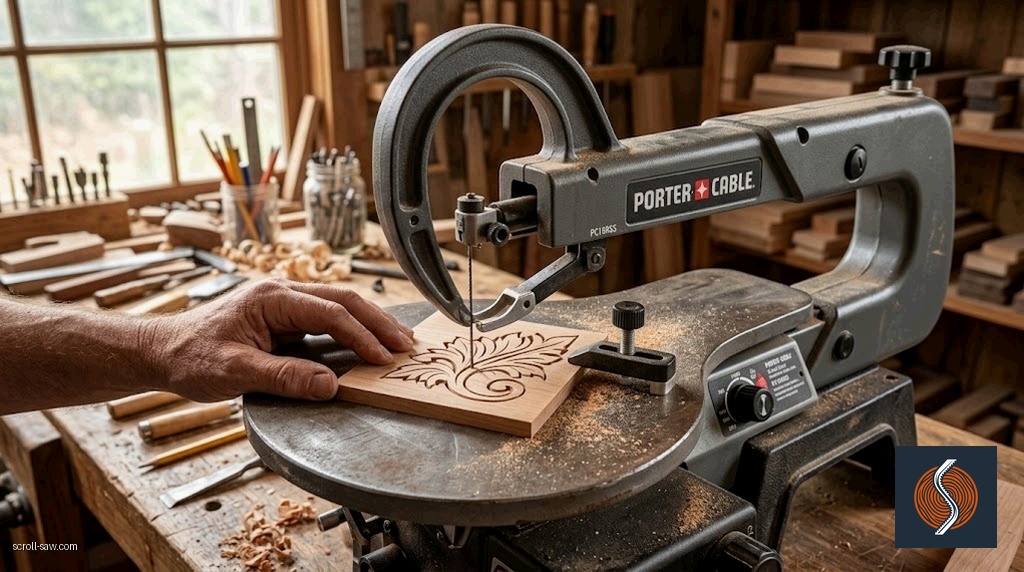
The Ryobi 16 inch scroll saw uses a parallel-arm design. Upper and lower arms move in sync, keeping the blade vertical through the full stroke. This produces cleaner cuts than the C-arm designs on older Dremel and some Craftsman scroll saws, though the Ryobi’s lighter arm weight makes it slightly more susceptible to vibration than heavier mid-tier saws.
Cutting capacity is 2 inches at 90 degrees, dropping to about 1 inch at a 45 degree bevel. Stroke length is approximately 3/4 inch.
Blade fit
Ryobi 16 inch scroll saws use standard 5-inch blades. Older Ryobi 16-inch saws are pin-end only. Newer variants accept both pin-end and plain-end blades. Any universal 5-inch blade from Olson, Pégas, or Flying Dutchman fits the appropriate clamp.
A working blade shelf:
-
Cleaner underside: Olson FR49202 reverse-tooth pin-end assortment.
-
Fine detail: Olson FR44802 fine reverse-tooth blades.
-
Hardwood finish: Olson DT49300 double-tooth blades.
For spiral cutting or 360-degree work on any Ryobi 16, install a pin-to-pinless conversion adapter if your model does not accept pinless natively, then run Olson SP46500 spiral blades.
Ownership notes
Motor. Ryobi 16 inch scroll saw motors run cool and last well. Even units used regularly for years typically show no motor wear.
Vibration on rubber feet. The single most common complaint about Ryobi 16 inch scroll saws. Bolt or clamp the base to a solid bench and vibration drops noticeably.
Blade holders. Pin-end clamps on older Ryobi models can develop slight play after years of blade changes. Newer variants with tool-free clamps handle repeated changes better.
Speed control board. Variable-speed boards are the failure point on any variable-speed hobby scroll saw. Ryobi’s boards last well but do eventually die on high-use saws.
Cord and switch. Age issues on older units.
Rubber feet. Crumble over time. Trivial to replace.
Onboard light. Dim by modern standards. Replace with a bench-mounted Neatfi XL magnifying lamp for detail work.
Setup
Bolt the saw down. Mandatory on any Ryobi 16 inch scroll saw. Vibration drops noticeably.
Square the table. Fresh blade, engineer’s square, adjust the tilt lock, mark true zero.
Tension by ear. Pluck the blade. Clear high note is right.
Set the pressure foot. Touch at the top of the stroke, no pressing hard.
Wax the table. Feed becomes noticeably smoother.
Aim the dust blower. The stock blower tube is soft. Replace with stiffer aquarium tubing if you cut regularly.
Add real light. As above.
Comparison against alternatives
Against a WEN 3922, the WEN is a close peer at similar price. The WEN’s side-panel blade change is faster. Ryobi’s Home Depot availability and warranty are more accessible for many buyers.
Against a Shop Fox W1872, the Shop Fox is slightly ahead on dust blower and includes a factory foot switch.
Against a Delta Shopmaster or Delta 40-540, the Ryobi is a peer. Cut quality is similar. Feature sets differ.
Against a used DeWalt DW788, the DeWalt is a considerable step up in every measurable way.
Who should skip a Ryobi 16 inch scroll saw entirely: someone who plans to scroll seriously and knows the hobby will stick. Save for a DW788 or a mid-tier Delta. Someone whose Ryobi needs multiple simultaneous repairs is competing on cost with a new WEN or a new Ryobi.
FAQ
What is the speed range of the Ryobi 16 inch scroll saw? Approximately 550 to 1,600 SPM on current variable-speed variants.
What blades does the Ryobi 16 take? Standard 5-inch scroll saw blades. Pin-end on older variants, both formats on newer variants.
How thick can it cut? 2 inches at 90 degrees. Comfortable working thickness is 1-1/2 inch and thinner.
Why does my Ryobi scroll saw vibrate? Because it is not bolted down. Every Ryobi 16 needs a solid mount.
Are parts available? Yes, through Ryobi’s parts network and third-party parts specialists.
Can I convert an older Ryobi 16 to pinless blades? Yes, with a universal pin-to-pinless adapter.
What speed for hardwood? 900 to 1,200 SPM for 3/4 inch hardwood.
Should I bolt my Ryobi scroll saw to the bench? Yes. Single biggest cut quality upgrade.
Is the Ryobi 16 better than the WEN 3922? They are peers. WEN has faster blade changes. Ryobi has broader Home Depot availability.
How do I set blade tension on a Ryobi? Pluck test. Clear high note is right.
References
-
Ryobi scroll saw product support manufacturer parts and service reference.
-
Olson Saw scroll saw blade selection chart blade sizing and material match reference.
-
Scroll Saw Village archived Ryobi 16 inch scroll saw threads, field notes and setup tips from long-time owners.


