
Central Machinery 16 in Variable Speed Scroll Saw: What to Change When the Cut Quality Drops
Central Machinery 16 in Variable Speed Scroll Saw: What to Change When the Cut Quality Drops
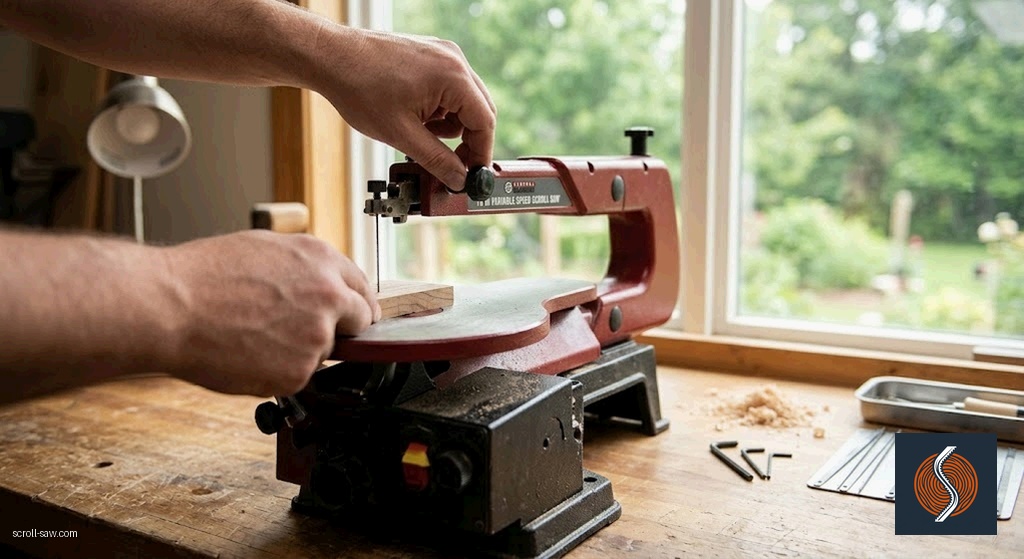
The Central Machinery 16 in variable speed scroll saw is Harbor Freight’s house-brand entry into the 16-inch scroll saw category. It carries the item number 93012 on most current variants. It costs less than any other 16-inch variable-speed scroll saw on the market, and that price shows in the details. Set up right, it cuts fine hobby projects. Neglected, it produces wandering cuts and broken blades. This is the plain guide to keeping it in the first category.
What the saw is
The Central Machinery 16 in variable speed scroll saw is a 16-inch throat parallel-arm scroll saw with a variable-speed drive covering approximately 550 to 1,600 SPM. It uses standard 5-inch scroll saw blades, pin-end in factory configuration on most variants. It has a die-cast aluminum table, a plastic side cover, a rubber-footed base, and an onboard work light on some versions.
The saw is aimed at first-time buyers and occasional hobbyists. It is not intended to compete with the DeWalt DW788 or the Delta 40-694. It competes at price with the WEN 3922, the Ryobi 16, and other budget-tier saws.
Diagnosing declining cut quality
When the Central Machinery 16 stops cutting cleanly, work through the checks in order.
Blade first. Change the blade. Two-thirds of “the saw is broken” complaints are actually “the blade is dull.” A fresh Olson FR49202 reverse-tooth pin-end blade or Olson FR49400 skip-tooth pin-end blade is often the fix.
Tension second. Pluck the blade. A clear high note is right. Under-tensioned blades wander. Over-tensioned blades snap. On Central Machinery saws, the tension mechanism has a wider dead-band than heavier saws, so it is easier to leave a blade slightly under-tensioned without noticing.
Bolt-down third. If the saw is not bolted to a bench, vibration produces cuts that lean, wander, and burn. Bolt or clamp the base to a solid surface.
Table square fourth. Fresh blade, engineer’s square, check the tilt at nominal zero. If the blade is not flush along the square, adjust the tilt lock. Mark true zero with a paint pen.
Blade holders fifth. Wiggle each blade holder with the saw off. Side-to-side rock is worn clamps. This is the most common Central Machinery repair after two or three years of regular use.
Speed match sixth. High speed on hardwood burns the wood. Low speed on softwood produces choppy cuts. Match speed to material and thickness.
Feed pressure seventh. Push too hard and the blade wanders. Feed too light and the cut takes forever. Let the blade pull itself through the wood.
Pressure foot eighth. It should touch the workpiece at the top of the stroke. Not pressing hard.
Motor last. If everything above is right and the saw still cuts poorly, motor brushes may be worn. This is rare on Central Machinery scroll saws in their expected service life but not impossible.
Setup that keeps cut quality high
Bolt the saw down. Mandatory. Central Machinery 16 in variable speed scroll saws vibrate more than mid-tier saws on rubber feet.
Wax the table. Paste furniture wax on die-cast aluminum makes feed noticeably smoother.
Aim the dust blower. The stock blower tube is soft. Aim exactly at the cut line on the near side of the blade. Replace with aquarium tubing if the tube stiffens or falls.
Add real light. The onboard work light is dim. A bench-mounted Neatfi XL magnifying lamp at the near edge changes how the saw feels to use.
Change blades before they die. A dull blade rides worse than a fresh blade at the same tension. If cuts start to wander, change the blade first.
Speed by material
-
Softwood under 3/4 inch: 1,300 to 1,500 SPM. #5 skip-tooth.
-
Hardwood under 1/2 inch: 1,000 to 1,200 SPM. #5 reverse-tooth.
-
Hardwood 1/2 to 1 inch: 900 to 1,100 SPM. #7 skip-tooth.
-
Plywood: 1,000 to 1,300 SPM. #5 reverse-tooth.
-
Acrylic: 600 to 800 SPM. #5 skip-tooth.
-
Non-ferrous metal sheet: 400 to 700 SPM. Metal-cutting blade.
Blade choice
Any universal 5-inch pin-end blade fits the factory arm. Universal pin-end blades from Olson or Pégas are cheaper per blade than Harbor Freight’s own blade packs and cut better.
A working blade shelf:
-
Cleaner underside: Olson FR49202 reverse-tooth pin-end assortment.
-
Fine detail: Olson FR44802 fine reverse-tooth blades.
For spiral cutting, install a pin-to-pinless conversion adapter and run Olson SP46500 spiral blades.
Limits worth accepting
Cast aluminum table. Not as flat over time as cast iron. Handles hobby use fine but shows scratches easily.
Modest blade tension. The clamp mechanism does not support the same tension as a DW788 or a Pégas. Fine-detail blades tolerate this less than general skip-tooth blades.
Vibration. Real. Bolt-down is not optional.
Parts availability. Harbor Freight parts networks are less thorough than Delta’s or Woodstock’s. Some Central Machinery scroll saw parts require universal cross-references.
Comparison against alternatives
Against a WEN 3922, the WEN is a peer at slightly higher price. WEN’s side-panel access is faster for blade changes. Cut quality is close on both saws with matched blades.
Against a Ryobi 16 inch scroll saw, the two are close peers. Ryobi’s Home Depot warranty is more accessible.
Against a Delta Shopmaster, the two are peers. Central Machinery is cheaper.
Against a used DeWalt DW788, the DeWalt is a considerable step up.
Who should skip a Central Machinery 16 in variable speed scroll saw entirely: someone who plans to scroll seriously and knows the hobby will stick. Save for a mid-tier saw instead. Someone who needs a saw for a single project and does not care whether it lasts more than a few years is exactly the buyer this saw is aimed at.
FAQ
What is the item number for the Central Machinery 16 in variable speed scroll saw? 93012 on most current variants. Harbor Freight has updated the model over the years.
What is the speed range? Approximately 550 to 1,600 SPM.
What blades does it take? Standard 5-inch pin-end scroll saw blades from any quality maker.
How thick can it cut? 2 inches at 90 degrees. Comfortable working thickness is 1-1/2 inch and thinner.
Why does my Central Machinery scroll saw vibrate? Because it is not bolted down. Every one of them needs a solid mount.
Are parts available? Some through Harbor Freight, more through universal cross-references. Blade holders and speed control boards can be harder to source than for name-brand saws.
Can I convert to pinless blades? Yes, with a universal pin-to-pinless adapter.
Why do my blades keep breaking on this saw? Almost always over-tension. Pluck test.
Should I buy the Central Machinery 16 in variable speed scroll saw? For a first-time hobbyist on a tight budget who wants to try scrolling, yes. For anyone serious about the hobby, save for a mid-tier saw.
Is the Central Machinery scroll saw the same as the WEN 3922? No. Different brands, different manufacturers. Similar price bracket.
References
-
Harbor Freight product portal manufacturer product references and manuals.
-
Olson Saw scroll saw blade selection chart blade sizing reference.
-
Sawmill Creek archived Central Machinery scroll saw threads, field notes from long-time owners.


