
How to Set Central Machinery 16 Inch Variable Speed Scroll Saw for Cleaner Cuts and Longer Blade Life
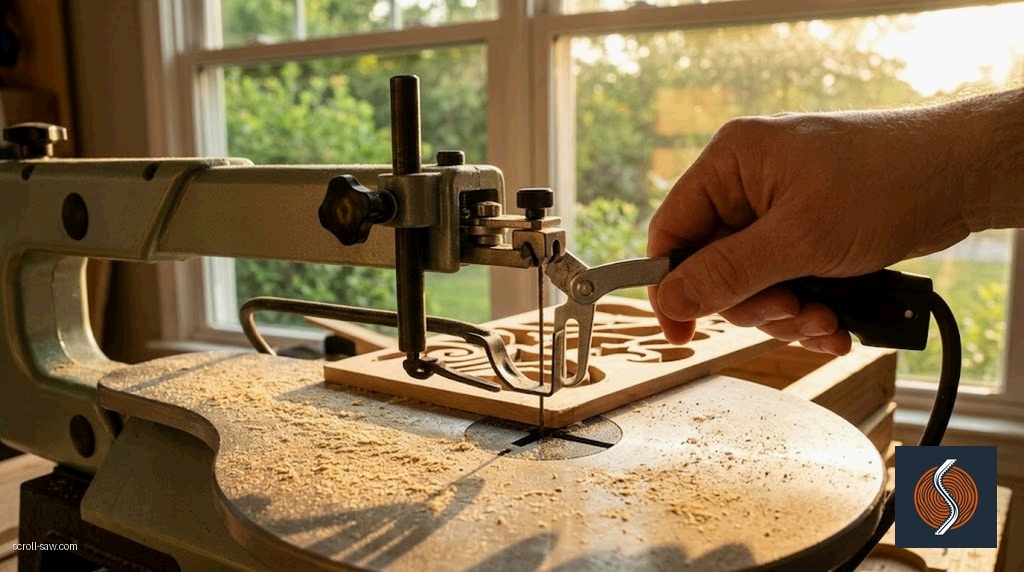
How to Set Central Machinery 16 Inch Variable Speed Scroll Saw for Cleaner Cuts and Longer Blade Life
The Central Machinery 16 inch variable speed scroll saw sold at Harbor Freight under item number 93012 is the cheapest 16-inch variable-speed scroll saw a US buyer can put in a hobby shop. It also has the widest gap between how it cuts out of the box and how it cuts after a proper setup. New owners often assume the saw is limited. Set up right, it cuts hobby projects cleanly. This is the plain guide.
What the saw is
The Central Machinery 93012 is a 16-inch throat parallel-arm scroll saw with a variable-speed drive running approximately 550 to 1,600 SPM. Die-cast aluminum table. Onboard work light on some variants. Rubber-footed base. Standard 5-inch pin-end blade holders. Rated cutting capacity is 2 inches at 90 degrees.
It competes at price with the WEN 3922, the Ryobi 16, and the Delta Shopmaster. Feature set and cut quality are close to peers when set up properly.
Out-of-box assembly
Harbor Freight ships the saw partially assembled. The manual is thin. What actually matters:
Do not overtighten the table mounting bolts. The die-cast aluminum table cracks at over-torque. Snug plus a quarter turn is enough.
Check the arm hinge bolts. Some units ship with slightly loose hinge bolts. Torque them to spec before the first cut.
Install the pressure foot with the pad slightly above the blade level. Too high and the workpiece lifts on the upstroke. Too low and the workpiece binds against the foot.
Attach the dust blower tube and aim it at the cut line. The stock tube is soft plastic and loses its aim quickly. Aquarium tubing is a common upgrade.
First-session setup
Bolt the saw down. Mandatory. The Central Machinery 93012 vibrates visibly on rubber feet. Bolting the base to a solid bench eliminates the vibration and is the single biggest cut quality improvement you can make.
Square the table to the blade. Install a fresh blade. Hold an engineer’s square against the blade. Adjust the tilt lock until the blade sits flush along the square at nominal zero. The factory tilt indicator on this saw is often off by a degree or two. Mark true zero with a paint pen.
Set blade tension by ear. Install a blade. Tension it. Pluck it. Clear high note is right. On the 93012 the tension mechanism has a wider dead-band than heavier saws, so under-tensioning is more common than over-tensioning.
Set the pressure foot. It should touch the workpiece at the top of the stroke without pressing down hard.
Wax the die-cast aluminum table. Paste furniture wax. Feed becomes noticeably smoother.
Aim the dust blower. Exactly at the cut line on the near side of the blade.
Add real light. The onboard work light is dim. A bench-mounted Neatfi XL magnifying lamp at the near edge is the single biggest visibility upgrade the saw accepts.
Speed by material
-
Softwood under 3/4 inch: 1,300 to 1,500 SPM. #5 skip-tooth.
-
Softwood 3/4 to 1-1/2 inch: 1,200 to 1,400 SPM. #5 or #7 skip-tooth.
-
Hardwood under 1/2 inch: 1,000 to 1,200 SPM. #5 reverse-tooth.
-
Hardwood 1/2 to 1 inch: 900 to 1,100 SPM. #7 skip-tooth.
-
Plywood: 1,000 to 1,300 SPM. #5 reverse-tooth.
-
Acrylic: 600 to 800 SPM. #5 skip-tooth. Leave protective film on.
-
Non-ferrous metal sheet: 400 to 700 SPM. Metal-cutting blade with wax lubricant.
Blade choice that lets the 93012 show what it can do
The factory arm takes standard 5-inch pin-end blades. Harbor Freight sells house-brand blade packs but universal blades from Olson or Pégas cost less per blade and cut cleaner. A working blade shelf:
-
Cleaner underside: Olson FR49202 reverse-tooth pin-end assortment.
-
Fine detail: Olson FR44802 fine reverse-tooth blades.
-
Hardwood finish: Olson DT49300 double-tooth blades.
For spiral cutting on the 93012, install a universal pin-to-pinless conversion adapter and run Olson SP46500 spiral blades.
Getting longer blade life on the 93012
Blade life on this saw is a function of tension, feed, and speed.
Do not over-tension. The clamp mechanism has an upper limit. Set tension by pluck test, not by cranking the lever tight.
Feed light. Let the blade pull itself through the wood. Pushing hard bends the blade and heats it.
Match speed to material. High speeds burn wood. Low speeds let the blade drag and dull.
Rotate blades. On long jobs, drop tension and slide the blade up an inch to expose fresh teeth.
Change blades before they die. A dull blade rides worse than a fresh blade at the same tension.
Small upgrades that matter
-
Aquarium tubing dust blower. Stiffer than stock, keeps its aim.
-
Bench-mounted magnifying lamp. Bigger cut quality upgrade than most owners expect.
-
Foot switch. The 93012 does not have one. Adding one changes how you work.
-
Bolt-down. Non-optional.
Comparison against alternatives
Against a WEN 3922, the WEN is a modest step up in build refinement, blade change speed (side-panel access), and dust collection. Cut quality is close on both saws with matched blades.
Against a Ryobi 16 or a Delta Shopmaster, all three are peers at similar price. Central Machinery is the cheapest of the group.
Against a Shop Fox W1872, the Shop Fox is a step up in table (cast iron vs die-cast aluminum), dust blower, and includes a factory foot switch.
Against a used DeWalt DW788, the DeWalt is a considerable step up.
Who should skip the 93012 entirely: someone whose scroll saw hobby is already established and who wants a saw that will outlive the buyer. Save for a mid-tier or premium saw instead.
FAQ
What is the item number for the Central Machinery 16 inch variable speed scroll saw? 93012 on most current variants.
What is the speed range? Approximately 550 to 1,600 SPM.
What blades does it take? Standard 5-inch pin-end scroll saw blades from any quality maker.
How thick can it cut? 2 inches at 90 degrees. Comfortable working thickness is 1-1/2 inch and thinner.
Why does my Central Machinery scroll saw vibrate? Because it is not bolted down. Bolt-down is mandatory.
Are parts available? Some through Harbor Freight, more through universal cross-references.
Can I convert to pinless blades? Yes, with a universal pin-to-pinless adapter.
Why do my blades keep breaking on this saw? Over-tension. Pluck test.
Is the Central Machinery 16 the same as the WEN 3922? No. Similar price, different brands and manufacturers.
Should I buy the Central Machinery 16 inch variable speed scroll saw? For a first-time hobbyist on a tight budget, yes. For anyone serious about the hobby, save for a mid-tier saw.
References
-
Harbor Freight product portal manufacturer product references and manuals.
-
Olson Saw scroll saw blade selection chart blade sizing reference.
-
Sawmill Creek archived Central Machinery scroll saw threads, field notes and setup tips.


