
A Practical Delta 20 Inch Variable Speed Scroll Saw Setup Guide by Material and Thickness
A Practical Delta 20 Inch Variable Speed Scroll Saw Setup Guide by Material and Thickness
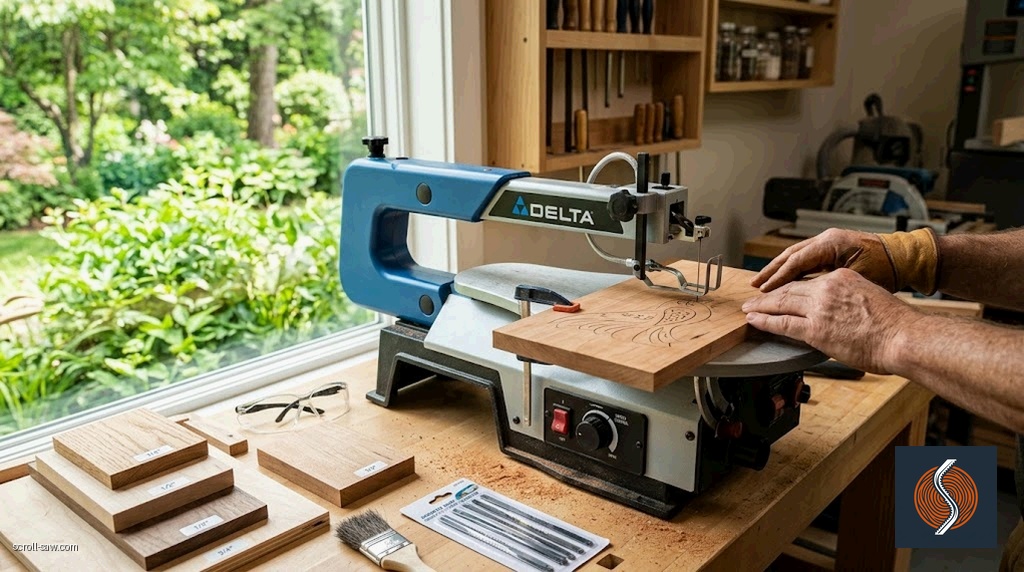
The Delta 20 inch variable speed scroll saw is the Delta 40-694 (and 40-695 on some variants), one of the two reference upper-tier hobby scroll saws in North America alongside the DeWalt DW788. If you already own the saw and want a practical setup guide organized by material and thickness, this is the plain reference.
Baseline setup (do this before your first cut)
Bolt or clamp the saw firmly to your bench. Even the 40-694’s mass benefits from a solid mount.
Square the table to the blade. Install a fresh blade. Place an engineer’s square against the blade and the table. Adjust the tilt lock until the square reads true. Mark true zero on the tilt scale with a paint pen. Factory tilt indicators are close but not precise.
Wax the cast iron table. Paste furniture wax. Buff. Feed becomes noticeably smoother.
Aim the dust blower. Exactly at the cut line on the near side of the blade.
Add real light. A bench-mounted Neatfi XL magnifying lamp adds full-spectrum light and magnification at the cut zone.
Check the pressure foot. It should touch the workpiece at the top of the stroke, not press down.
Once baseline is set, you tune per material.
Speed selection by material and thickness
Softwood (pine, cedar, poplar, basswood)
-
Under 1/4 inch: 1,300 to 1,500 SPM. #3 skip-tooth.
-
1/4 to 3/4 inch: 1,300 to 1,500 SPM. #5 skip-tooth.
-
3/4 to 1-1/2 inch: 1,200 to 1,400 SPM. #5 or #7 skip-tooth.
-
Over 1-1/2 inch: 1,000 to 1,300 SPM. #7 or #9 skip-tooth.
Hardwood (oak, maple, walnut, cherry)
-
Under 1/4 inch: 1,000 to 1,200 SPM. #3 reverse-tooth.
-
1/4 to 1/2 inch: 1,000 to 1,200 SPM. #5 reverse-tooth.
-
1/2 to 1 inch: 900 to 1,100 SPM. #7 skip-tooth or #7 double-tooth.
-
1 to 1-1/2 inch: 800 to 1,000 SPM. #7 or #9 skip-tooth.
-
Over 1-1/2 inch: 700 to 900 SPM. #9 skip-tooth.
Plywood and veneered stock
-
1/8 to 1/4 inch: 1,100 to 1,300 SPM. #5 reverse-tooth.
-
1/4 to 1/2 inch: 1,000 to 1,200 SPM. #5 or #7 reverse-tooth.
-
1/2 to 3/4 inch: 1,000 to 1,200 SPM. #7 reverse-tooth.
Acrylic and plastic
- Any thickness up to 40-694 capacity: 600 to 800 SPM. #5 skip-tooth. Leave protective film on both faces. Cut slowly to prevent melting.
Non-ferrous metal sheet (aluminum, brass, copper)
- Up to 1/16 inch: 400 to 700 SPM. Metal-cutting blade with wax lubricant on the blade every few inches of cut.
Spiral cutting (any material)
-
Portrait scrolling: 800 to 1,100 SPM. Spiral #0 or #2/0.
-
General 360-degree cuts: 900 to 1,200 SPM. Spiral #2 or #4.
Blade tension by ear
On the 40-694, tension is set with the single front-mounted lever. Pluck the blade after tensioning. Clear high note is right. Fine blades ring higher than coarse blades. Under-tensioned blades wander. Over-tensioned blades snap at the clamps.
Most 40-694 blade breakage traces to over-tension. Back off the lever if blades keep failing at the upper or lower clamp.
Blade shelf for the Delta 40-694
Standard 5-inch plain-end scroll saw blades. A working shelf:
-
General: Olson FR49400 skip-tooth assortment.
-
Cleaner underside: Olson FR49202 reverse-tooth blades.
-
Fine detail: Olson FR44802 fine reverse-tooth blades.
-
Hardwood finish: Olson DT49300 double-tooth blades.
-
Spiral general: Olson SP46500 spiral #4.
-
Spiral fine: Olson SP46300 spiral #2.
-
Spiral portrait: Olson SP46100 spiral #0.
-
Premium detail: Pégas #7 regular blades.
Common setup problems by symptom
Cut leans one way. Table not square to the blade. Recheck with engineer’s square.
Cut wanders around a line. Too coarse a blade, or under-tensioned, or dull.
Underside tears out. Switch to a reverse-tooth blade.
Wood burns. Too fast, or too fine a blade, or dull.
Blade snaps at the clamp. Over-tensioned. Back off.
Blade snaps in the cut. Feed rate too aggressive, or blade too fine for the material.
Saw walks on the bench. Not bolted down. Bolt it.
Speed drops mid-cut. Speed control board failing, or motor overheating from a blocked cooling vent.
Break-in for a new 40-694
Run the saw at medium speed with no workpiece for 15 minutes. This seats the brushes and lets the motor bearings warm up. Then make a series of test cuts in 3/4 inch pine at medium speed with a #5 skip-tooth blade. Confirm the cut tracks straight, the underside is clean, and the pressure foot sits at the top of the stroke without pressing.
After the first hour of cutting, retorque the saw-to-bench mounting bolts. Metal-to-metal joints settle.
FAQ
What is the speed range of the Delta 20 inch variable speed scroll saw? Approximately 400 to 1,750 SPM.
What is the model number? Delta 40-694 (and 40-695 on some variants).
What blades does it take? Standard 5-inch plain-end scroll saw blades.
How thick can it cut? 2 inches at 90 degrees.
Does it tilt both directions? Yes. 45 degrees left and 45 degrees right.
What speed for cutting 1/2 inch oak? 1,000 to 1,200 SPM with a #5 reverse-tooth blade.
What speed for cutting acrylic? 600 to 800 SPM with a #5 skip-tooth blade, protective film on.
Can I add a foot switch? Yes, standard AC foot switches wire in-line with the saw.
Where is the speed dial located? Front-mounted, within reach of the operator.
Should I break the saw in before serious cutting? Yes. 15 minutes of no-load running at medium speed seats the brushes.
References
-
Delta Machinery service portal manufacturer parts, manuals, and service reference.
-
Olson Saw scroll saw blade selection chart blade sizing and material match reference.
-
Sawmill Creek archived Delta 40-694 threads, setup and long-term ownership notes.


