
Craftsman 16 Scroll Saw Blade Change: Step-by-Step and Replacement Blade Selection
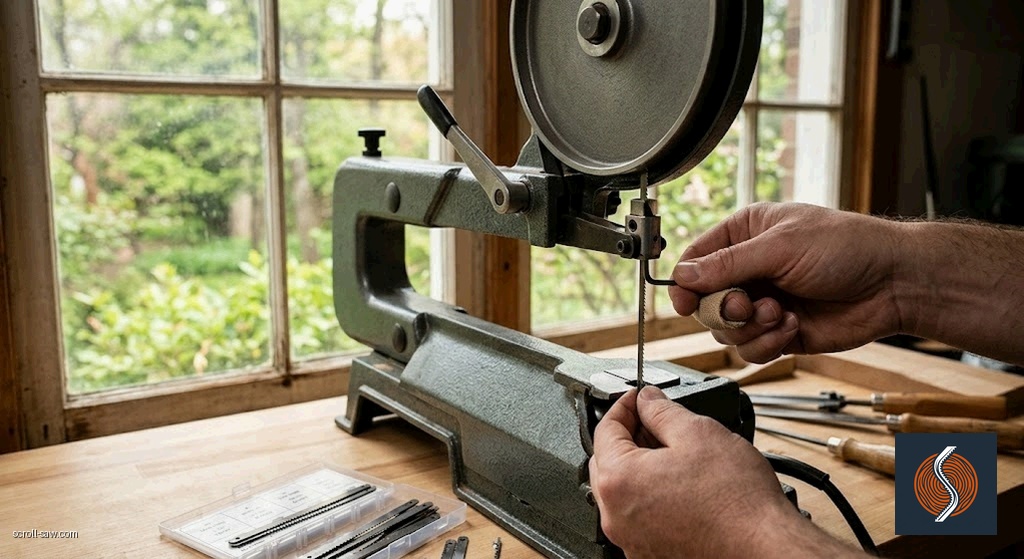
Craftsman 16 Scroll Saw Blade Change: Step-by-Step and Replacement Blade Selection
Changing a blade on a Craftsman 16 scroll saw is straightforward. The steps differ slightly depending on whether your saw has pin-end holders, a thumbscrew adapter, or a foot-lock clamp.
Before you change the blade
Turn off the saw and disconnect from power. Drop tension fully before trying to remove the blade. Note the blade size and type you are removing.
Pin-end holder (older Craftsman 16)
-
Drop tension fully.
-
Pull the upper holder pin out of the blade’s upper pin hole.
-
Pull the blade downward and out of the lower holder.
-
Insert the new blade teeth pointing downward.
-
Seat the lower pin in the lower holder.
-
Pull the upper arm down to seat the upper pin.
-
Restore tension. Pluck the blade. Clear high note is correct.
Thumbscrew adapter (mid-era Craftsman 16)
-
Drop tension. Loosen both thumbscrews.
-
Remove the blade from upper and lower adapters.
-
Insert the new blade teeth-down. Seat the lower end, tighten. Seat the upper end, tighten.
-
Restore tension. Pluck the blade.
Foot-lock clamp (current Craftsman 16)
-
Drop tension. Press foot-lock release on upper clamp. Pull blade out.
-
Press foot-lock release on lower clamp. Pull blade out.
-
Insert new blade teeth-down in lower clamp. Release foot-lock to grip.
-
Insert upper end in upper clamp. Release foot-lock.
-
Restore tension. Pluck the blade.
Threading for an interior cut
Drill a starter hole in the workpiece. Drop the upper arm. Thread the blade through the hole. Seat the blade in upper and lower holders. Restore tension.
Choosing the right replacement blade
-
General softwood: Olson FR49400 skip-tooth.
-
Plywood/veneered: Olson FR49202 reverse-tooth.
-
Fine detail and tight curves: Olson FR44802 fine reverse-tooth.
-
Hardwood finish cuts: Olson DT49300 double-tooth.
-
Spiral (add universal pin-to-pinless adapter for pin-end saws): Olson SP46500 spiral 4 general, Olson SP46100 spiral 0 portrait.
-
Premium hardwood: Pegas 7 blades (plain-end, needs pinless adapter).
After the blade change
Tension by ear. Pluck, clear high note. Confirm teeth point downward into the table. Make a test cut in 3/4” scrap along a marked line and check the underside for cleanliness.
FAQ
How do I change a blade on a Craftsman 16? Drop tension, remove old blade from holders, insert new blade teeth-down, seat both ends, restore tension. What does teeth-down mean? Teeth point toward the table so the blade cuts into the workpiece on the down stroke. How do I thread the blade for an interior cut? Drill a starter hole, drop the arm, thread the blade through, seat in holders, restore tension. What is the pluck test? Pluck the tensioned blade with a fingernail. Correctly tensioned blade rings with a clear, high note. How often should I change blades? When the blade wanders, burns wood, or requires more effort than a fresh blade. What is a reverse-tooth blade? A blade with lower teeth reversed to cut cleanly on the return stroke, reducing bottom-face tearout. What blade for tight curves? #1 to #3 for curves under 1/4” radius. What is a foot-lock clamp? A blade clamp that releases with a press-and-hold. Faster blade change. Should I disconnect from power when changing blades? Yes, especially when reaching near the clamps. Can I use pin-end blades in a thumbscrew adapter? Yes, the thumbscrew adapter grips both pin-end and plain-end blade ends.
References
-
Sears Parts Direct manuals and parts for Sears-era scroll saws.
-
Olson blade chart blade sizing reference.
-
Craftsman support current Craftsman product references.


