
DeWalt DW788: Cleaner Cuts and Longer Blade Life
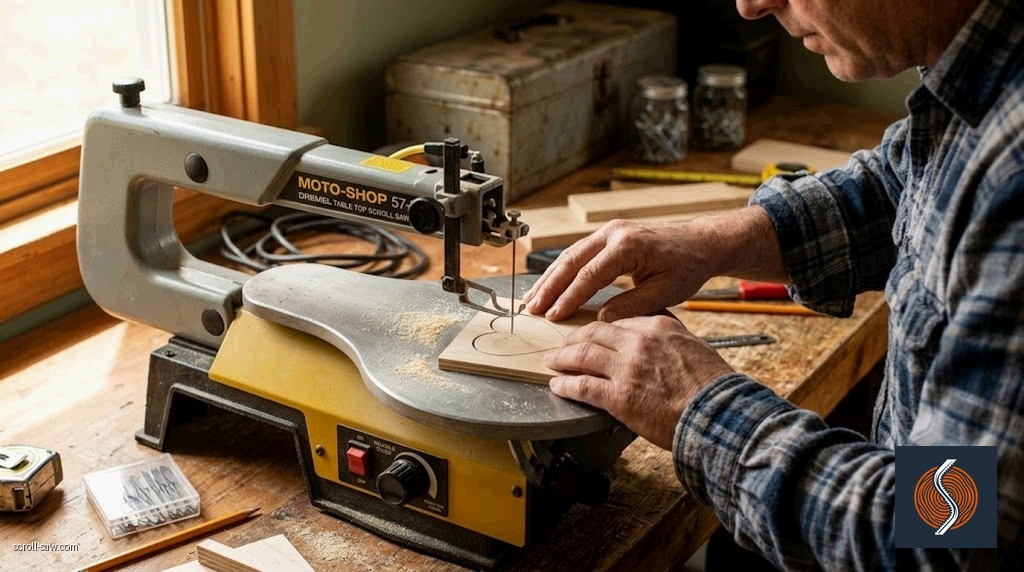
DeWalt DW788: Cleaner Cuts and Longer Blade Life
A scroll saw blade that lasts twice as long in the same shop, cutting the same wood, is almost never a better blade. It is a better setup. On the DeWalt DW788, the machine gives you enough control to double blade life without spending more on consumables, and the same adjustments that stretch the blade also produce a cleaner cut on the workpiece. It is the same conversation from two angles.
The DeWalt DW788 is a 20-inch dual parallel-link scroll saw with variable speed from 400 to 1,750 SPM, a 3/4-inch stroke, and a 1.3-amp motor. It runs 5-inch plain-end blades. Everything below assumes the machine is mechanically sound; if the arm bearings are shot or the drive shaft is loose, no amount of technique will save the blade.
Tension is the biggest single variable
More blades die from wrong tension than from all other causes combined. Too much tension over-flexes the blade steel through the stroke and fatigues it at the clamp. Too little tension lets the blade wobble sideways under load, which puts a bend in the body that shows up as sudden breakage a few minutes later.
The DW788’s front-mounted tension lever is meant to be used every blade change. Set the blade in both clamps first, then bring the lever up until the blade plucks with a clear pitch. On a #5 blade the note should sit around a high C. Too tight and the note goes higher and the blade whines when the saw starts. Too loose and the note is dull and the blade oscillates visibly.
One habit that adds real blade life: back off tension whenever you pause for more than a couple of minutes. Even a two-minute break with the blade tensioned adds cumulative fatigue over the day. At the end of a session, drop tension all the way.
Feed pressure is the second
A scroll saw blade cuts best when the workpiece is fed at the pace the blade wants to eat, not the pace the operator wants to move. On the DW788, that pace changes with material and blade choice, and the honest answer is that no formula replaces the feel.
A test that works: after you start a cut, back off pressure until the blade is just barely progressing through the material. Now increase pressure until the blade starts to bow visibly backward under the load. That is too much. The right pressure is halfway between those two points. Cut a foot at that pressure and see if the shaving comes off in a continuous ribbon. Ribbon means correct. Dust means too fast. Chunks means too slow or too coarse a blade.
Over-feeding is what kills blades fastest on this saw. The parallel-link arm can hide the pressure feedback because the arm does not shake the way a C-arm does under a hard feed. Blade users who move from a cheaper C-arm to a DW788 often break blades in their first hour because their hands are still calibrated to a machine that pushed back harder.
Speed matched to material
High speed is not always cleaner. Fast SPM at low feed rates burnishes the wood and cooks the blade tip. Slow SPM at high feed rates makes the tooth grab and puts a lateral load on the blade that bends the body.
For most hardwood work between 1/2 and 1 inch, keep the speed dial at roughly 60 to 75 percent of maximum. That corresponds to 1,000 to 1,300 SPM on the DW788. Soft wood and thin plywood can tolerate 1,400 to 1,700 SPM. Acrylic drops to 700 to 900 SPM. Thin metal at 400 to 600 SPM.
A blade running the correct speed for the material stays cool enough to keep its temper for a full session. A blade running 300 SPM too fast will die within an hour on the same wood.
Clean the blade clamps every session
The DW788 has tool-free blade clamps at both the upper and lower ends of the arm. Fine sawdust builds up in the clamp jaws over time. Every session, before mounting a fresh blade, drop the lower clamp open, brush the jaw faces clean with a stiff brush, and blow the debris out.
A clamp with debris in it holds the blade unevenly. That off-axis grip flexes the blade tang on every stroke and cracks it at the clamp within a fraction of the blade’s normal life. Two minutes of clamp cleaning per session extends blade life more than any other single habit.
Match the blade to the material, always
Running a #9 skip-tooth in 1/4-inch Baltic birch will finish the cut, but the blade is oversized for the work and the finish will be rougher than it should be. Running a #2 reverse-tooth in 3/4-inch oak will finish the cut too, but the blade will die inside of ten minutes because the small gullet cannot clear the oak’s density.
A workable rule: the blade number should roughly match the wood thickness in eighths of an inch. A #5 for 3/8-inch stock, a #7 for 5/8, a #9 for 3/4 to 1 inch. Tooth style depends on finish demand: skip-tooth for speed and blade life, reverse-tooth for a clean bottom face, precision-ground when hardwood volume justifies the higher blade cost.
Buying blades in packs of a dozen from a single supplier gives you consistent behavior. Olson skip-tooth 5-inch plain-end packs are the practical default. Pégas blades cut faster and last longer per unit but cost more per pack.
The bevel-cutting adjustment
Bevel cuts on the DW788 tilt the table, not the arm. That means the blade is still cutting vertically while the workpiece sits at an angle, and the effective thickness of the material through the blade increases. A 3/4-inch board tilted to 45 degrees presents just over an inch of cutting depth to the blade.
That extra depth changes the blade rules. Slow the speed by 200 SPM from the flat-cut setting. Feed lighter. Use one blade size larger than you would for the flat cut. A 3/4-inch bevel cut in cherry that ran at 1,200 SPM with a #7 skip on the flat wants 1,000 SPM with a #9 skip when tilted.
Also confirm the bevel lock is fully engaged before starting a bevel cut. The DW788’s trunnion locks the table at any angle, but a partial lock will let the table shift a degree under cutting load, which shows up as a taper in the finished cut.
Small things that add up
Keep the dust blower aimed at the cut line, not the workpiece surface. Chips on the surface do not affect cut quality; chips packed into the kerf do.
Check the air hose flexibility every six months. The flexible tube stiffens with age and stops holding its position, and a dust blower pointed at the operator does nothing for the cut.
Oil the tension pivot annually with a single drop of light machine oil. Nothing more.
Store blades flat in a small case with dividers by size. Blades that live loose in a drawer bend against each other and arrive at the saw already stressed.
Mark the blade of the day on the saw with a small piece of tape and a note of the material and speed. You will start seeing patterns in what works after a month, and the notes become your own reference book faster than any published chart.
Who this setup helps most
The scroller who cuts three or four hours a week on this saw will see the biggest return from these habits. Fewer broken blades per session, less scorch on the workpiece, cleaner curves on tight fretwork.
The occasional weekend user who cuts a few hours per month will see a smaller absolute return in blade life, but the cleaner cut is still worth the small time investment.
Anyone running the DW788 for production hours will already know most of this. What tends to catch professional users is the tension habit at breaks; a paused saw at full tension for lunch adds up over a career of hours.
FAQ
How long should a scroll saw blade last on a DW788? A #5 skip-tooth in Baltic birch fretwork should give roughly 30 to 60 minutes of continuous cutting. A #7 skip in 3/4-inch hardwood might give 15 to 30 minutes. Blades die faster in harder wood.
Why do my blades keep breaking at the top clamp? Usually tension too high, or the upper clamp jaw needs cleaning. Both fixes are quick.
Should I detension the blade every night? Yes. Detension whenever the saw sits for more than a few minutes.
Can I use pin-end blades on the DW788? No, the clamps are designed for plain-end blades.
What blade brand lasts longest? Pégas modified-geometry blades measure longest per blade in most independent tests, but Olson blades cost less and hold up well for hobby volumes.
Why does my cut wander to one side? Blade drift is almost always a tension issue on the DW788, not an alignment issue. Re-tension first.
Do I need the DW7880 stand? Not required. Any sturdy bench with a bolt-down surface works. The stand is a convenience for shops without dedicated bench space.
References
-
DeWalt. DW788 product page, owner’s manual, and exploded diagram.
-
Bob Vila. Tested review of the DeWalt DW788 scroll saw.
-
Olson Saw Company. Plain-end scroll saw blade selection guide.
Title tag: DeWalt DW788: Cleaner Cuts and Longer Blade Life Meta description: Setup habits that extend blade life and improve cut quality on the DeWalt DW788 20-inch variable speed scroll saw. URL slug: dewalt-20-in-variable-speed-scroll-saw-dw788 Excerpt: The tension setting, feed pressure, and clamp habits that double blade life on a DeWalt DW788 and produce a cleaner cut at the same time. Practical adjustments you can make in the first ten minutes of your next session.


