
DeWalt DW7880 Scroll Saw Stand: Worth Buying?
DeWalt DW7880 Scroll Saw Stand: Worth Buying?
Buy the DeWalt DW788 and the first practical question, before the second blade change, is where the saw is actually going to live. The machine weighs 56 pounds set up, the arm sweeps through a working envelope you do not want to interrupt with a bench edge, and the height that feels right when you cut for ten minutes is rarely the height that feels right when you cut for two hours. Some people bolt it to a workbench and move on. Others buy the DeWalt DW7880 stand that DeWalt sells specifically to hold this saw. It is worth looking at what the stand actually offers before spending on it.
What the stand is
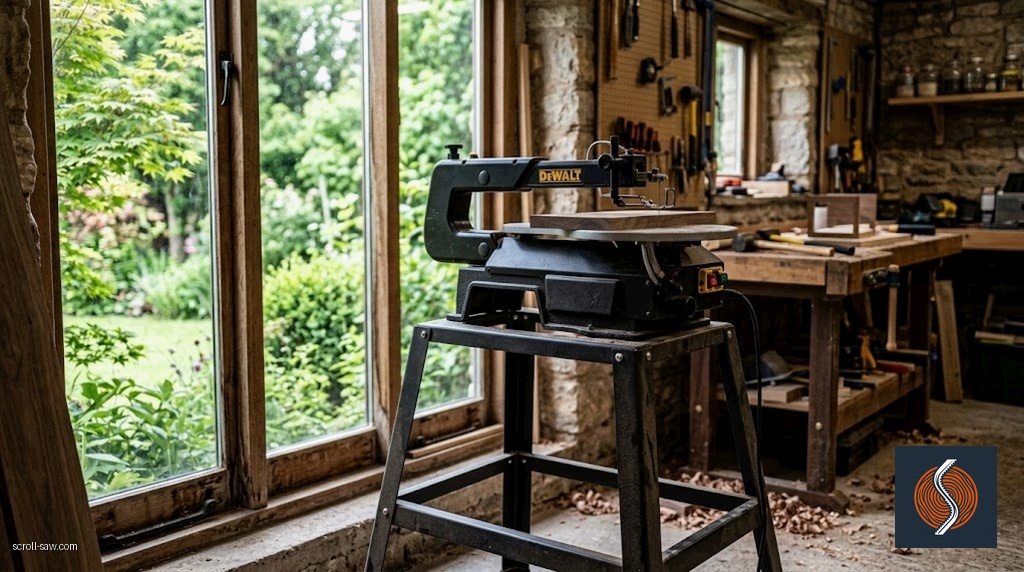
The DW7880 is an all-metal frame stand with adjustable legs, designed to mount the DW788 (and by extension the compatible Delta 40-694, which shares the same footprint). It has four legs, two of which adjust in height for uneven floors and to fine-tune the working height. The mounting hardware for bolting the saw to the top of the stand comes in the box. Assembly is straightforward and takes about 20 minutes.
The stand is not a cabinet. There is no storage underneath, no drawer, no shelf beyond what you might add yourself. It is a frame that holds the saw at working height and keeps it stable under the arm’s oscillation.
What the stand actually solves
Bench space is the first thing. A DW788 bolted to a workbench takes up a piece of real estate you cannot easily reclaim, because the saw itself is not a machine you want to move often. Bolt patterns wear, alignment drifts every time you shift it, and the setup routine of leveling the saw and squaring the table takes real time. A dedicated stand solves that permanently.
Height is the second, and it matters more than most people expect. Scroll saw work involves standing or perching for extended periods with your eyes about 12 inches above the workpiece. The wrong height puts strain on the lower back and shoulders that compounds over months. On a workbench of 36-inch height, most people find the DW788’s table sitting a couple of inches too high for comfortable long sessions. The DW7880’s adjustable legs let you drop the table to something closer to 34 inches, which is where most scrollers report the least fatigue.
Stability is the third. The DW788’s parallel-link arm is smoother than a C-arm saw, but any scroll saw still transmits a low-frequency vibration through its mounting surface. A wobbly workbench amplifies that vibration and reads as chatter in the cut. The DW7880 is heavy enough and rigid enough to damp the arm’s motion without walking across the floor.
What the stand does not solve
Weight is not solved. The DW788 on the DW7880 is a stationary machine. If you need to move the saw between locations, add casters or accept that this is not a portable setup.
Dust is not solved. The stand has no dust collection routing, no shroud, no port. If you are trying to keep the shop clean, you will still need a shop vac at the saw and a downstream chip catch.
Storage is not solved. Blades, wrenches, cutting wax, and workpiece scraps still need a home somewhere else in the shop.
Comparing the DW7880 to alternatives
Building a scroll saw stand yourself is common and it works. A simple 2x4 frame with a plywood top and adjustable feet can match the DW7880’s function for the cost of the materials. The DW7880’s advantage is that it is dimensioned correctly for the saw, it does not take shop time to build, and it disassembles for storage or moves.
Universal power tool stands with metal frames and MDF tops are the other alternative. They tend to be heavier, they usually include wheels, and they carry more machines than just a scroll saw. If you already own one for a benchtop planer or a table saw, it can hold the DW788 without a dedicated purchase.
Where the DW7880 earns its place is on the person who wants a permanent, matched setup with no fabrication time and no compromise on stability. That is a real category, and the stand’s long production run reflects that.
Assembly and setup notes
The stand ships flat-packed in a long, narrow box. Lay all four legs out, identify the two adjustable legs by their extended range, and orient them at the two front corners so height adjustments are within easy reach. Bolt the frame together with the included hardware, hand-tight at first, then torque everything down once the frame is square.
Before mounting the saw, place the frame in its intended shop location. Level the two adjustable legs against the floor first, then check that the top of the frame is level in both axes. Any twist in the frame will telegraph to the saw table.
Mount the DW788 with all four bolts and lock washers. Torque evenly. An unevenly bolted saw will develop table-tilt drift over the first few sessions as the frame settles.
Small habits with the stand
Once the saw is bolted down, resist the temptation to shim the table with the stand’s leg adjusters. If the table is not sitting flat, the fix is at the saw’s trunnion, not at the stand. Using the stand to correct a saw problem creates a compound alignment issue that is harder to trace later.
Check the leg adjuster locking nuts every few months. Vibration slowly loosens them over years of use. A dab of thread-locker on the nut threads at initial assembly prevents the problem for the life of the stand.
If the shop floor is concrete, put a piece of anti-fatigue mat under the operator position, not under the stand. The stand does not need the cushion; you do.
Where the stand is not the right buy
The DW7880 is not the answer for shops with limited floor space and generous bench space. In that case, bolting the saw to a corner of the bench uses the space you already have.
It is also not the right choice for a scroller who moves the saw between rooms or between a home shop and a demo location. The stand is stationary, and adding casters compromises its stability.
And it does not fit the shop that already has a general-purpose mobile power tool stand doing similar duty for other machines. Buying a second stand for one saw is a use of shop budget better spent on blades and material.
Who should buy the stand
The scroll saw hobbyist with a dedicated shop corner, no existing stand, and a working schedule that includes multi-hour sessions is the DW7880’s clearest customer. The stand disappears into the setup within a week and the saw feels planted every time you turn it on.
The scroller upgrading from a smaller benchtop saw who wants the DW788’s cutting quality without giving up bench space to a permanent installation is the second clearest customer. The stand takes the saw off the bench and returns that surface to other work.
FAQ
Does the DW7880 fit any scroll saw besides the DW788? It is designed for the DW788 and fits the Delta 40-694 without modification. Other scroll saws with a similar footprint may bolt on with drilled adapter plates.
How tall is the DW7880? Without adjustment, the frame stands roughly 30 inches tall. The adjustable legs add roughly 2 inches of range.
Does the stand include the saw? No. The stand is sold separately from the DW788.
Can I add casters to the DW7880? Owners have done it by drilling the leg feet for locking casters. The stand becomes portable but slightly less stable under cut.
How much does the stand weigh? About 25 pounds assembled.
Is assembly complicated? No. About 20 minutes with a wrench and a screwdriver.
Is the stand worth it if I already have a workbench? Depends on whether you want the saw as a permanent bench occupant or as a dedicated station. If bench space is the constraint, the stand is worth it.
References
-
Home Depot. DW7880 stand product listing with specifications and reviews.
-
DeWalt. DW788 scroll saw product page for the machine the stand fits.
Title tag: DeWalt DW7880 Scroll Saw Stand: Worth Buying? Meta description: What the DeWalt DW7880 scroll saw stand actually solves, who should buy it, and when a workbench does the same job. URL slug: dewalt-788-scroll-saw-stand Excerpt: A practical look at the DeWalt DW7880 stand that pairs with the DW788 scroll saw. What it solves, what it does not, and whether the stand is the right buy for a hobbyist, an occasional user, or a shop that already has a bench.


