
DeWalt DW7880 Scroll Saw Stand: Buying Guide
DeWalt DW7880 Scroll Saw Stand: Buying Guide
A scroll saw stand looks like a simple thing. Four legs, a top rail frame, some bolts. In practice it is doing more than it looks: it is deciding where the saw sits in the shop, how tall the workpiece meets the operator, and whether the arm’s oscillation reaches the cut as a smooth stroke or as a chattery vibration. Getting the stand right matters more than the price tag suggests, and getting it wrong is one of the quiet reasons a good saw produces disappointing cuts.
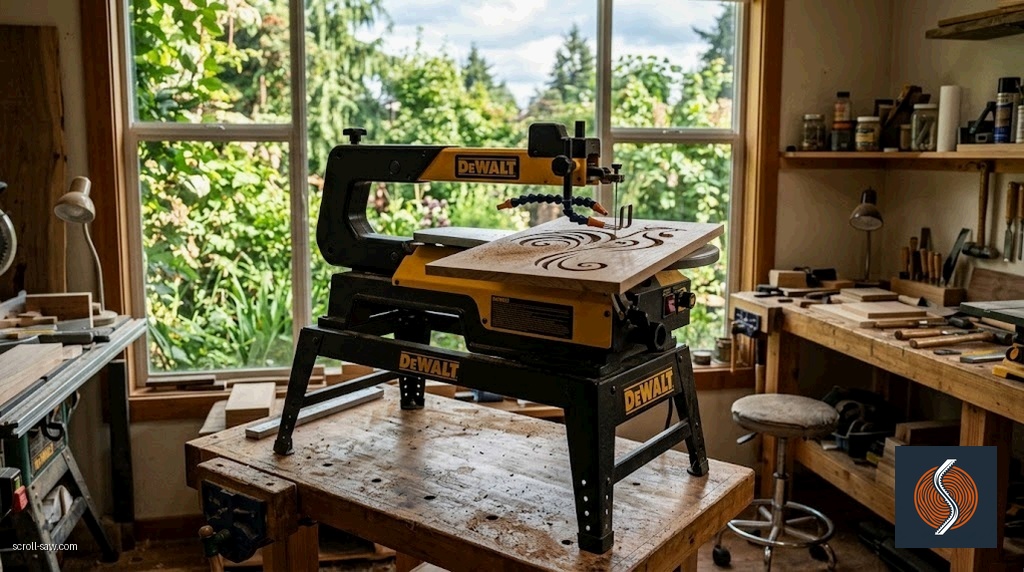
The DeWalt DW7880 is DeWalt’s factory stand for the DW788 scroll saw. It is an all-metal frame with adjustable back legs, roughly 30 inches tall unassisted, and it ships with the mounting hardware to bolt the DW788 down. That is the short version. Here is what to actually check before you buy one, and what to look at first if the stand you already have is starting to feel less solid than it should.
Before you buy: does the stand fit your shop
Measure the space. The DW7880 has a footprint that is wider than the DW788 alone by roughly two inches on each side. Add operator space in front of the saw, at least 30 inches, and clearance behind for the arm’s rear travel and for accessing the tension mechanism. The total space commitment is typically 4 by 3 feet minimum.
Measure your own height. The DW788 on the DW7880 puts the saw table at roughly 34 inches off the floor with the legs at their default extension. Adjusting the two rear legs adds about 2 inches of range. If you are much taller or much shorter than average, the stand may not put the workpiece in a comfortable working position without additional platforms or foot rests.
Check the shop floor. On a concrete floor, the stand sits stable but transmits vibration to the operator’s feet. Anti-fatigue matting under the operator (not under the stand) solves this. On a wooden shop floor with any spring or bounce, the stand will amplify that motion. In that case, look at bolting the stand’s feet directly to the floor with lag bolts.
Before you buy: is the stand actually needed
A DW788 bolted to a heavy workbench works fine. If you already own a bench of the right height and stability, the DW7880 is a convenience purchase, not a necessity.
The stand becomes worth its cost in three specific situations. When shop bench space is limited and you want the saw off the bench. When the existing bench is not stable enough to damp the arm’s oscillation. When the intended height is significantly different from the available bench height.
Outside those situations, the money is often better spent on blades, on a work light, or on a higher-quality blade selection.
Before you buy: what alternatives look like
Homemade stands work. A 2x4 frame with a plywood top, gusseted at the corners with steel plates, will hold the DW788 as securely as the DW7880 for a fraction of the cost in materials. The tradeoff is shop time; a homemade stand takes an afternoon.
Universal power tool stands from Bosch, Ridgid, and others hold benchtop machines including scroll saws. They tend to be heavier, they usually roll on casters, and they carry multiple machines through the year. If you already own one, you may not need the DW7880 at all.
Rolling shop cabinets with drawers can be adapted to hold the DW788 on top. This adds storage that the DW7880 does not provide, at the cost of more shop space and more money.
What to check when the stand you own feels off
Start with the leg locking nuts. The DW7880’s rear legs adjust for height and lock with threaded nuts against the frame. Vibration slowly loosens those nuts over years. If the stand feels less rigid than it did, put a wrench on each leg lock and snug it firmly. This one check accounts for maybe half of all stability complaints on used DW7880s.
Check the bolts that fasten the frame together. The stand ships as a knockdown assembly, and the frame bolts can loosen the same way the leg nuts do. Torque each frame bolt firmly.
Check the saw’s mounting bolts. All four bolts holding the DW788 to the stand top need to be tight. An uneven mount, where three bolts hold and one is loose, transmits arm oscillation as a wobble that reads as chatter in the cut.
Look for cracks in the welds at the leg-to-frame joints. Cracks are rare on the DW7880 because the welds are gusseted, but they can happen if the stand has been dropped or if the leg bolts were massively over-torqued. A cracked weld cannot be safely field-repaired; replace the stand or return it for warranty.
Inspect the leg feet. The DW7880’s feet are simple metal caps, not adjustable levelers. If a foot is bent or the metal cap is missing, replace it. A bent foot puts the stand out of level, which telegraphs to the saw table.
Adjusting the stand for the saw you own
The DW7880 fits the DW788 by bolt pattern. It also fits the Delta 40-694 without modification because the two saws share the same base footprint. Other scroll saws with different bolt patterns need a drilled adapter plate, which is a straightforward shop job on 3/8-inch plywood or steel.
Height adjustment: level the front (non-adjustable) legs first. Then adjust the two rear legs so the stand top is level in both axes and at the height you prefer. Lock the leg nuts, then bolt the saw down. Adjusting height after the saw is mounted risks racking the frame.
Level matters. A stand that is out of level puts a twist in the frame, which puts a twist in the saw’s table. The result is a table that looks square by eye but reads out of square when you check with an engineer’s square against the blade. Get the stand level before you calibrate the saw.
When to skip the DW7880
Skip it if you have a workbench of the right height and stability already. There is no cutting-quality reason to add the stand in that case.
Skip it if your shop is small and you move the saw for other work. The stand is not designed to fold or nest, and it takes up floor space when the saw is set aside.
Skip it if you plan to move the DW788 between shop locations. The stand is stationary. Adding casters compromises the stability that is its main selling point.
When it earns its place
A dedicated scroll saw station in a shop that runs multi-hour sessions is where the DW7880 pays back its cost. The saw sits at exactly the right height every session, the frame damps the arm’s oscillation cleanly, and the setup does not have to be done again the next time you turn the saw on.
A scroller upgrading from a smaller benchtop machine to the DW788 who does not want to give up bench space is the second clearest case. The stand takes the saw off the bench without compromising cut quality.
FAQ
How tall is the DW7880 fully assembled? About 30 inches at the default leg extension. The adjustable rear legs add roughly 2 inches of range.
Does the DW7880 fit any scroll saw other than the DW788? It fits the Delta 40-694 without modification. Other saws need a drilled adapter plate.
Can I add wheels to the stand? Owners have done it by drilling the feet for locking casters. Stability drops slightly but the stand becomes portable.
How much does the stand weigh? About 25 pounds assembled, per DeWalt’s specifications.
Is it hard to assemble? No. About 20 minutes with basic hand tools.
Why is my DW7880 wobbling? Usually loose leg lock nuts or loose frame bolts. Tighten all of them.
Does DeWalt still sell replacement parts for the DW7880? Yes. The stand remains in production and parts are available through DeWalt’s service network.
References
-
DeWalt. DW7880 scroll saw stand product page.
-
Lowe’s. DW7880 aluminum adjustable scroll saw stand product listing.
-
Home Depot. DW7880 stand product listing with owner reviews.
Title tag: DeWalt DW7880 Scroll Saw Stand: Buying Guide Meta description: What to check before buying or repairing a DeWalt DW7880 scroll saw stand. Fit, alternatives, adjustment, and when to skip it. URL slug: dewalt-dw7880-scroll-saw-stand Excerpt: Before buying or repairing a DeWalt DW7880 scroll saw stand, check the shop space, the alternatives, and the small failures that show up on used stands. When the DW7880 is worth its price and when a workbench does the same job.


