
Dremel 18 Variable Speed Scroll Saw: Fix Cut Quality
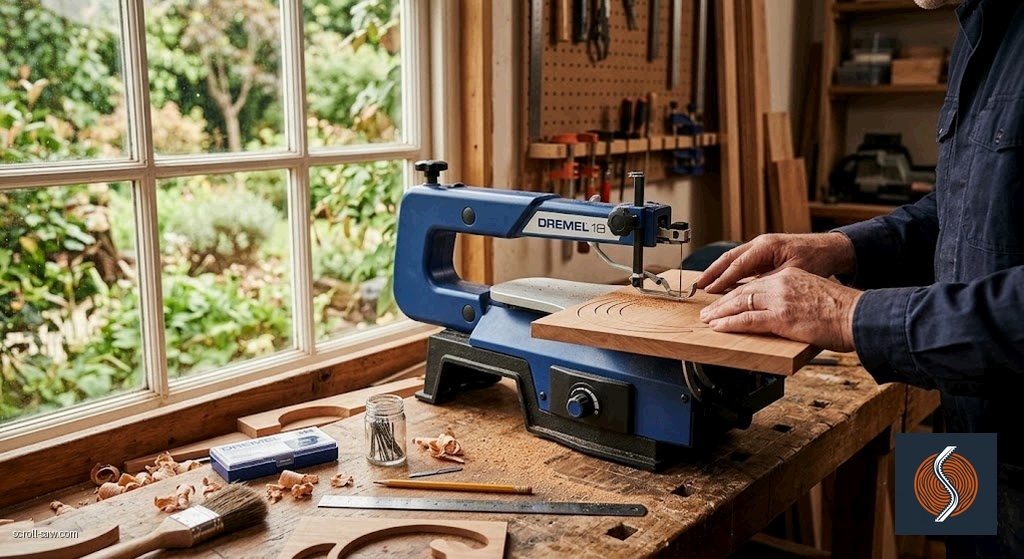
Dremel 18 Variable Speed Scroll Saw: Fix Cut Quality
The Dremel 18 sits in Dremel’s older scroll saw lineup and shares most of its design language with the 1671, 1672, and 1680: a compact throat, a C-arm, a small variable-speed motor, and pin-end blade clamps. When one of these saws stops cutting cleanly, the problem is almost never mysterious. It sits in one of four or five places, and finding it is a matter of checking them in the right order.
The cheapest fix takes ten seconds and saves an afternoon of frustration. Start there and work outward.
First: the blade itself
A blade that was cutting fine an hour ago can dull faster than most first-time users expect. Scroll saw blade life is measured in minutes of continuous cutting, not hours, and the transition from sharp to marginal is quiet.
Swap in a fresh pin-end blade of the right size for the material. A #5 skip-tooth for medium wood, a #7 for thick or hard, a #3 reverse-tooth for plywood fretwork.
Cut a test line in scrap. If the fresh blade cuts clean, the problem was blade wear. That single check accounts for roughly 60 percent of sudden cut-quality drops on this saw.
Then: tension
A fresh blade that still cuts poorly points at tension. The Dremel 18 tensions from the upper arm, and correct tension is a clear high pluck note when you snap the blade with a fingernail.
Low tension shows up as drift on curves, chatter on straight cuts, and a soft feel under sideways finger pressure. High tension shows up as sudden blade breakage at the pins.
Adjust and test. Get in the habit of pluck-testing after every blade change.
Then: the clamp pin holes
Pin-end clamps accumulate dust in the cross-drilled pin holes over months. Dust in the hole prevents the pin from seating fully, and a partly seated pin rotates during the stroke. That rotation reads as chatter and short blade life.
Open the clamps. Brush the pin holes with a stiff brush or blow them clean with compressed air. Wipe the clamp faces.
Check for elongated pin holes while you have the clamps open. A pin that visibly rocks in an unloaded hole means the clamp is worn and needs replacement.
Then: the tension mechanism
The upper arm tension assembly is a spring-loaded mechanism that develops problems if the saw sits unused for long stretches or gets heavy use.
With no blade installed, work the tension arm through its full range. Smooth motion is right. Binding means the pivot needs a drop of light machine oil. Gravity-drop means the internal spring has failed.
Both repairs are within reach for a patient hobbyist working from Dremel’s parts diagram.
Then: the motor and drive
The small motor can develop wear that shows up as reduced power under load. RPM drops when the blade hits hardwood, cuts slow down noticeably, and the operator ends up pushing harder to compensate. Pushing harder does not fix the underlying issue and it wears the blade faster.
Check the motor by listening under no load. Smooth, consistent sound is right. Hunting or varying RPM points to brush wear or a speed-control fault.
On models with a drive belt, check the belt for glazing or cracking. A slipping belt is a common cause of reduced cutting power.
The order matters
Blade, tension, clamps, tension mechanism, motor and drive. Skipping ahead to motor checks usually ends in backing up to a blade change, so save the time and work through in order.
What to keep in stock
-
Two dozen 5-inch pin-end blades in the sizes you use most
-
One dozen each of two other common sizes
-
A small can of light machine oil
-
Replacement blade clamps if you can source them
-
A divided case for blade storage
A dozen pack of Olson skip-tooth pin-end blades is the practical default for the primary blade slot.
Habits that prevent most problems
Detension between sessions. Brush the pin holes clean at every blade change. Store blades flat. Work in reasonable session lengths (twenty minutes cutting, five minutes rest). Oil the arm pivot annually.
When to stop repairing
The Dremel 18 has a value ceiling. If arm bearings have developed lateral play, if the motor is burning brushes faster than they can be replaced, or if you have already been through clamps, springs, and belts, a modern scroll saw will cost less than continued repair.
Heuristic: if the saw spends more shop time in repair than in cutting, it has retired itself.
FAQ
Why did my Dremel 18 suddenly start cutting poorly? Usually a dulled blade. Replace it first.
What blades does the Dremel 18 use? Standard 5-inch pin-end scroll saw blades.
Is Dremel still making parts for the 18? Common wear items remain available through Dremel’s service network.
How thick can this saw cut? About 1-3/4 inches at 90 degrees on soft wood.
Why do blades break at the pins? Over-tension or blades left tensioned overnight.
How long does a blade last? 15 to 45 minutes depending on wood and blade size.
Should I convert to plain-end blades? Only if you cannot find pin-end blades in the specialty you need. Pin-end blades are still widely stocked.
References
-
Olson Saw Company. Pin-end scroll saw blade catalog.
-
Scroll Saw Woodworking & Crafts forum. Troubleshooting archive for older Dremel scroll saws.
Title tag: Dremel 18 Variable Speed Scroll Saw: Fix Cut Quality Meta description: Restore cut quality on the Dremel 18 variable speed scroll saw. Blade, tension, clamps, and mechanism checks in order. URL slug: dremel-18-variable-speed-scroll-saw Excerpt: A step-by-step path for restoring cut quality on the Dremel 18 variable speed scroll saw. Blade first, then tension, clamps, mechanism, motor, in the order that fixes most problems fastest.


