
Dremel 57-2 Scroll Saw Blades: Better Cuts
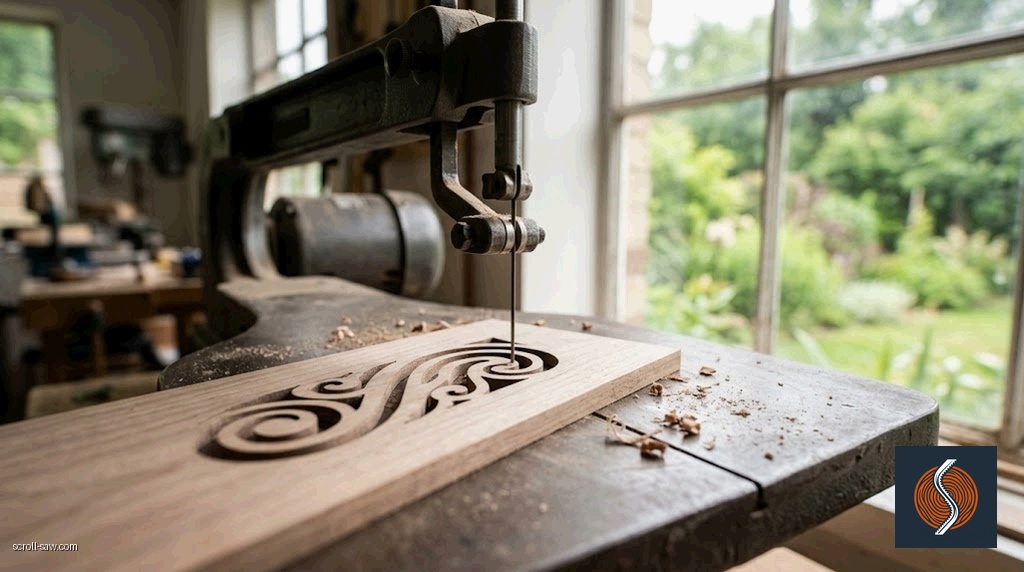
Dremel 57-2 Scroll Saw Blades: Better Cuts
The Dremel 57-2 shows up in shops without anyone quite remembering when it arrived. Sold decades ago as part of Dremel’s early scroll saw line, the 57-2 was a compact hobby machine built for pattern work, ornaments, and small craft cutting. If you have one and it still runs, blade selection is what stands between the saw and the cut quality it was capable of when new.
The 57-2 uses standard 5-inch pin-end scroll saw blades. That format is still widely stocked, so blade availability is not the issue. What matters is picking the right blade for the material and the pattern.
Confirming the format
Before ordering blades, look at the 57-2’s clamps. The factory configuration is pin-end: small blocks with cross-drilled holes on either side that seat the blade’s pins. If a previous owner converted the clamps to plain-end, you will see flat slots with set screws instead.
The 5-inch pin-end format on the 57-2 is the same format used by later Dremel scroll saws (1671, 1672, 1680) and by many other hobby-grade scroll saws from the 1970s through the 2000s. Any modern 5-inch pin-end blade fits.
The three blades that cover most work
Most 57-2 owners settle into a rotation of three blades that handle the majority of what the saw is asked to do.
#5 skip-tooth pin-end: the workhorse for 1/4 to 1/2-inch soft wood and plywood. About 12.5 TPI.
#3 reverse-tooth pin-end: the choice for plywood fretwork where the exit face will be visible. About 18 TPI.
#7 skip-tooth pin-end: the step-up for 3/4-inch hardwood or stacked cuts. About 11.5 TPI.
A dozen pack of Olson #5 skip-tooth pin-end blades is the practical default for the primary blade slot.
Specialty blades worth knowing
Spiral blades cut in all directions and let the operator work complex patterns without rotating the workpiece. The tradeoff is a wider, fuzzier kerf.
Precision-ground blades have ground teeth for sharper edges and lower feed pressure. On the 57-2’s small motor, precision-ground blades noticeably reduce load in hardwood.
Metal-cutting blades with 30-plus TPI handle thin non-ferrous sheet up to about 20 gauge. Run at the saw’s minimum speed with cutting wax.
Double-tooth blades balance skip and standard patterns. Middle-ground finish and feed characteristics.
Material and blade matching
-
1/8-inch Baltic birch, fine fretwork: #3 reverse-tooth at 1,000 to 1,300 SPM
-
1/4-inch Baltic birch, pattern work: #5 reverse-tooth or skip-tooth at 1,100 to 1,400 SPM
-
3/8 to 1/2-inch soft wood: #5 skip-tooth at 1,100 to 1,300 SPM
-
3/4-inch soft wood: #7 skip-tooth at 1,000 to 1,200 SPM
-
1/2-inch hardwood: #5 skip-tooth at 900 to 1,100 SPM
-
3/4-inch hardwood: #7 precision-ground at 800 to 1,000 SPM
-
1/8 to 1/4-inch acrylic: #5 skip-tooth at 500 to 800 SPM
-
Thin non-ferrous metal: metal-cutting blade at minimum speed
What changes when you get it right
Correct blade selection on the 57-2 changes three things.
Cut quality changes first. The pencil line looks followed. Curves come out at the radius drawn. Exit faces look clean rather than fuzzy.
Blade life changes second. A blade matched to material lasts twice as long as a blade forced into work it was not designed for.
Operator fatigue changes third. A blade that feeds under light, steady pressure is easier on hands, wrists, and shoulders than a blade that grabs and hesitates.
Blade tension and clamp habits
The 57-2 tensions from the upper arm. Correct tension is a clear high pluck note.
Brush the clamp pin holes clean before every blade change. Dust in the holes prevents full seating and produces chatter.
Check the pin holes for wear periodically. Elongated holes let the pin rock even after cleaning. Replacement clamps for older Dremel saws are still available through Dremel’s service network.
Small habits that stretch blade life
Break in new blades. Run the first minute at slow speed on soft wood scrap.
Detension between sessions.
Match speed to material and thickness.
Feed at the pace the blade wants (continuous ribbon shaving from the kerf) rather than the pace the operator wants.
Rotate partially worn blades to lighter work.
Store blades flat in a divided case.
When blade choice cannot fix the cut
A fresh, correctly sized blade at correct tension in clean clamps that still cuts poorly points at the saw itself. Common causes: worn upper arm bearings, stripped or broken tension spring, slipping drive belt, motor brushes worn to end of life.
Before assuming a saw problem, run three fresh blades in sequence. Three bad cuts in a row means the saw needs service.
Who should skip this saw
The 57-2 is not the right saw for anyone doing production work, thick hardwood cutting, or high-volume fine fretwork.
It is the right saw, or at least an adequate saw, for the hobbyist who already owns one and wants to keep using it for pattern work, ornaments, and small craft cutting.
Anyone shopping new for a scroll saw today should look at a modern parallel-link machine rather than tracking down a 57-2 on the used market.
FAQ
What blades fit the Dremel 57-2? Standard 5-inch pin-end scroll saw blades.
Is the 57-2 still in production? No. Compatible blades and some replacement parts remain available.
What is the best all-purpose blade? A #5 skip-tooth pin-end.
How thick can this saw cut? About 1-3/4 inches at 90 degrees on soft wood.
Why do blades break at the pins? Over-tension or blades left tensioned overnight.
How long does a blade last? 15 to 45 minutes of continuous cutting depending on wood and blade size.
Should I upgrade to a newer saw? If the 57-2 is running well and you cut hobby volumes, no. If you cut hardwood volumes or fine fretwork, yes.
References
-
Olson Saw Company. Pin-end scroll saw blade catalog and material guide.
-
Dremel. Customer support for legacy scroll saw documentation.
-
Scroll Saw Woodworking & Crafts forum. Older Dremel scroll saw discussions.
Title tag: Dremel 57-2 Scroll Saw Blades: Better Cuts Meta description: Blade selection for the Dremel 57-2 scroll saw. Pin-end blades matched to material for cleaner cuts and longer life. URL slug: dremel-57-2-scroll-saw-blades Excerpt: Pin-end blade selection for the Dremel 57-2 scroll saw. Three blades cover most hobby work and change three things about the cut: quality, blade life, and operator fatigue.


