
Dremel Model 1680 Scroll Saw Blades: Clean Curves
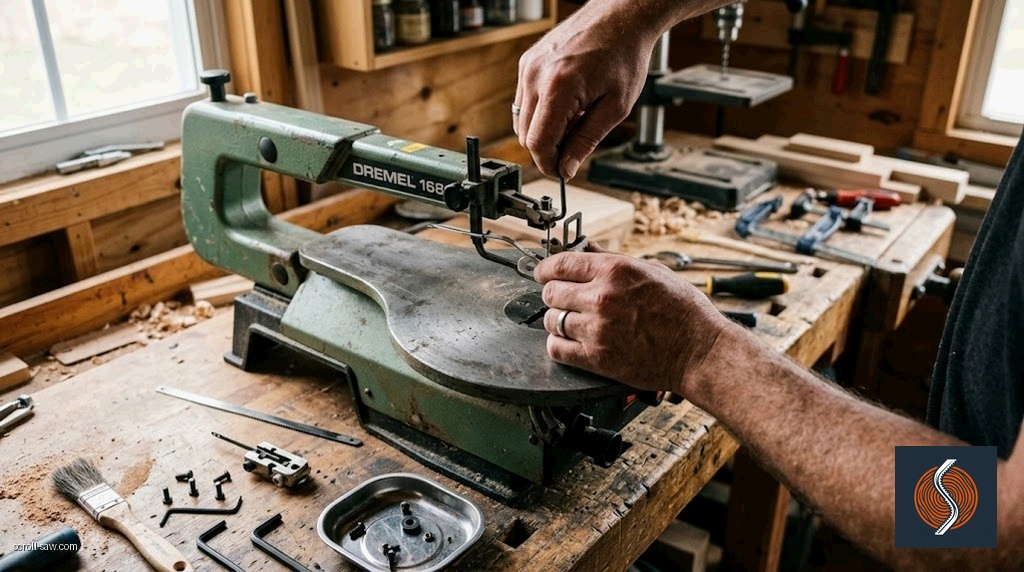
Dremel Model 1680 Scroll Saw Blades: Clean Curves
There is a specific frustration that hits Dremel 1680 owners a few months into ownership. The saw cuts fine on straight lines. It cuts fine on gentle curves. But somewhere in the middle of a pattern, the blade starts to drift, or grab, or leave a rougher edge than it did on the last piece. The pattern was drawn correctly, the workpiece was aligned, the operator was doing everything the same way. What changed?
Almost always, the blade. Either it dulled, or it was the wrong choice for the specific cut the pattern demanded. This guide focuses on the second half of that: how to choose Dremel Model 1680 blades so curves come out clean and feed pressure stays under control.
The 1680’s blade format
The Dremel Model 1680 uses standard 5-inch pin-end scroll saw blades. Any modern 5-inch pin-end blade from Olson, Flying Dutchman, or Pegas fits the clamps and cuts correctly. The blade market for this format is healthy despite the 1680 itself being out of production.
Clean curves: blade width vs curve radius
A scroll saw blade cannot turn a curve tighter than its body allows. Blade width, not kerf width, sets the practical minimum radius. Try to cut a 1/16-inch inside curve with a #7 blade and the blade will bind, snap, or leave a wobbly arc.
Minimum radii for 5-inch pin-end blades on the 1680:
-
#2/0 to #2: 1/32 to 1/16 inch, for very fine fretwork
-
#3 to #5: 1/8 inch, for most pattern work
-
#7 to #9: 3/16 inch or wider, for stack cutting and heavier material
Rule for pattern work: match blade width to the tightest inside curve in the pattern, not to the average. If one detail needs a 1/16-inch curve and everything else is generous, still use a #2 blade throughout the piece. Consistency matters more than optimizing each cut.
Controlled feed: tooth geometry
Feed that feels controlled (the blade cuts steadily without grabbing or hesitating) depends on how quickly the tooth clears its chip. That is a tooth geometry question.
Skip-tooth blades have every other tooth removed. Larger gullets clear chips faster, and feed pressure stays light. The default for the 1680 in most hobby work.
Standard-tooth blades have all teeth engaged. Chips accumulate in the gullets faster, feed pressure goes up. Fine for thin material where chip volume is small.
Reverse-tooth blades have the last five or six teeth reversed. Feed pressure is slightly higher than skip-tooth because more teeth engage. The tradeoff is a clean exit face on plywood.
Precision-ground blades have ground teeth. Feed pressure drops noticeably. On the 1680’s small motor, precision-ground blades reduce motor labor and let the operator feed lighter.
Double-tooth blades pair skip and standard patterns. Middle-ground feed and finish.
Matching blade to project
Fine fretwork in 1/8 to 1/4-inch Baltic birch: #3 reverse-tooth. Feed light, speed 1,000 to 1,300 SPM.
General pattern work in 1/4 to 1/2-inch soft wood or plywood: #5 skip-tooth. Feed moderate, speed 1,100 to 1,400 SPM.
Thicker soft wood, 3/4 inch: #7 skip-tooth. Speed 1,000 to 1,200 SPM.
Hardwood 1/2 to 3/4 inch: #7 precision-ground pin-end. Feed light, speed 800 to 1,000 SPM. Precision-ground blades earn their higher cost in hardwood on this saw.
Acrylic under 1/4 inch: #5 skip-tooth at 500 to 800 SPM.
Very tight curve pattern work: #2 or #2/0. Speed 1,000 to 1,200 SPM. Blade life short but the cut is possible.
Stock recommendation
A working 1680 blade stock:
-
Two dozen #5 skip-tooth pin-end (primary, general work)
-
One dozen #3 reverse-tooth pin-end (plywood fretwork)
-
One dozen #7 skip-tooth or precision-ground pin-end (thicker or harder material)
-
Optional: a few #2 blades for tight curves
-
Optional: metal-cutting pin-end blades if you cut occasional non-ferrous sheet
A 12-pack of Olson pin-end skip-tooth blades covers the primary blade slot at reasonable cost.
Testing a fresh blade
A fresh blade should cut a straight line in scrap without conscious steering. If it wanders, the blade is bent, the tension is wrong, or the clamps are dirty. Diagnose before starting a real project.
A fresh blade should cut a controlled curve at moderate feed pressure. If it grabs into the wood and pulls the workpiece, either tension is low or the blade is too aggressive.
A fresh blade should leave a clean top-face edge. Rough top edges mean the blade is dull or the operator is feeding too fast.
Small habits
Break in new blades with slow-speed cutting for the first minute.
Detension between sessions.
Brush the pin holes clean at every blade change.
Match speed to material.
Rotate partially worn blades to lighter work.
Store blades flat in a divided case.
When blade choice cannot fix it
Three fresh blades of the correct type in sequence, all cutting poorly, points at the saw. Common causes: worn upper arm bearings, stripped tension mechanism, elongated clamp pin holes, slipping drive belt.
Who this saw fits
The 1680 works well for hobby pattern cutting in soft wood, plywood, and occasional hardwood. It does not fit production hardwood work or high-volume fine fretwork.
FAQ
What blades fit the Dremel Model 1680? Standard 5-inch pin-end scroll saw blades.
Best all-purpose blade? A #5 skip-tooth pin-end.
Tightest curve I can cut? About 1/16 inch with a #2 blade in soft wood.
Why does my blade grab under feed pressure? Low tension or a blade too aggressive for the material.
Are precision-ground blades worth the cost? In hardwood, yes.
Can I cut stack pieces? Thin stock stacked to about 3/4 inch total, yes.
Is the Model 1680 still made? No. Blades and some parts remain available.
References
-
Olson Saw Company. Pin-end scroll saw blade catalog and material guide.
-
Dremel. Customer support and legacy scroll saw documentation.
-
Scroll Saw Village. Blade tooth geometry reference.
Title tag: Dremel Model 1680 Scroll Saw Blades: Clean Curves Meta description: Pick Dremel Model 1680 scroll saw blades for clean curves and controlled feed. Pin-end blade selection guide. URL slug: dremel-model-1680-scroll-saw-blades Excerpt: Blade selection for the Dremel Model 1680 scroll saw. How to match pin-end blades to curve radius, feed pressure, and material so pattern work comes off clean.


