
General International 16 in Scroll Saw: No Burn, No Wander
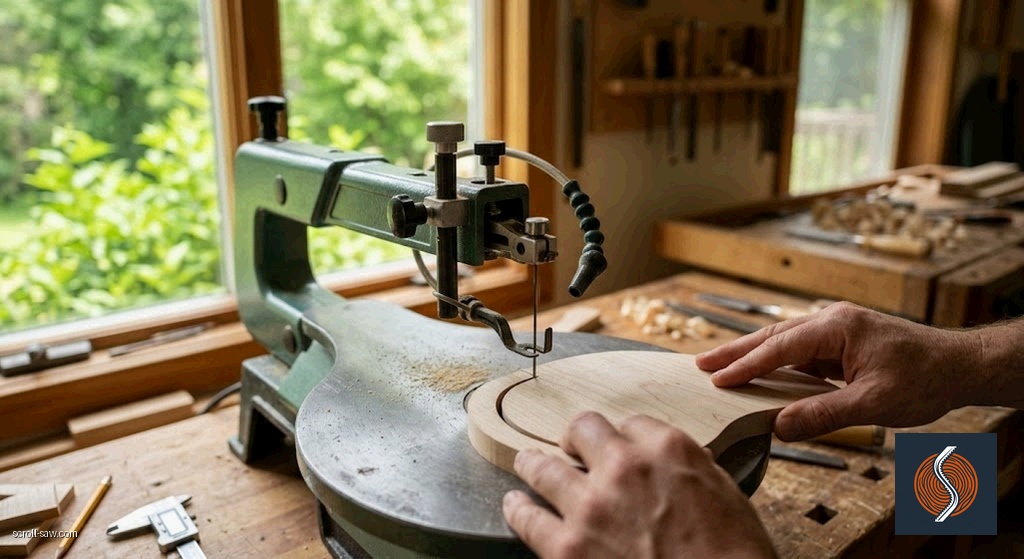
General International 16 in Scroll Saw: No Burn, No Wander
There is a specific kind of frustration that comes from watching a scroll saw cut walk away from a pencil line while the operator is doing everything right. The pattern was drawn correctly. The workpiece is flat. The blade is fresh. And still the cut wanders, or the wood shows a burn stripe along the kerf, and the finished piece needs sanding to look presentable.
On the General International 16-inch 1.2 amp variable speed scroll saw, wander and burn are usually the same problem in different clothing. Both come from mismatched speed, feed, and blade for the material being cut. Getting the three variables lined up correctly is what dialing in a scroll saw actually means.
About this saw
The General International 16-inch 1.2 amp variable speed scroll saw is a benchtop machine with a 16-inch throat, a 1.2 amp motor, and a variable speed control that ranges roughly from 550 to 1,650 SPM. It uses standard plain-end scroll saw blades on most units, with an adapter for pin-end blades available.
The 1.2 amp motor is small by scroll saw standards. That is not a defect. It is a design decision that keeps the saw quiet, keeps it easy on shop electrics, and keeps the machine cost reasonable. The tradeoff is that the motor has less headroom in dense material than a larger saw would, and the operator has to feed lighter in hardwood.
Burn: where it comes from
Burn on a scroll saw cut is a stripe of scorched wood along one or both sides of the kerf. It comes from the blade sitting in the wood too long relative to how much material each tooth is removing. Three variables cause it, in order of likelihood:
Speed too high for the material. At 1,600 SPM in oak, the blade passes through the same cut zone so many times per second that even a light contact heats the wood to scorch. Drop the speed.
Feed too slow. If the operator hesitates, the blade dwells in one spot and heats the surrounding wood. Feed continuously, not in pauses.
Blade dulled. A dull blade skates rather than cuts, generating friction heat. Replace the blade.
On this saw specifically, burn shows up most often in oak, walnut, maple, and any hardwood with dense grain. It shows up rarely in pine, poplar, or basswood. If your project material is hardwood, burn prevention starts with speed reduction.
Blade wander: where it comes from
Blade wander is the cut drifting away from the drawn pattern line. It happens for four main reasons:
Low tension. A blade under-tensioned bows sideways under feed pressure. The cut curves in the direction of the bow. Pluck-test after every blade change.
Wrong blade width for the curve. A wide blade forced into a tight curve pushes back sideways and wanders. Match blade width to the tightest curve in the pattern.
Feed pressure too high. Pushing the workpiece into the blade harder than the blade can remove material forces the blade sideways. Feed lighter.
Dull blade. A dull blade drifts even under correct tension and feed. Replace.
The speed and feed table for this saw
Starting points for the General International 16-inch 1.2 amp:
| Material | Thickness | Blade | Speed |
|---|---|---|---|
| Baltic birch plywood | 1/8 in | #3 reverse-tooth | 1,000 to 1,300 SPM |
| Baltic birch plywood | 1/4 in | #5 reverse-tooth | 1,100 to 1,400 SPM |
| Baltic birch plywood | 1/2 in | #7 skip-tooth | 1,000 to 1,200 SPM |
| Pine, poplar | 1/4 to 3/8 in | #5 skip-tooth | 1,200 to 1,500 SPM |
| Pine, poplar | 1/2 to 3/4 in | #7 skip-tooth | 1,000 to 1,300 SPM |
| Oak, maple, cherry | 1/2 in | #5 or #7 precision-ground | 800 to 1,000 SPM |
| Oak, maple, cherry | 3/4 in | #7 or #9 precision-ground | 700 to 900 SPM |
| Acrylic | 1/8 to 1/4 in | #5 skip-tooth | 500 to 800 SPM |
| Thin brass, aluminum | Up to 20 gauge | Metal-cutting blade | 550 to 700 SPM |
Feed technique
Feed pressure on this saw should be steady and light. The blade does the work. The operator’s job is to keep the workpiece moving along the pattern line at a rate that matches how fast the blade is removing material.
Signs of correct feed:
-
Continuous ribbon of shaving from the kerf, not fine dust
-
Motor sound stays consistent under feed
-
Blade tracks the pattern line without drift
-
No burn visible along the kerf edge
Signs of feed too fast:
-
Motor sound drops in pitch under load
-
Blade drifts sideways from the pattern line
-
Blade breakage frequency increases
Signs of feed too slow:
-
Burn stripe along kerf edge in hardwood
-
Fine dust rather than shaving
-
Operator’s hands cramp from holding position too long
Blade tension
Tension the blade to a clear high pluck note. On a #5 plain-end blade at this saw’s tension range, that note sits around a high C. Tension checks happen after every blade change and again ten minutes into any long session.
Blade tension drift is normal on this saw as the blade heats and cools during use. Recheck partway through a long project.
Small habits
Detension between sessions.
Brush the blade clamps clean at every blade change.
Match speed to material before starting the cut.
Start the motor before feeding the workpiece.
Feed in a continuous motion; hesitation causes burn.
Stock a rotation of three blades: #5 skip-tooth for general work, #3 reverse-tooth for plywood fretwork, #7 skip-tooth or precision-ground for hardwood. Olson makes these in dozen packs at reasonable cost.
When dialing in cannot fix it
A saw that still wanders or burns after correct blade, tension, and speed points at a mechanical issue. Check for:
-
Loose motor mount bolts
-
Worn upper arm bearings (lateral play in the arm)
-
Stripped blade clamp jaws
-
Table not perpendicular to the blade
The last one is worth an occasional check. Set a small square against the blade with the table at 0 degrees bevel. Any gap between the square and the blade means the table is not square, and cuts will drift in ways that no amount of blade adjustment fixes.
Who this saw fits
The General International 16-inch 1.2 amp fits the hobbyist cutting soft wood pattern work, Baltic birch fretwork, and occasional hardwood at moderate thickness. It is not a production saw and it is not sized for daily heavy work.
For that use case, the saw dials in well and rewards attention to speed, feed, and blade choice.
FAQ
Why does my scroll saw burn oak? Speed too high or feed too slow. Drop to 800 to 1,000 SPM and keep feeding continuously.
Why does my blade wander? Low tension, wrong blade width, or too much feed pressure.
What blade should I start with? A #5 skip-tooth for general work.
Does this saw take pin-end blades? Plain-end is standard. An adapter is available for pin-end.
How thick can this saw cut? About 2 inches at 90 degrees on soft wood.
How do I test blade tension? Pluck the blade with a fingernail. Clear high note means correct tension.
Is this saw good for beginners? Yes. The small motor is forgiving and the variable speed makes learning cut behavior easier.
References
-
Olson Saw Company. Plain-end scroll saw blade catalog and material selection.
-
Scroll Saw Village. Speed and feed reference for benchtop scroll saws.
-
Scroll Saw Woodworking & Crafts forum. Burn and wander troubleshooting discussions.
Title tag: General International 16 in Scroll Saw: No Burn, No Wander Meta description: Dial in the General International 16-inch 1.2 amp scroll saw to eliminate burning and blade wander through speed, feed, and blade choice. URL slug: general-international-16-in-1-2-amp-variable-speed-scroll-saw Excerpt: Burn and wander on the General International 16-inch 1.2 amp scroll saw are the same problem in different clothes. A practical dial-in guide for speed, feed, and blade selection.


