
Rikon 16 Scroll Saw: Setup by Material and Thickness
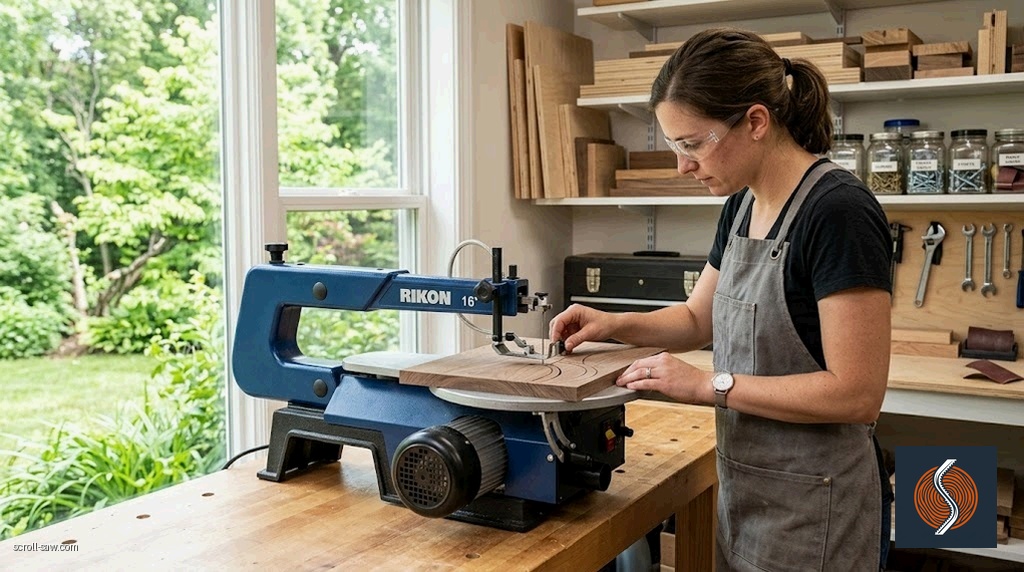
Rikon 16 Scroll Saw: Setup by Material and Thickness
The Rikon 16-inch variable speed scroll saw (the 10-600VS and its close relatives in Rikon’s benchtop line) is a well-built mid-price saw that rewards attention to setup. It has enough motor power to handle hardwood at moderate thickness, enough throat to fit most hobby pattern work, and enough speed range to move between wood, plastic, and thin metal without changing machines. What it does not do is set itself up. Every material has its own combination of blade, speed, and feed, and cuts look right or wrong depending on whether the operator makes those changes.
This guide covers those changes material by material, at the thicknesses most Rikon 16 owners actually cut.
Before starting
Check the saw’s basic condition. Work the tension mechanism through its full range with no blade installed. Look for lateral play in the upper arm. Brush the blade clamps clean. Any of these three items catch problems that would otherwise get blamed on blade choice later.
Most Rikon 16 units use plain-end scroll saw blades with tool-free cam clamps. Some earlier or specialty units may differ; check your specific saw.
Soft wood: pine, poplar, basswood
Soft wood is where the Rikon 16 is happiest. The motor has plenty of headroom, blade life is long, and cuts come off clean with basic setup.
1/8 to 3/8 inch: #5 skip-tooth plain-end blade at 1,200 to 1,500 SPM. Feed moderate to firm. Blade life on soft wood at this thickness is 40 to 60 minutes of continuous cutting.
1/2 to 3/4 inch: #7 skip-tooth at 1,000 to 1,300 SPM. Feed moderate. Reduce speed slightly if you see burn marks on the kerf edge.
1 inch and thicker: #9 skip-tooth at 800 to 1,000 SPM. This is near the practical top end. Session length shortens because motor works harder.
Hardwood: oak, maple, cherry, walnut
Hardwood shows the Rikon 16’s motor working harder than in soft wood. The saw handles it well up to about 3/4 inch, but the operator has to feed lighter and expect shorter blade life.
Under 1/2 inch: #5 skip-tooth or precision-ground #5 at 900 to 1,100 SPM. Precision-ground blades cut with noticeably less feed pressure.
1/2 to 3/4 inch: #7 precision-ground at 800 to 1,000 SPM.
Over 3/4 inch: #9 precision-ground at 700 to 900 SPM. Cuts get slow but they come off clean.
Plywood: Baltic birch, hardwood-faced
Baltic birch is the workhorse material for scroll saw pattern work. The Rikon 16 cuts it cleanly. The variable is the exit face; if the underside will show, reverse-tooth blades save the sanding step.
1/8 inch Baltic birch: #3 reverse-tooth at 1,000 to 1,300 SPM.
1/4 inch Baltic birch: #5 reverse-tooth at 1,100 to 1,400 SPM.
3/8 to 1/2 inch plywood: #5 or #7 skip-tooth at 1,000 to 1,200 SPM. Reverse-tooth in these sizes is harder to source.
Hardwood-faced plywood cuts like the harder face material. Set speed and blade accordingly.
Acrylic and plastic
Acrylic cuts on the Rikon 16 with speed dropped low and feed steady.
Cast acrylic 1/8 inch: #5 skip-tooth at 500 to 800 SPM.
Cast acrylic 1/4 inch: #7 skip-tooth at 400 to 700 SPM. Cutting wax on the blade helps.
Extruded acrylic cuts easier but chips more at the exit face. Cast acrylic is better for scroll saw work.
Polycarbonate: like acrylic but slightly higher speeds tolerated. 600 to 900 SPM.
Thin metal
The Rikon 16 handles thin non-ferrous sheet occasionally.
Brass or copper 20 gauge: metal-cutting blade at 400 to 600 SPM. Very slow feed. Cutting wax.
Aluminum 20 gauge: fine-tooth blade at 500 to 700 SPM. Wax the blade generously.
Metal work is occasional on this saw. For regular metal cutting, a different tool is right.
Blade rotation
Most Rikon 16 owners stock:
-
Two dozen #5 skip-tooth plain-end blades (general work)
-
One dozen #3 reverse-tooth (plywood fretwork)
-
One dozen #7 skip-tooth or precision-ground (thick or hard material)
-
A few metal-cutting blades (occasional metal work)
Olson plain-end skip-tooth blades cover the primary slot in dozen packs.
Feed technique
Correct feed produces a continuous ribbon of shaving from the kerf. Fine dust means feed too slow or blade dull. Motor pitch drop under load means feed too fast. Continuous, deliberate feed prevents most cut quality problems.
Blade tension
Pluck-test after every blade change. A #5 plain-end blade at correct tension gives a clear high pluck note. Recheck partway through long sessions.
Small habits
Detension between sessions.
Brush the clamps clean at every blade change.
Start the motor before feeding.
Match speed to material before starting.
Wipe the saw clean at end of each session.
Who this saw fits
The Rikon 16-inch variable speed fits the hobbyist or light-professional scroller cutting a mix of pattern work across materials. It handles wood, plywood, and occasional plastic or metal without changing machines.
It does not fit continuous production; a heavier saw is right for that.
FAQ
What is the best all-purpose blade for the Rikon 16? A #5 skip-tooth plain-end.
Can this saw cut hardwood? Up to 3/4 inch cleanly, thicker with reduced session length.
How thick can this saw cut? About 2 inches at 90 degrees on soft wood.
Why does my acrylic melt back? Speed too high or feed too slow.
Does the Rikon 16 take pin-end blades? Plain-end is standard.
How long does a blade last? 30 to 60 minutes of continuous cutting on typical hobby material.
Do I need cutting wax? For plastic and metal, yes. For wood, no.
References
-
Rikon Power Tools. 16-inch scroll saw product documentation.
-
Olson Saw Company. Plain-end scroll saw blade catalog.
-
Scroll Saw Village. Speed and feed reference for benchtop saws.
Title tag: Rikon 16 Scroll Saw: Setup by Material and Thickness Meta description: Practical setup for the Rikon 16-inch variable speed scroll saw across wood, plywood, acrylic, and thin metal. URL slug: rikon-16-variable-speed-scroll-saw Excerpt: A material-by-material setup guide for the Rikon 16-inch variable speed scroll saw. Blade, speed, and feed settings for clean cuts in soft wood, hardwood, Baltic birch, acrylic, and thin non-ferrous metal.


