
Ryobi 16 Inch Scroll Saw Blades: Clean Curves
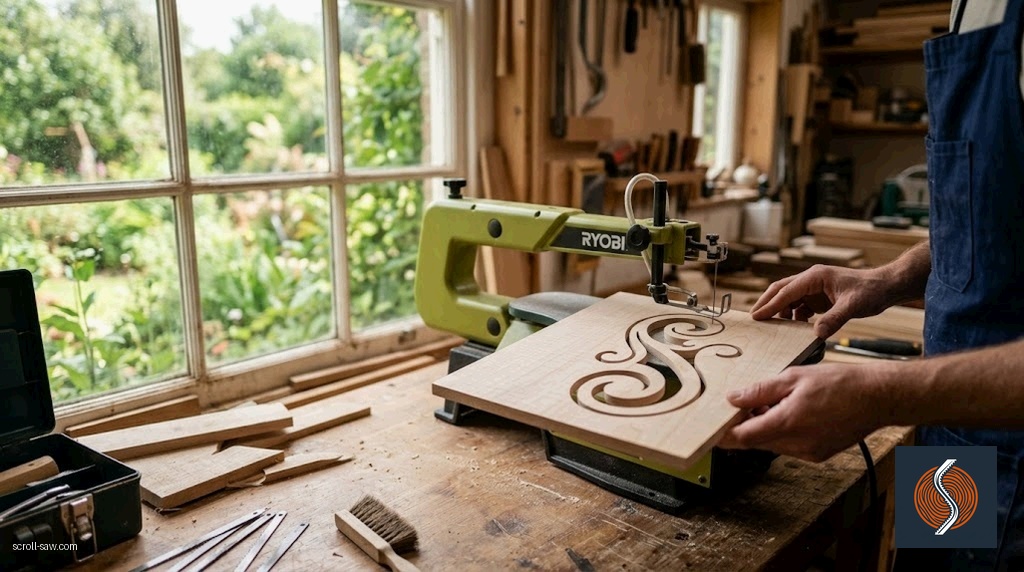
Ryobi 16 Inch Scroll Saw Blades: Clean Curves
Ryobi’s 16-inch scroll saws have been a fixture in home shops for decades. The SC162VS and SC164VS variants are still turning up on used equipment sites and in family workshops, and the current generation of Ryobi scroll saws follows the same basic design pattern. Owners hit the same question regardless of vintage: which blades cut best on this saw, and how do you pick them for clean curves and controlled feed?
The answers are consistent across the Ryobi 16-inch line. The saw uses plain-end scroll saw blades on most units (with an adapter available for pin-end blades on some models). Blade choice matters more than any other single variable for cut quality, and the specific priorities are curve tracking and feed feel.
Blade format
Most Ryobi 16-inch scroll saws use standard 5-inch plain-end blades. Some older or specific units use pin-end blades or accept both formats through a swappable clamp. Check your specific saw’s clamp before ordering.
Any modern 5-inch plain-end blade from Olson, Pegas, Flying Dutchman, or Niqua fits a Ryobi 16 with plain-end clamps.
Clean curves: blade width vs curve radius
A scroll saw blade cannot turn a curve tighter than its body allows. Blade width sets the minimum radius; kerf follows blade width closely but is not the direct constraint.
Minimum radii for 5-inch scroll saw blades on the Ryobi 16:
-
#2/0 to #2: 1/32 to 1/16 inch, for very fine fretwork
-
#3 to #5: 1/8 inch, for standard pattern work
-
#7 to #9: 3/16 inch or wider, for stack cuts and heavier material
Match blade width to the tightest inside curve in the pattern.
Controlled feed: tooth geometry
Feed pressure feels controlled when the tooth removes material at the same rate the operator advances the workpiece. That is a tooth geometry question.
Skip-tooth blades feed lightly. Larger gullets clear chips quickly.
Standard-tooth blades feed heavier. Chips accumulate in gullets.
Reverse-tooth blades feed slightly heavier than skip-tooth (more teeth engaged) but clean the exit face on plywood.
Precision-ground blades feed the lightest. Sharp ground teeth engage cleanly.
Double-tooth blades pair skip and standard patterns. Middle ground.
On the Ryobi 16, precision-ground blades produce noticeably lighter feel in hardwood because the motor is modest and reduced feed pressure helps.
Matching blade to project
Fine fretwork in 1/8 to 1/4-inch Baltic birch: #3 reverse-tooth. Speed 1,000 to 1,300 SPM. Light feed.
General pattern work in 1/4 to 1/2-inch soft wood or plywood: #5 skip-tooth. Speed 1,200 to 1,400 SPM. Moderate feed.
Thicker soft wood, 3/4 inch: #7 skip-tooth. Speed 1,000 to 1,200 SPM.
Hardwood 1/2 to 3/4 inch: #7 precision-ground. Feed light, speed 800 to 1,000 SPM.
Acrylic under 1/4 inch: #5 skip-tooth at 500 to 800 SPM. Cutting wax on the blade.
Very tight curves in fine fretwork: #2 or #2/0 blade of appropriate tooth style at 1,000 to 1,200 SPM.
Stock recommendation
A working Ryobi 16 blade drawer:
-
Two dozen #5 skip-tooth plain-end (primary)
-
One dozen #3 reverse-tooth plain-end (plywood fretwork)
-
One dozen #7 skip-tooth or precision-ground plain-end (thicker or harder wood)
-
A few metal-cutting blades in 30+ TPI (occasional metal)
A 12-pack of Olson plain-end scroll saw blades covers the primary blade slot.
Blade tension and clamp habits
Correct tension on the Ryobi 16 is a clear high pluck note when you snap the blade with a fingernail.
Brush the blade clamps clean before every blade change. Dust in the clamp jaws prevents uniform grip.
Check clamp faces for grooves. Grooved clamps grip the blade at only one point, producing shift under load.
Small habits
Break in new blades with slow-speed cutting.
Detension between sessions.
Match speed to material.
Feed continuously; hesitation causes burn.
Rotate partially worn blades to lighter work.
Store blades flat in a divided case.
When blade choice cannot fix it
Three fresh blades of the correct size, at correct tension, in clean clamps, still cutting poorly points at the saw. Check upper arm bearings, motor mount, and table square.
Who this covers
This guide fits owners of any Ryobi 16-inch scroll saw, including the SC162VS, SC164VS, current Ryobi benchtop models, and the various rebranded units from Ryobi’s OEM history. The blade selection principles are the same across the line.
FAQ
What blades fit a Ryobi 16-inch scroll saw? Most use 5-inch plain-end blades. Some older units use pin-end.
What is the best all-purpose blade? A #5 skip-tooth plain-end.
Are Ryobi-branded blades required? No. Any quality plain-end blade of the correct size fits.
Why do my curves wander? Low tension, wrong blade width, or excess feed pressure.
How long does a blade last? 30 to 60 minutes of continuous cutting on typical hobby wood.
Are precision-ground blades worth the cost? In hardwood, yes.
How thick can a Ryobi 16 cut? About 2 inches at 90 degrees on soft wood.
References
-
Olson Saw Company. Plain-end scroll saw blade catalog and material guide.
-
Ryobi Power Tools. Scroll saw product documentation.
-
Scroll Saw Woodworking & Crafts forum. Ryobi scroll saw discussion archive.
Title tag: Ryobi 16 Inch Scroll Saw Blades: Clean Curves Meta description: Pick Ryobi 16-inch scroll saw blades for clean curves and controlled feed. Plain-end blade selection guide. URL slug: ryobi-16-inch-scroll-saw-blades Excerpt: Blade selection for the Ryobi 16-inch scroll saw. How to match plain-end blades to curve radius, feed pressure, and material for clean pattern work.


