
Ryobi SC164VS Scroll Saw: Clean Curves
Ryobi SC164VS Scroll Saw: Clean Curves
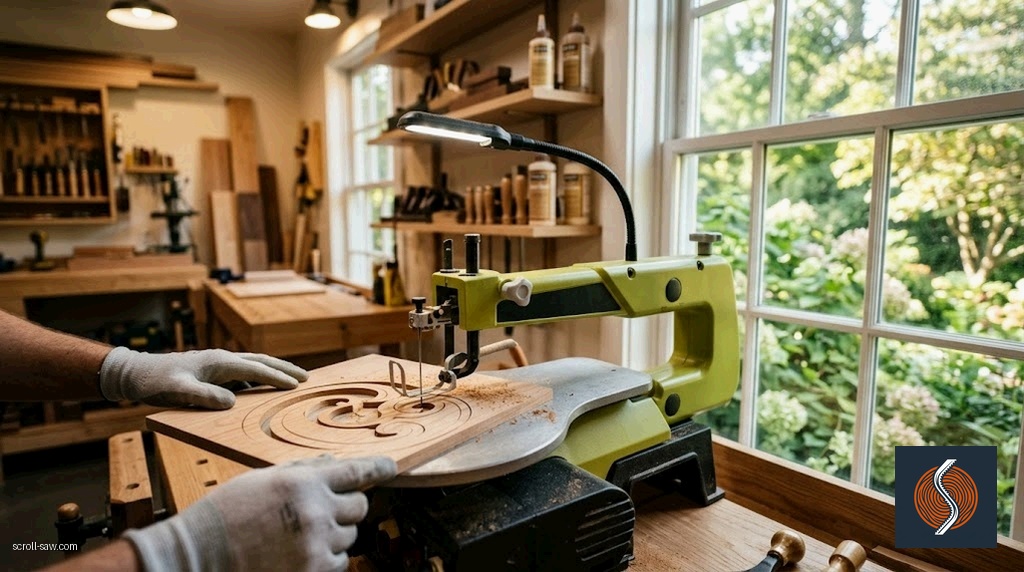
The Ryobi SC164VS is the follow-up model to the SC162VS in Ryobi’s scroll saw line. It kept the 16-inch throat and the variable speed motor, and it made small improvements to blade change, dust extraction, and table adjustment. The result was a saw that a lot of home scrollers used through the late 1990s and into the 2000s, and units are still turning up on used markets and in inherited shops.
The SC164VS runs well on standard plain-end blades and is capable across a range of materials once the operator learns which blades match which projects. Cut quality on this saw is more about blade selection and technique than any structural feature of the saw itself.
About the SC164VS
The Ryobi SC164VS is a benchtop scroll saw with a 16-inch throat, a variable speed motor ranging roughly from 400 to 1,600 SPM, a cast-aluminum tilting table, and tool-free blade change. It uses standard 5-inch plain-end blades.
The motor is modest by scroll saw standards. That is not a defect. It means the saw runs quiet, is easy on shop electrics, and stays reasonable in cost. The tradeoff is that hardwood over 3/4 inch or continuous production cutting stresses the motor more than a heavier saw would experience.
Clean curves: blade width vs curve radius
A blade cannot turn a curve tighter than its width allows. Match blade width to the tightest inside curve in your pattern.
Very tight curves (1/32 inch inside radius): #2/0 or #2 blade.
Tight curves (1/16 inch): #3 blade.
Standard pattern curves (1/8 inch): #5 blade.
Broad curves and straight cuts (3/16 inch or wider): #7 or #9 blade.
On the SC164VS, tight-curve work benefits from the saw’s steady low-speed operation. Ryobi’s speed control on this generation was reasonably good at low SPM, which matters for tight curves where fast blade movement makes precise pattern following difficult.
Controlled feed: tooth geometry
Feed feels controlled when the tooth removes material at the same rate the operator advances the workpiece.
Skip-tooth: light feed, good chip clearance. Workhorse geometry.
Standard-tooth: heavier feed, denser tooth pattern.
Reverse-tooth: slightly heavier than skip-tooth but cleans exit face on plywood.
Precision-ground: lightest feed. Sharp edges engage cleanly.
For the SC164VS’s modest motor, precision-ground blades in hardwood reduce operator effort noticeably and keep the motor from lugging.
Matching blade to project
Fine fretwork in 1/8 to 1/4-inch Baltic birch: #3 reverse-tooth at 1,000 to 1,300 SPM. Light feed.
General pattern work in 1/4 to 1/2-inch soft wood or plywood: #5 skip-tooth at 1,100 to 1,400 SPM.
Thicker soft wood, 3/4 inch: #7 skip-tooth at 1,000 to 1,200 SPM.
Hardwood 1/2 to 3/4 inch: #7 precision-ground at 800 to 1,000 SPM.
Acrylic under 1/4 inch: #5 skip-tooth at 500 to 800 SPM with cutting wax.
Very tight curves in fine fretwork: #2 or #2/0 at 1,000 to 1,200 SPM.
Stock recommendation
-
Two dozen #5 skip-tooth plain-end (primary)
-
One dozen #3 reverse-tooth plain-end (plywood fretwork)
-
One dozen #7 skip-tooth or precision-ground (thicker/harder)
-
A few metal-cutting blades in 30+ TPI
A dozen pack of Olson plain-end scroll saw blades covers the primary blade slot at reasonable cost.
Blade tension and clamp habits
Pluck-test after every blade change. Clear high note for a #5 blade.
Brush the clamps clean before every blade change. Dust prevents uniform grip.
Check clamp faces for grooves. Grooved clamps grip the blade at only one point.
Small habits
Break in new blades with slow-speed cutting.
Detension between sessions.
Match speed to material before starting.
Start the motor before feeding.
Rotate partially worn blades to lighter work.
Store blades flat in a divided case.
When blade choice cannot fix it
Mechanical issues that cause bad cuts on an SC164VS: worn upper arm bearings, loose motor mount, table not square, worn blade clamp jaws.
Who this saw fits
The SC164VS fits hobby pattern work in soft wood, plywood, and occasional hardwood or plastic. For that use, it performs well when blade choice matches material.
FAQ
What blades fit the SC164VS? Standard 5-inch plain-end blades.
Best all-purpose blade? #5 skip-tooth.
Why do my curves wander? Low tension, wrong blade width, or excess feed pressure.
How long does a blade last? 30 to 60 minutes of continuous cutting on typical hobby material.
How thick can it cut? About 2 inches at 90 degrees on soft wood.
Are precision-ground blades worth it? In hardwood, yes.
Is the SC164VS still supported? Blades and consumables yes; specific parts may require sourcing from used stock.
References
-
Ryobi Power Tools. Scroll saw legacy documentation.
-
Olson Saw Company. Plain-end scroll saw blade catalog.
-
Scroll Saw Woodworking & Crafts forum. SC164VS owner discussions.
Title tag: Ryobi SC164VS Scroll Saw: Clean Curves Meta description: Blade selection for the Ryobi SC164VS 16-inch variable speed scroll saw. Clean curves and controlled feed. URL slug: ryobi-16-variable-speed-scroll-saw-sc164vs Excerpt: Blade selection for the Ryobi SC164VS variable speed scroll saw. How to match plain-end blades to curve radius, feed pressure, and material.


