
Sears Craftsman 16 Variable Speed Scroll Saw: Fix Cuts
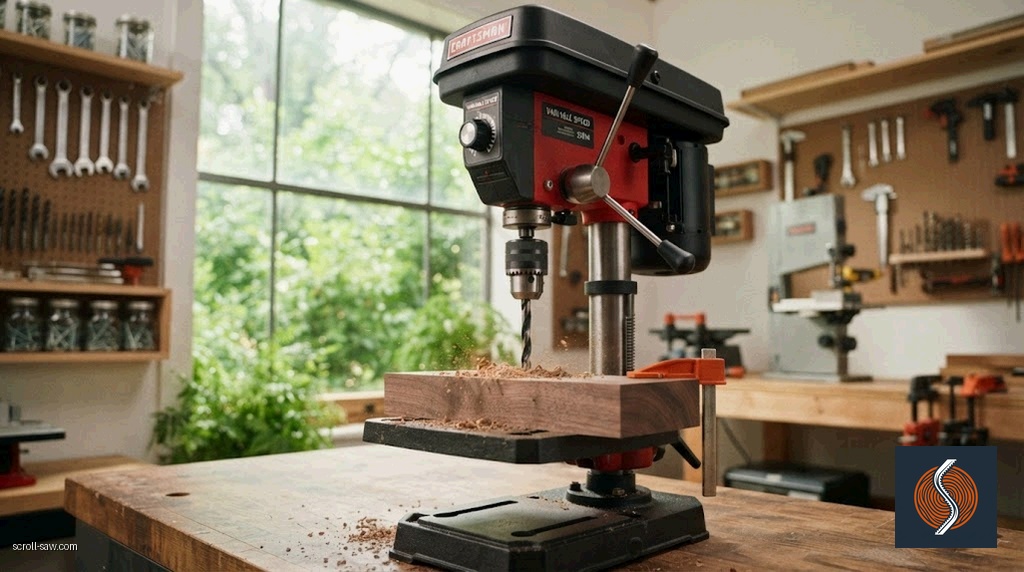
Sears Craftsman 16 Variable Speed Scroll Saw: Fix Cuts
Craftsman scroll saws have long useful lives. A well-maintained Craftsman 16-inch variable speed saw from the 1990s can still cut cleanly today. What happens over that span is drift: parts wear slightly, adjustments loosen, dust accumulates in places it should not, and one day the cuts that were fine yesterday are not fine anymore. The fixes are usually simple, and most owners can work through them without shop tools.
Here is what to change, in the order that fixes most problems fastest.
First: the blade
A fresh blade fixes about 60 percent of sudden cut-quality drops.
Swap in a fresh blade in the right size. A #5 skip-tooth for general work, #7 for thick or hard wood, #3 reverse-tooth for plywood fretwork.
Cut a test line in scrap. If clean, the problem was blade wear.
Then: blade tension
Craftsman 16-inch scroll saws tension from a lever or knob on the upper arm depending on model. Correct tension is a clear high pluck note when the blade is snapped with a fingernail.
Check the tension mechanism engages fully. A partly engaged lever leaves the blade under-tensioned.
Recheck tension partway through long sessions.
Then: blade clamps
Craftsman blade clamps vary by model. Some use set screws. Some use cam levers. Both develop wear.
With the saw unplugged, open the clamps. Check the gripping face for grooves. Fine grooves clean up with steel wool. Deep grooves mean replacement.
Check for dust in the clamp jaws. Brush clean at every blade change.
Then: the tension mechanism
With no blade installed, work the tension mechanism through its range. Smooth motion is right. Binding means the pivot needs light machine oil.
On cam systems, check that the cam engages fully. Worn cams do not close completely.
Then: the arm
With the saw unplugged and no blade installed, work the upper arm up and down. Feel for lateral play or roughness. Smooth motion with no side movement is right.
Lateral play in the arm means upper arm bearings are worn. Replacement varies in difficulty by model; some are straightforward, some require partial saw disassembly. Sears/Craftsman parts service handles this on saws still supported.
Then: the motor
With the saw running under no load, listen for smooth consistent motor sound. Hunting or varying RPM means brush wear or speed control issues.
Under load, the motor should hold speed without dropping noticeably. Significant drop points at brush wear, capacitor issues, or drive belt slip on models with a belt.
Then: the table
Check that the table is perpendicular to the blade at 0 degrees bevel. Use a small square. Any gap between blade and square means table adjustment is needed per the manual.
The order matters
Blade, tension, clamps, mechanism, arm, motor, table. Working through in this order fixes almost all cut-quality complaints on Craftsman 16-inch variable speed saws.
Parts availability
Sears/Craftsman parts availability varies by model. Older 113 and 137-series parts are increasingly hard to source. Newer 21600-series and current Craftsman parts remain available.
For blades, clamp inserts, and general consumables, third-party sources (Olson, Pegas) provide everything needed. For motor or arm bearing replacement on older saws, sourcing may require patience with the used market.
A dozen pack of Olson skip-tooth blades covers the primary blade slot.
Habits
Detension between sessions.
Brush the clamps clean at every blade change.
Store blades flat in a divided case.
Wipe the saw and table clean at end of each session.
Oil the arm pivot annually.
When repair cost approaches new-saw cost
Craftsman scroll saws are mid-range consumer tools. Their per-part cost was not designed around long-term service. If motor or arm bearing failure occurs on an older saw, comparing repair cost to a new saw (Rikon 10-600VS, DeWalt DW788, or current Craftsman) makes sense.
For blade, clamp, and adjustment wear, repair is almost always right.
Who this covers
This guide applies to Sears Craftsman 16-inch variable speed scroll saws across model years, including 113-series, 137-series, 315-series, and 21600-series units.
FAQ
Why did my Craftsman suddenly cut poorly? Usually a dulled blade. Replace first.
What blades does it use? 5-inch scroll saw blades. Pin-end or plain-end depending on model.
Is Sears service still available? Parts availability varies by model. Blades and consumables remain available from third parties.
How thick can it cut? About 2 inches at 90 degrees on soft wood.
Should I repair or replace an older Craftsman? For blade and clamp wear, repair. For motor or arm bearing failure on older saws, compare to new-saw cost.
How long does a blade last? 30 to 60 minutes of continuous cutting.
Do I need Craftsman-branded blades? No. Any quality 5-inch blade of the correct format fits.
References
-
Olson Saw Company. Scroll saw blade catalog.
-
Sears Craftsman parts and manual archive via ManualsLib.
-
Scroll Saw Woodworking & Crafts forum. Craftsman scroll saw discussion archive.
Title tag: Sears Craftsman 16 Variable Speed Scroll Saw: Fix Cuts Meta description: Restore cut quality on the Sears Craftsman 16-inch variable speed scroll saw. Blade, tension, clamps, arm, and motor checks. URL slug: sears-craftsman-16-variable-speed-scroll-saw Excerpt: What to change on the Sears Craftsman 16-inch variable speed scroll saw when cut quality drops. A step-by-step diagnostic in the order that fixes most problems fastest.


