
Olson Pinned Scroll Saw Blades: Better Cuts Guide
Olson Pinned Scroll Saw Blades: Better Cuts Guide
Olson makes scroll saw blades in both pin-end and plain-end formats, and while plain-end has become the dominant format for modern saws, pin-end blades remain the standard for a large installed base of older scroll saws. Sears Craftsman 16-inch saws, Ryobi SC162VS and SC164VS, Delta Shopmaster, older Dremel 1670-series, Central Machinery, and various other consumer saws from the 1980s and 1990s use pin-end blades.
Owners of these saws sometimes assume pin-end blades are lower quality or that the pin-end format itself limits cut quality. Neither is true. Olson pin-end blades cover the same tooth geometries and cutting capabilities as plain-end in most sizes, and pin-end saws can produce cuts equal to plain-end saws when the blade is right for the work.
What makes pin-end different
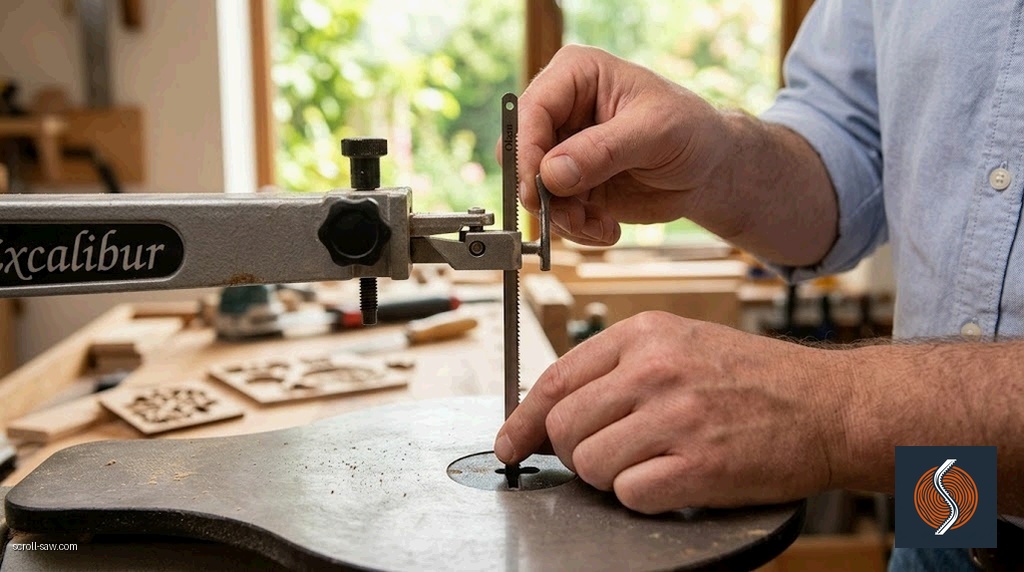
Pin-end blades have small cross-pins at each end, pressed through the blade body. The pins seat into cross-drilled holes in the saw’s blade clamps. Installation is fast: drop the blade into place, tension it, cut.
Plain-end blades have no pins. The clamps grip the flat blade body with set screws or cams.
The mechanical function is the same. The blade cuts on the down-stroke, tension holds the blade straight, and the arm carries the blade through its cycle.
Differences that matter in practice:
Blade change speed: Pin-end is slightly faster (about 15 to 20 seconds vs 30 seconds for plain-end tool-free clamps).
Blade selection: Plain-end has a slightly wider selection in specialty tooth geometries (precision-ground, ultra-fine, MGT).
Clamp wear: Plain-end clamps develop grooves at the gripping face over time. Pin-end clamps wear at the pin holes, but wear is slower.
Threading through work: Fine fretwork requires threading the blade through a start hole in the interior of the pattern. Pin-end requires a start hole large enough for the pin (roughly 1/8 inch). Plain-end requires only a hole large enough for the blade body itself (much smaller). For very fine fretwork, plain-end is more practical.
Getting better cuts with Olson pin-end blades
Cut quality on pin-end blades comes from the same variables as plain-end: correct blade for material, correct speed, correct tension, correct feed.
Blade selection for material: same principles as plain-end. #5 skip-tooth for general work, #3 reverse-tooth for plywood, #7 for thick or hard material.
Speed: same as plain-end. Fast for soft wood, slow for hardwood, very slow for plastic and metal.
Tension: pluck-test after installation. Clear high note for a #5 blade.
Feed: steady, light, continuous.
The biggest cut-quality difference on pin-end saws is not the blade format itself but the age and condition of the saw. Many pin-end scroll saws are older machines with worn arm bearings, loose motor mounts, and dust-clogged clamps. Restore the saw’s mechanical condition first; blade choice matters less on a saw that is not cutting straight to begin with.
Olson pin-end blade line
Olson makes pin-end blades in the same primary tooth geometries as plain-end:
Skip-tooth pin-end: workhorse. Sizes from #2/0 (fine) through #12 (aggressive). Best-selling blade format.
Standard-tooth pin-end: basic tooth pattern. Less common than skip-tooth but still available.
Reverse-tooth pin-end: some bottom teeth reversed to clean exit face on plywood. Available in medium sizes.
Metal-cutting pin-end: high TPI for thin non-ferrous sheet.
Spiral pin-end: teeth wrap around blade for all-directions cutting. Available in limited sizes.
What plain-end has that pin-end does not: precision-ground (PGT), Pegas MGT modified geometry, and ultra-fine sizes below #2/0.
For pin-end owners who want access to these specialty formats, a pinless blade adapter converts pin-end clamps to accept plain-end blades.
Recommended stock for pin-end saws
-
Two dozen #5 skip-tooth pin-end (primary)
-
One dozen #3 reverse-tooth pin-end (plywood fretwork)
-
One dozen #7 skip-tooth pin-end (thicker or harder wood)
-
A few metal-cutting pin-end blades
-
Optional: pinless adapter kit for specialty plain-end work
A dozen pack of Olson skip-tooth scroll saw blades covers the primary slot at reasonable cost.
Small habits with pin-end blades
Inspect the pins on new blades before installation. Occasionally a pin is loose in the blade body; those blades are duds and should be returned.
Check the pin holes on the clamps periodically. Enlarged or worn pin holes allow the blade to shift. Enlarged holes require clamp replacement.
Detension between sessions.
Match speed to material.
Start the motor before feeding.
Store blades flat.
When to consider switching to plain-end
Fine fretwork with many interior cuts: plain-end threads through smaller start holes.
Regular use of precision-ground or specialty blades: plain-end has wider selection.
Owner replacing the saw: current saws are mostly plain-end. Buying blade stock in plain-end anticipates the transition.
For most other use, pin-end blades work well and are slightly faster to change.
Getting the most out of a pin-end saw
Mechanical condition of the saw matters more than blade format for cut quality. A well-maintained pin-end saw with the right blade produces cuts equal to a plain-end saw. A worn or dusty saw produces poor cuts regardless of blade format.
Start with the saw. Check bearings, motor, table square, clamp condition. Then focus on blade selection.
FAQ
Are pin-end blades lower quality? No. Olson pin-end blades cover the same tooth geometries as plain-end in most sizes.
Can I use plain-end blades in a pin-end saw? Only with a pinless blade adapter.
Best all-purpose pin-end blade? #5 skip-tooth.
Do pin-end blades break more than plain-end? No. Blade breakage depends on tension, speed, and feed, not on end format.
Is my old pin-end saw worth using? Usually yes, if the arm bearings and motor are in good condition.
How long does a pin-end blade last? 30 to 60 minutes of continuous cutting.
Should I switch to plain-end? Only if the saw supports it or you buy a new saw. For an existing pin-end saw, pin-end blades work well.
References
-
Olson Saw Company. Pin-end scroll saw blade catalog.
-
Scroll Saw Woodworking & Crafts forum. Pin-end blade discussion archive.
-
Scroll Saw Village. Blade format reference.
Title tag: Olson Pinned Scroll Saw Blades: Better Cuts Guide Meta description: Get better cuts with Olson pin-end scroll saw blades. Selection, technique, and format comparison with plain-end. URL slug: olson-pinned-scroll-saw-blades Excerpt: Getting better cuts with Olson pin-end scroll saw blades. Blade selection, cutting technique, and the differences between pin-end and plain-end formats.


