
Scroll Saw Animal Patterns: Material Thickness, Blade Size, and Finishing Notes
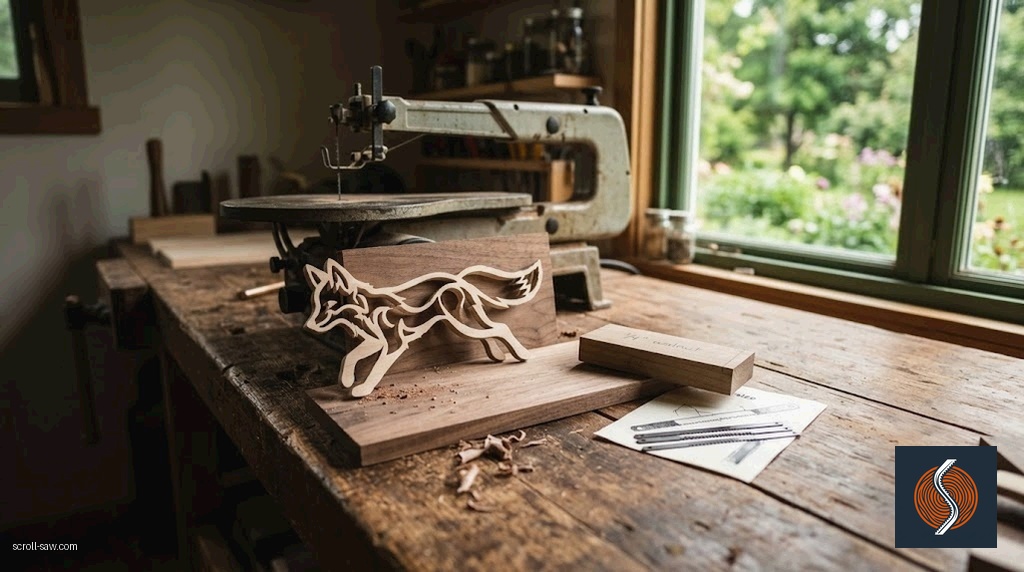
Scroll Saw Animal Patterns: Material Thickness, Blade Size, and Finishing Notes
Scroll saw animal patterns cover a huge range: farm animals for children’s puzzles, wildlife silhouettes for wall art, birds in fretwork detail, marine life, insects, fantasy creatures. It’s the largest single category of scroll saw pattern work.
Each animal has its own technical characteristics. A horse’s long legs require different grain planning than an owl’s compact form. A fish’s fins are different from a bear’s ears.
Short answer: 1/4-inch to 1/2-inch stock depending on scale, #5 reverse-tooth for outlines with #3 for detail, grain oriented along the animal’s longest fragile axis, pattern verification before cutting.
Animal categories and their characteristics
Farm animals (cow, pig, sheep, horse, goat, chicken): compact bodies, sometimes with legs or horns as fragile points. Grain along body length.
Wildlife mammals (bear, wolf, deer, fox, moose): powerful bodies. Antlers on deer/moose are fragile. Grain planning depends on species.
Birds (eagle, owl, cardinal, chickadee, hummingbird): wings and tails often have fine feather detail. Grain along body length (beak to tail).
Marine life (fish, whale, dolphin, sea turtle): fins are fragile. Grain along body length.
Domestic pets (cats, dogs): often as portrait commissions. Face features must be recognizable.
Insects (butterflies, dragonflies, bees): delicate wings with fine detail. Very high fragility. Baltic birch plywood preferred.
Reptiles (snakes, turtles, lizards): elongated bodies for snakes, compact for turtles.
Fantasy creatures (dragons, unicorns, mermaids): pattern-designer variation. Standard scroll saw techniques apply.
Stock selection by scale
Small (2-4 inches): 1/8 or 1/4-inch Baltic birch plywood. Suitable for ornaments, small pendants, jewelry.
Medium (4-10 inches): 1/4 to 1/2-inch stock. Solid hardwood for heirloom pieces; plywood for painted work.
Large (10-24 inches): 1/2 to 3/4-inch stock. Wall art scale. Solid hardwood reads best.
Very large (over 24 inches): 3/4 to 1-inch stock. Yard art or public display. Cedar or exterior plywood for outdoor use.
Blade choice
Body outline: #5 reverse-tooth. Olson FR49202.
Fine feather or fur detail: #3 reverse-tooth. Tighter turns and cleaner detail.
Thicker stock (1/2 inch and up): #7 skip-tooth. Olson FR49400.
Extended production: Pegas Regular Scroll #7 or Pegas Modified Geometry #12.
Grain direction rules
Every animal has one or more fragile points. Grain planning protects them:
Horse: grain along body length. Legs are perpendicular to grain—vulnerable but acceptable in thicker stock or plywood.
Deer: grain along body length. Antlers cross the grain—significant fragility. Use plywood for detailed antler patterns.
Owl: compact body. Grain vertical (top of head to bottom of feet). Wing feathers oriented with grain.
Eagle: grain vertical for perched pose, along body for flying pose. Wing tips fragile.
Fish: grain along body length (nose to tail). Fins perpendicular—fragile but small.
Butterfly: wings dominant. Grain across wings—prone to splits. Baltic birch plywood or careful grain planning essential.
Cat: grain along body. Tail sometimes fragile depending on pose.
Dog: grain along body. Some breeds have long ears (spaniels)—grain along ear length if possible.
Avoid solid wood with grain across the animal’s longest fragile axis. Baltic birch plywood eliminates most grain-direction failures.
Cutting sequence
-
Attach pattern with 3M Super 77. ScotchBlue Painter’s Tape 2090 underneath for clear-finish stock.
-
Drill interior entry holes for interior detail (eyes, mouth, wing detail).
-
Interior detail first.
-
Perimeter last. For animals with fragile appendages (antlers, tails, wings), cut those areas before adjacent perimeter to maintain support.
-
Sand while pattern attached.
-
Peel pattern.
Finishing
Clear satin polyurethane over hardwood. Wildlife and heirloom animals.
Paint with detail. Farm animals for children, cartoon-style pets. Base coat + colored features.
Wood-burned detail. Add fur texture or scales via wood burning after cutting. Advanced technique.
Multiple woods. Cut different body parts from different woods (dark walnut body with maple accents). Assembled after finishing.
Where to source patterns
Steve Good’s blog has hundreds of animal patterns as free downloads. Categorized by species.
Sue Mey has extensive animal pattern books.
Big Book of Scroll Saw Woodworking has animal sections.
Specialty books focus on specific animal categories—wildlife, farm animals, ocean life, dinosaurs, dogs, cats.
Popular animal subjects by market
Craft fair puzzles for children: farm animals, dinosaurs, ocean life.
Wall art for adults: wildlife (bears, wolves, eagles), scenic (elk against mountains, wolves against moon).
Gift market: breed-specific dogs, breed-specific cats, farm animals for hunters/farmers.
Nature themes: birds, butterflies, dragonflies, small woodland creatures.
Kitchen and dining: roosters, farm animals, food-themed animals (pigs, cows).
Common problems and fixes
Legs broke during cutting. Grain direction wrong or blade too aggressive. Use Baltic birch or reorient grain.
Antlers or horns broke. Fragility inherent to the design. Use plywood, thicken the design, or accept the risk.
Face features unrecognizable. Interior detail too fine for stock and blade. Simplify pattern.
Animal proportions look wrong. Pattern quality issue. Use patterns from established designers rather than random free patterns.
Fur/feather texture disappears in finish. Very fine detail below scroll saw capability. Wood-burning after cutting adds texture that scroll saw can’t achieve.
Frequently asked questions
What’s the most popular animal pattern subject? Wildlife (bears, wolves, eagles) for wall art. Farm animals for children’s puzzles. Both sell consistently.
Should I use plywood or solid wood? Plywood for fragile designs and painted finishes. Solid wood for heirloom clear-finish pieces. Plywood is more forgiving; solid wood is more prestigious.
Can I sell animal-pattern pieces? Yes with appropriate pattern licensing. Many pattern books explicitly permit commercial sale of pieces cut from the book’s patterns.
What’s the smallest animal I can cut? With a scroll saw and #3 blade in 1/8-inch plywood, roughly 2 inches minimum for a recognizable subject. Smaller than that loses too much detail.
How do I make an animal pattern look realistic? Start with patterns by designers who work realistically (as opposed to cartoon). Add wood-burning after cutting for fur/feather texture. Use appropriate wood color (walnut for bears, cedar for red-toned animals).
Can I combine multiple animals in one piece? Yes. Wildlife scenes with multiple animals (wolf pack, deer herd, birds in flight) are popular. Ensure grain direction works for all animals in the composition.
Should I paint or leave unfinished? Depends on subject and market. Children’s puzzles: painted. Adult wall art: often clear-finished to show wood. Farm-style décor: often painted or stained.
References
-
Fox Chapel Publishing, Big Book of Scroll Saw Woodworking.
-
Steve Good, Scrollsaw Workshop (blog).
-
Sue Mey, Scroll Saw Artist.


