
Craftsman 13 Inch Scroll Saw: Selection Guide
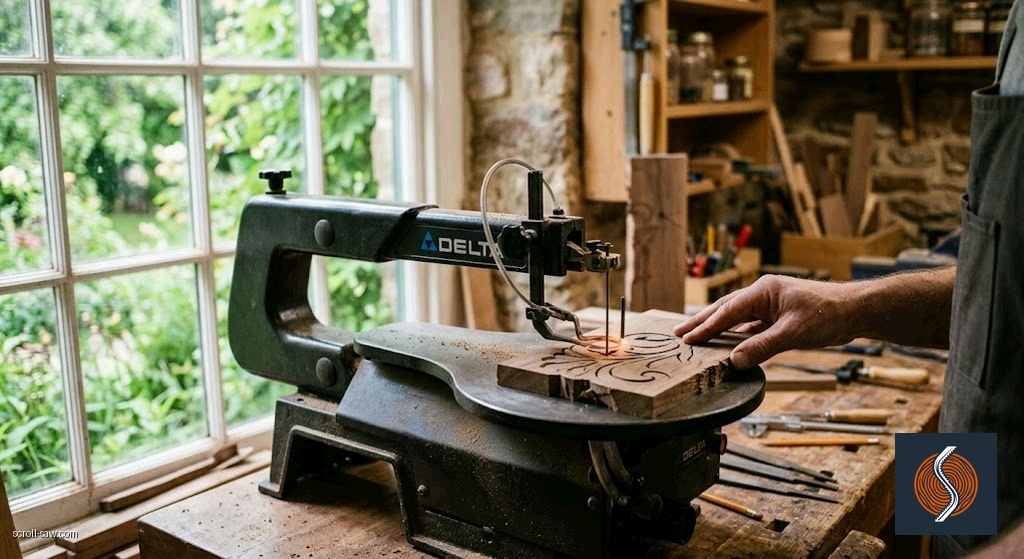
Craftsman 13 Inch Scroll Saw: Selection Guide
The Craftsman 13-inch scroll saw is a class of benchtop machine that Sears sold under the Craftsman brand across several model numbers and decades. The 13-inch designation refers to the throat depth: the distance from the blade to the back of the arm, which sets the maximum piece dimension the saw can accept.
Thirteen inches is on the small side for a modern scroll saw. Current benchtop saws are typically 16 inches or larger. But a 13-inch Craftsman covers the majority of hobby pattern work and takes up less shop space than larger saws. For a small shop or occasional scroller, it is a reasonable machine if in good condition.
What a 13-inch throat lets you do
Through depth of 13 inches means the widest workpiece the saw can handle for a cut through the center of the piece is 26 inches (twice the throat). Pieces cut near an edge can be larger than the throat depth would suggest.
Practical uses:
-
Puzzle pieces and ornaments (small workpieces, always fits)
-
Name plaques up to about 20 inches long (cut near the edge)
-
Small fretwork panels
-
Christmas ornaments and jewelry-scale work
-
Chess pieces and small three-dimensional cuts
Where a 13-inch throat limits you:
-
Large fretwork panels (need 16 inches or more)
-
Interior cuts in large pieces (the throat cannot reach the center)
-
Some sign work with the pattern in the middle of a large panel
For most hobby work, 13 inches is enough. For larger production or panel work, a larger saw is more practical.
Craftsman 13-inch models
Craftsman sold 13-inch scroll saws under several model numbers. Older units are found at estate sales, on eBay, and at used-tool dealers.
Older Craftsman 13-inch (1970s to 1980s): rigid steel construction, pin-end blades, single speed. Well-built but old.
Newer Craftsman 13-inch (1990s to 2000s): aluminum arms, variable speed, some plain-end conversions. Lighter and more feature-rich.
Check the specific model number to identify what you have.
What to look for when buying used
Motor: runs smoothly at all speeds, no burning smell, no bearing noise.
Arm: pivots freely, no play at the pivot point, blade tracks straight through the stroke.
Clamps: grip firmly, no grooves in the gripping faces, no bent set screws.
Table: flat, no gouges near the blade slot, tilts and locks reliably.
Table insert: present and reasonably intact (aftermarket replacements are cheap).
Motor mount and belt (if belt-drive): not cracked, belt in good condition.
Power cord: not frayed or repaired with electrical tape.
Missing safety features: some very old Craftsman scroll saws have inadequate blade guards. Check whether an aftermarket guard or a shop-made shield is needed.
A well-maintained older Craftsman 13-inch scroll saw is a usable machine. A poorly maintained one is more trouble than it is worth; better to buy a new WEN or Ryobi 16-inch for similar cost.
Blade format
Older Craftsman 13-inch units are usually pin-end. Newer 13-inch units may be plain-end or convertible.
Pin-end: use pin-end scroll saw blades from Olson, Pegas, or Niqua. Widely available in standard sizes.
Plain-end: use plain-end blades in the same sizes.
Pin-end saw + plain-end blade stock: add a pinless blade adapter (Olson AC49610).
Blade selection for a 13-inch Craftsman
Same blade selection principles as any scroll saw:
#5 skip-tooth (workhorse): general pattern work, soft wood up to 1/2 inch.
#3 skip-tooth or reverse-tooth (fine): Baltic birch fretwork, name plaques with detailed patterns.
#7 skip-tooth (wider): soft wood 1/2 to 1 inch, hardwood 1/4 to 1/2 inch.
#9 skip-tooth (aggressive): thick soft wood, occasional thick hardwood.
Reverse-tooth #3 or #5: plywood pattern work.
Precision-ground or MGT #5 or #7: hardwood pattern work (with plain-end saw or adapter).
A dozen pack of Olson skip-tooth blades covers the primary slot at reasonable cost. Verify pin-end or plain-end format before ordering.
Speed on Craftsman 13-inch saws
Older single-speed Craftsman: fixed at roughly 1,700 SPM. Fast for most work, sometimes too fast for hardwood or plastic. Working within the fixed speed is a matter of adjusting feed and blade selection.
Newer variable-speed Craftsman: adjustable from roughly 400 to 1,600 SPM. Adjust to match material.
Speed recommendations by material:
-
Soft wood pattern work: 1,200 to 1,500 SPM
-
Hardwood pattern work: 800 to 1,100 SPM
-
Plywood fretwork: 1,100 to 1,400 SPM
-
Plastic or acrylic: 500 to 800 SPM
-
Metal (non-ferrous, thin gauge): 400 to 600 SPM
Table and setup
Check the table is square to the blade before starting real work. A small square placed against the blade on the table surface should show 90 degrees across the blade width.
If the table is out of square, adjust per the manual. Typical mechanism is a stop screw under the table.
Bolt the saw to the workbench or to a purpose-built stand. Vibration walks unbolted benchtop scroll saws around.
Small habits
Unplug for every blade change.
Detension between sessions.
Brush the clamps clean at every blade change.
Store blades flat in a divided case.
Rotate partially worn blades to lighter work.
Check blade square to table after installation.
When a 13-inch Craftsman is worth restoring
Yes: motor runs smoothly, arm pivots without play, clamps grip firmly, table is flat.
Maybe: motor sounds rough but bearings are cheap to replace, arm has minor wear that can be shimmed.
No: motor burned or seized, arm has significant slop, castings cracked, missing parts unavailable.
For a well-maintained older Craftsman 13-inch, the machine can produce good work for years with basic maintenance. For a poorly maintained one, buy new instead.
FAQ
Is a 13-inch scroll saw big enough? For most hobby work, yes. For large panels, no.
What blade format does my Craftsman 13-inch use? Check the clamps. Older units are usually pin-end; newer may be plain-end.
Are Craftsman 13-inch saws still made? Current Craftsman offerings vary by year and retailer.
Best blade for general use? #5 skip-tooth.
Can I convert a pin-end Craftsman to plain-end? With a pinless blade adapter, yes.
Should I buy a used Craftsman 13-inch or a new saw? Depends on the condition of the used unit and price.
Do parts for old Craftsman scroll saws still exist? Some parts through Sears and independent Craftsman parts specialists. Availability varies.
References
-
Craftsman parts and manual archive via ManualsLib.
-
Olson Saw Company. Scroll saw blade catalog and pin-end vs plain-end compatibility.
-
Scroll Saw Woodworking & Crafts forum. Craftsman scroll saw discussion archive.
Title tag: Craftsman 13 Inch Scroll Saw: Selection Guide Meta description: Practical guide to Craftsman 13-inch scroll saws. What to look for, blade selection, and setup. URL slug: craftsman-13-inch-scroll-saw Excerpt: A practical guide to Craftsman 13-inch scroll saws. What to look for when buying used, blade selection, setup, and when the machine is worth restoring.


