
Scroll Saw Christmas Gifts: What to Make, When to Start, and How to Package
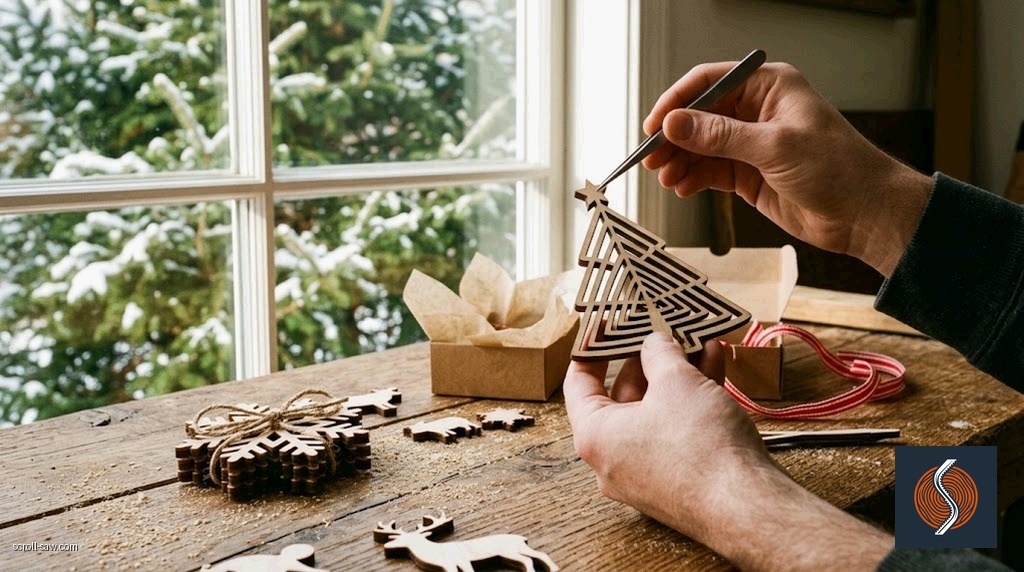
Scroll Saw Christmas Gifts: What to Make, When to Start, and How to Package
Scroll saw Christmas gifts are handmade gifts produced on a scroll saw for holiday giving. The category includes ornaments, decorative pieces, functional items (cutting boards, coasters, trivets), personalized name pieces, and small furniture (jewelry boxes, keepsake boxes).
A scroll saw gift can be more meaningful than store-bought, especially when personalized. The gift signals time and thought.
Short answer: start planning in July, cutting in September, finishing in November, packaging by early December. Use pattern books, focus on recipients’ interests, and match wood and finish to the gift’s purpose.
Timeline
Working backward from December 20:
July: brainstorm recipients, decide on gifts per recipient, select patterns.
August: order wood and materials. Verify patterns are complete and correct.
September: start cutting. Batch by wood species and finish.
October: continue cutting. Begin finishing pieces that are ready.
November: finish all pieces. Complete personalization (names, dates).
Early December: package and prepare for delivery.
Late December: deliver or ship.
Against this timeline: leave slack for problems (pieces that fail, patterns that don’t work, finish batches that need redo).
Gift categories
Ornaments: relatively fast to produce, universal appeal, can be personalized with name or date. 15-90 minutes each.
Wall art: larger pieces for permanent display. 2-8 hours each depending on complexity.
Jewelry boxes: functional gift with scroll saw decoration. 4-12 hours each.
Cutting boards: functional kitchen gift. 2-4 hours each.
Keepsake boxes: small storage boxes with lids. 3-8 hours each.
Coasters: sets of small pieces. 1-3 hours per set.
Toys and puzzles: for children. 1-3 hours each.
Name pieces: letters spelling a name or word. 2-4 hours depending on length.
Nativity sets: multiple-piece religious gifts. 10-30 hours for a full set.
Personalized signs: family names, sayings, addresses. 2-6 hours.
Matching gifts to recipients
Grandparents: heirloom-quality pieces in hardwood. Family names, birth dates, sentimental subjects.
Parents: functional or decorative pieces that fit their home style.
Children: puzzles, toys, painted pieces with colorful subjects.
Siblings: varies. Match to hobbies or interests (fishing, hunting, cooking).
Coworkers: small, restrained pieces. Ornaments, coasters, small décor.
Distant relatives: ornaments (shippable, universal).
Newlyweds: dated pieces marking their year. Wedding-themed subjects.
New parents: birth-year pieces, children’s toys, nursery décor.
Stock selection
Ornaments: 1/4-inch Baltic birch plywood (painted) or 1/4-inch cherry/walnut (clear finish).
Wall art: 1/2-inch to 3/4-inch hardwood.
Cutting boards: food-safe hardwoods (maple, cherry, walnut) at 3/4-inch thickness minimum.
Jewelry boxes: 1/4-inch to 1/2-inch hardwood for box, thinner stock for scroll-cut top piece.
Toys/puzzles: 1/2-inch to 3/4-inch closed-grain hardwood.
Name pieces: 1/2-inch hardwood or Baltic birch depending on style.
Blade choice
For mixed-project seasons:
Primary blade: #5 reverse-tooth. Olson FR49202. Handles most gift work.
Fine detail: #3 reverse-tooth. For fretwork ornaments and detailed pieces.
Thicker stock: #7 skip-tooth. Olson FR49400. For cutting boards, thick wall art.
Extended sessions: Pegas Regular Scroll #7. Cool-running for long production days.
Personalization
Handmade gifts benefit dramatically from personalization:
Names. Cut into ornaments, into wall art titles, into box tops.
Dates. Anniversary years, birth years, wedding dates.
Places. Home addresses, family cabin locations, meaningful cities.
Quotes. Family sayings, meaningful verses, inside jokes.
Symbols. Family crest, business logo, hobby-related imagery.
Verify all personalization before cutting. A misspelled name on a gift is worse than no personalization.
Finishing choices by gift type
Heirloom pieces: clear satin polyurethane over hardwood. Shows the wood grain. Ages beautifully.
Decorative pieces: paint or stain to match recipient’s décor. Test with recipient’s home style in mind.
Functional pieces: food-safe finish (mineral oil, beeswax) for kitchen items. Waterproof finish for outdoor use.
Children’s toys: food-safe finish (children may mouth toys). Bright paint over base coat.
Jewelry boxes: clear finish inside (to protect jewelry). Decorative finish outside.
Packaging
Handmade gifts deserve appropriate packaging:
Gift boxes with tissue paper. Standard for medium-size gifts.
Kraft paper wrapping with twine. Rustic look for country-style pieces.
Wooden gift boxes (which you can also cut on the scroll saw). Meta-gift where the box itself is part of the gift.
Include a card explaining the piece. Wood species, pattern designer credit, care instructions.
For fragile pieces: bubble wrap or foam padding inside the box.
Pattern books worth having
Big Book of Scroll Saw Woodworking has patterns across many gift categories.
Compound Christmas Ornaments for the Scroll Saw for compound-cut ornament gifts.
Creating Wooden Boxes on the Scroll Saw for jewelry box and keepsake box gifts.
Making Wooden Baskets on Your Scroll Saw, 2nd Ed for basket gifts.
Complete Guide to Making Wooden Clocks, 3rd Ed for clock gifts.
Common problems and fixes
Ran out of time before Christmas. Started too late. Move next year’s planning back to July.
Piece failed at final finishing. Rushed final coat. Allow adequate drying time; don’t rush end-of-year finishing.
Personalization misspelled. Verify all text before cutting. Especially names and dates. Ask the family member’s spouse/partner for the correct spelling if unsure.
Wood didn’t match across a set. Bought different lots. Buy enough stock at once at the start of the season.
Gift felt small compared to store-bought. Scale up. A 4-inch wall piece looks small; a 10-inch wall piece looks like a real gift.
Recipient didn’t understand it’s handmade. Note included with the gift explaining. Handmade signals care—make sure the recipient knows.
Frequently asked questions
When should I start Christmas scroll saw work? July for planning, September for cutting. Starting in November means rushing.
How many gifts can I make? Depends on complexity and hours available. A hobbyist with 5-10 hours per week from September through November can produce 15-30 gifts.
Should I make matching gifts for a family? Matching but personalized works well. Same subject and style, different names or dates. Reads as thoughtful set.
Can I make Christmas gifts if I don’t celebrate Christmas? Yes. Winter décor, name pieces, and non-religious subjects work as year-end gifts regardless of the recipient’s traditions.
What’s the best gift for someone who has everything? Personalized pieces. Named, dated, hometown-referenced. Store-bought equivalents don’t exist.
How should I price handmade gifts I’m giving? Not at market rates—they’re gifts, not products. But calculating market value helps you decide effort level. A $30-50 market-value gift is appropriate for close family; $10-20 for coworkers or distant relatives.
Should I sign my work? A small mark (initials, year) on the back of the piece is traditional. Reads as personal signature; adds to the gift’s meaning.
References
-
Fox Chapel Publishing, Big Book of Scroll Saw Woodworking.
-
Diana Thompson, Compound Christmas Ornaments for the Scroll Saw.
-
Steve Good, Scrollsaw Workshop (blog).


