
Craftsman 137 Scroll Saw: Blade Selection
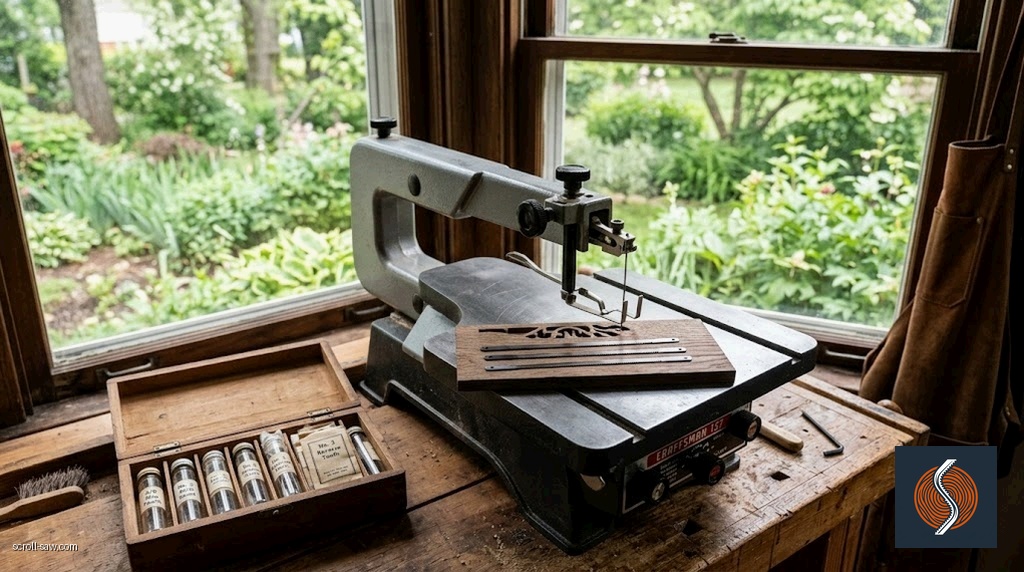
Craftsman 137 Scroll Saw: Blade Selection
Craftsman scroll saws with a 137 model prefix identify machines manufactured by Rexon Industrial (a Taiwanese power tool maker) under contract to Sears. The 137 designation appears on saws sold from the late 1990s onward, replacing the older 113 series that was made by King-Seeley Corporation.
The 137 machines were the transition into modern benchtop scroll saw features: variable speed control, plain-end blade clamps, cast-aluminum tables, and generally lighter construction than the older 113 series. They are less commonly encountered on the used market than 113s but represent a class of newer Craftsman scroll saws that many hobbyists still own.
This guide covers blade selection for the 137 series. Setup, wear, and general use apply the same as any modern benchtop scroll saw.
What the 137 saws share
Variable speed control: adjustable from roughly 400 to 1,600 SPM in most models.
Plain-end clamps: the modern standard. Some 137 units accept both pin-end and plain-end through swappable clamp components.
Cast-aluminum table: tilts for bevel cuts.
Roughly 16 to 20 inch throat: depending on specific model.
Dust extraction port: on most 137 units.
Blower: many 137 units include a small blower to clear dust from the cut line.
The specific model number determines exact features. Check the manual or the model plate for your specific 137.
Matching blade to material
Blade selection on a 137 follows the standard rules for any scroll saw.
Soft wood (pine, poplar, basswood) 1/4 to 1/2 inch: #5 skip-tooth at 1,200 to 1,500 SPM.
Soft wood 1/2 to 1 inch: #7 skip-tooth at 1,000 to 1,300 SPM.
Soft wood 1 to 2 inches: #9 skip-tooth at 800 to 1,000 SPM.
Baltic birch 1/8 inch: #3 reverse-tooth at 1,000 to 1,300 SPM.
Baltic birch 1/4 inch: #5 reverse-tooth at 1,100 to 1,400 SPM.
Baltic birch 3/8 to 1/2 inch: #5 or #7 reverse-tooth at 1,000 to 1,300 SPM.
Hardwood (oak, maple, cherry, walnut) 1/4 to 1/2 inch: #5 skip-tooth or precision-ground at 900 to 1,100 SPM.
Hardwood 1/2 to 3/4 inch: #7 precision-ground at 800 to 1,000 SPM.
Hardwood 3/4 to 1 inch: #9 precision-ground at 700 to 900 SPM.
Cast acrylic 1/8 to 1/4 inch: #5 skip-tooth at 500 to 800 SPM. Cutting wax essential.
Thin non-ferrous metal (brass, copper, aluminum 20 gauge and thinner): 30 to 40 TPI metal-cutting blade at 400 to 600 SPM. Cutting wax essential.
Blade width and turning radius
Match blade width to the tightest inside curve in the pattern:
-
Curves under 1/16 inch: #2 or #2/0 blade.
-
Curves 1/16 to 1/8 inch: #3 blade.
-
Standard pattern curves (1/8 inch or wider): #5 blade.
-
Broad curves and straight cuts: #7 or wider.
A blade wider than the pattern’s tightest curve forces sideways and wanders. A narrower blade turns tight curves but wears faster in the thick sections of the cut.
Blade thickness for material stack
Stack cutting (cutting multiple layers of thin material at once) is a common technique on 137 saws.
Two layers of 1/4 inch soft wood (total 1/2 inch): #7 skip-tooth.
Three layers of 1/8 inch Baltic birch (total 3/8 inch): #5 reverse-tooth.
Four layers of 1/8 inch hardwood (total 1/2 inch): #5 precision-ground.
Rule of thumb: choose blade size based on total stack thickness, not on individual layer thickness.
Special material notes for a 137
Damp or resinous wood: use skip-tooth for better chip clearance. Standard-tooth or double-tooth pack with resin.
Very thin material (under 1/16 inch): use a zero-clearance table insert to prevent the material from dropping through the slot.
Hardwood over 1 inch thick: 137 saws handle this but the motor works harder. Slow feed, sharp blade, patience.
Plywood with soft filler layers (birch outer with poplar core): reverse-tooth is essential for clean exit face; skip-tooth chips the poplar layers.
Cast iron or steel: not possible on a scroll saw. Use a jeweler’s saw or metal bandsaw.
Speed and feed on a 137
The 137’s variable-speed control is one of its main advantages over older single-speed scroll saws.
Set speed before starting: match SPM to material.
Watch motor sound: pitch drop under load means feed too fast for the material or speed too slow for the feed. Adjust.
Feed steady and light: force the feed and the blade drifts.
Watch chip clearance: continuous ribbon shavings indicate correct feed and blade choice. Fine dust means blade dull or feed too slow. Chip packing means blade wrong for the material.
Blade format for a 137
Most 137 units use plain-end blades. Some accept pin-end through swappable clamps.
Plain-end blade selection: widest modern selection. Skip-tooth, reverse-tooth, precision-ground, MGT, spiral, metal-cutting all available.
Pin-end (on convertible clamps): standard tooth geometries; specialty formats limited.
Standard Olson plain-end skip-tooth blades cover general work.
Setup and maintenance
Check table square to blade after every blade change.
Detension between sessions.
Brush clamps clean at every blade change.
Empty dust extraction periodically.
Check arm bearings for play periodically.
Bolt the saw to a bench or stand.
When a 137 shows its age
The 137 series has been in the field for 20 to 30 years now, and used units show typical wear. Watch for:
Arm bearing wear: play at the pivot point. Replace bearings.
Clamp face grooves: replace clamp components.
Motor bearing noise: replace motor bearings or replace the motor.
Speed control failure: replace the speed controller board.
Blower failure: replace the blower unit.
Most repairs are within reach of a handy owner. Parts for 137 series scroll saws are less consistently available than for the 113 series because the 137s are newer but Rexon has changed parts supply arrangements over the years.
FAQ
Who manufactured the Craftsman 137 series? Rexon Industrial.
Are 137 saws still made? Current Craftsman offerings vary by year. Check current retailer listings.
What blade format? Mostly plain-end. Some convertible.
Best blade for a 137? #5 skip-tooth for general work.
Speed range on a 137? Roughly 400 to 1,600 SPM depending on model.
Can I use spirals? Yes, in plain-end format.
Are parts available for older 137 saws? Varies. Some through Sears parts direct, others from independent specialists.
References
-
Craftsman parts and manual archive via ManualsLib.
-
Olson Saw Company. Scroll saw blade catalog.
-
Scroll Saw Woodworking & Crafts forum. Craftsman 137 scroll saw discussions.
Title tag: Craftsman 137 Scroll Saw: Blade Selection Meta description: Match blade number to material and thickness on Craftsman 137 scroll saws. Speed and feed reference. URL slug: craftsman-137-scroll-saw Excerpt: Match blade number to material and thickness on Craftsman 137 series scroll saws. Speed, feed, and blade selection for the Rexon-made Craftsman line.


