
Craftsman Model 113 Scroll Saw: Blade Guide
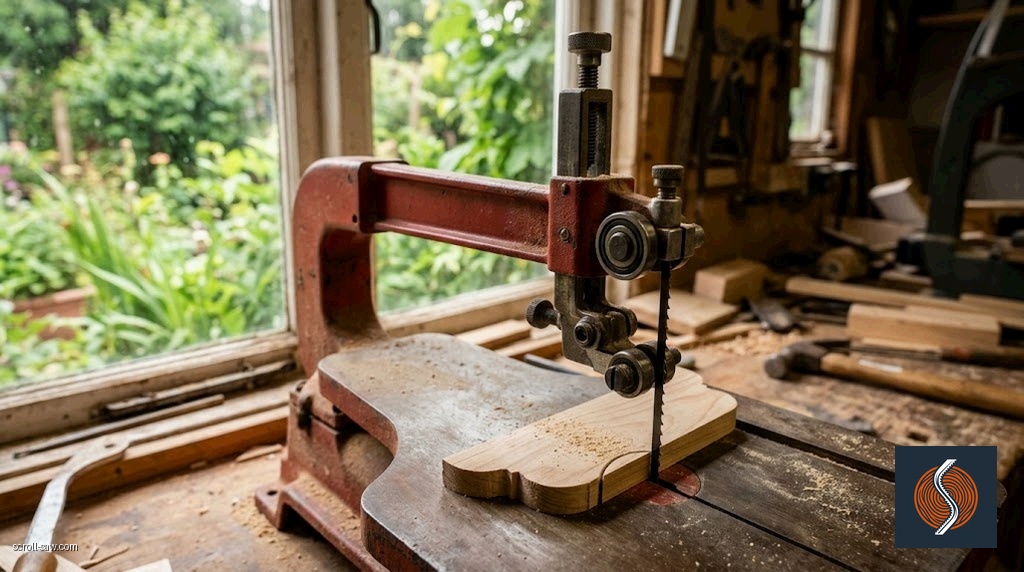
Craftsman Model 113 Scroll Saw: Blade Guide
Craftsman scroll saws bearing a 113 model prefix were manufactured by King-Seeley Corporation under contract to Sears from the 1960s into the mid-1990s. King-Seeley built a range of Craftsman power tools during this era and the 113 scroll saws share design elements with other King-Seeley Sears-branded machines. The 113 line covers scroll saws from small 12-inch benchtop units to 20-inch heavy-duty machines.
A Craftsman Model 113 scroll saw in good working condition produces cuts equal to modern scroll saws when fitted with the right blade. This guide covers blade size, tooth geometry, and material matching for the 113 series.
What 113 units share
Rigid construction: cast-iron or heavy cast-aluminum frames. Solid mechanical foundation.
Pin-end clamps: standard on most 113 units. Some later 113 models are plain-end.
Single or variable speed: single-speed on older units, variable-speed on later 1980s and early 1990s units.
Belt or direct drive: some 113 models use a belt drive, others direct drive. Belt-drive models have replaceable belts.
Cast tables: usually flat, sometimes with mounting for accessory jigs.
Check the specific 113 model number to identify features.
Blade size
Standard scroll saw blade numbering applies:
#2/0: 0.020 inch wide, 25 TPI. Very fine fretwork.
#2: 0.028 inch wide, 20 TPI. Fine work.
#3: 0.030 inch wide, 18 TPI.
#5: 0.038 inch wide, 12.5 TPI. Workhorse general-purpose size.
#7: 0.045 inch wide, 11.5 TPI.
#9: 0.055 inch wide, 11 TPI.
#12: 0.062 inch wide, 9 TPI.
Blade width sets minimum inside turning radius.
Tooth geometry options
Skip-tooth: every second tooth space empty. Workhorse for general work. Best chip clearance.
Standard tooth: uniform tooth spacing. Smoother finish but slower cutting. Less common in modern blades.
Reverse-tooth: skip-tooth with bottom teeth reversed to clean exit face on plywood.
Precision-ground (PGT): ground rather than milled teeth. Sharper edge, lighter feed, longer life. Higher cost. Best for hardwood.
Modified geometry (MGT): variable tooth spacing. Fast cutting in hardwood with clean finish. Higher cost.
Spiral: teeth wrap around blade for all-directions cutting.
Metal-cutting: high TPI (30 to 50) for thin non-ferrous sheet.
Blade format compatibility
Most 113 units are pin-end. Blade selection:
Pin-end Olson blades: available in skip-tooth, reverse-tooth, metal-cutting, and spiral formats in standard sizes.
Pin-end Pegas or other brands: available in fewer sizes and geometries than Olson.
Plain-end blades in pin-end 113 clamps: requires a pinless blade adapter (Olson AC49610).
Some late 113 units (mid-1990s transitional models) have plain-end clamps. Check your specific saw before ordering blades.
Material and thickness guide
Soft wood (pine, poplar, basswood) 1/4 to 1/2 inch, general pattern work: #5 skip-tooth at 1,200 to 1,500 SPM (variable-speed 113) or normal feed on single-speed.
Soft wood 1/2 to 1 inch: #7 skip-tooth at 1,000 to 1,300 SPM.
Soft wood 1 to 2 inches: #9 skip-tooth at 800 to 1,000 SPM.
Baltic birch 1/8 inch: #3 reverse-tooth at 1,000 to 1,300 SPM.
Baltic birch 1/4 inch: #5 reverse-tooth at 1,100 to 1,400 SPM.
Baltic birch 3/8 to 1/2 inch: #5 or #7 reverse-tooth at 1,000 to 1,300 SPM.
Hardwood 1/4 to 1/2 inch: #5 skip-tooth or precision-ground at 900 to 1,100 SPM (requires plain-end saw or adapter).
Hardwood 1/2 to 3/4 inch: #7 precision-ground at 800 to 1,000 SPM.
Hardwood 3/4 to 1 inch: #9 precision-ground at 700 to 900 SPM.
Cast acrylic 1/8 to 1/4 inch: #5 skip-tooth at 500 to 800 SPM.
Thin non-ferrous metal: 30 to 40 TPI metal-cutting blade at 400 to 600 SPM.
Turning radius by blade
Match blade width to the tightest inside curve:
-
#2/0 to #2: 1/32 to 1/16 inch
-
#3: 1/16 to 1/8 inch
-
#5: 1/8 inch
-
#7: 3/16 inch
-
#9: 1/4 inch
-
#12: 3/8 inch or wider
Single-speed 113 considerations
Older 113 units are single-speed at roughly 1,700 SPM. Work within this speed:
Soft wood: matches single-speed well.
Hardwood: slightly fast. Adjust feed and blade selection. Use coarser blade (#7 or #9) that runs cooler at high speed.
Plastic: too fast for cast acrylic; expect melted edges. Use narrow feed and cutting wax generously.
Metal: too fast for non-ferrous cutting. Consider a variable-speed saw for metal work.
Owners of single-speed 113s can add aftermarket speed controllers (industrial motor speed controls), converting the saw to variable-speed. Requires basic electrical work.
Setup for a 113
Bolt the saw to a heavy bench or dedicated stand. 113 units are heavy and stable but they still benefit from firm mounting.
Check table square to blade after every blade change.
Ensure the mechanism is clean; older 113s can have decades of packed sawdust.
Check arm bearing condition. Play at the pivot produces wobbly cuts.
Check motor mount tightness. Older 113s often have loosened motor mounts.
Connect dust extraction if the saw has a port.
Set up dedicated task lighting.
Small habits
Unplug for every blade change.
Detension between sessions.
Brush clamps clean at every blade change.
Store blades flat in a divided case.
Install blades with teeth pointing down toward the table.
Tension to a clear high pluck note.
Check blade square to table.
Rotate partially worn blades to lighter work.
Blade stock for a 113
Starting blade drawer:
-
Two dozen #5 skip-tooth pin-end (primary)
-
One dozen #3 skip-tooth or reverse-tooth pin-end (fine pattern work)
-
One dozen #7 skip-tooth pin-end (thicker material)
-
Half dozen #9 skip-tooth pin-end (thick cuts)
-
Optional pinless adapter kit for specialty plain-end blades
A dozen pack of Olson skip-tooth blades covers general work.
FAQ
Who manufactured the Craftsman 113 series? King-Seeley Corporation.
When was the 113 series made? 1960s into the mid-1990s.
What blade format? Mostly pin-end. Some late 113 units are plain-end.
Best blade for a 113? #5 skip-tooth in the correct format.
Speed range? Single-speed at 1,700 SPM on older models; variable 400 to 1,600 SPM on later models.
Can I convert single-speed to variable-speed? With aftermarket motor speed controls, yes.
Are parts available? Some, through Sears parts direct and independent specialists.
References
-
Craftsman parts and manual archive via ManualsLib.
-
Olson Saw Company. Scroll saw blade catalog including pin-end options.
-
Scroll Saw Woodworking & Crafts forum. Craftsman 113 discussions.
Title tag: Craftsman Model 113 Scroll Saw: Blade Guide Meta description: Blade size, tooth geometry, and material matching for Craftsman Model 113 scroll saws. URL slug: craftsman-model-113-scroll-saw Excerpt: Blade selection guide for Craftsman Model 113 scroll saws. Size, tooth geometry, material matching, and setup for the King-Seeley-made Craftsman line.


