
Craftsman 20 Contractor Scroll Saw: Buyer Checks
Craftsman 20 Contractor Scroll Saw: Buyer Checks
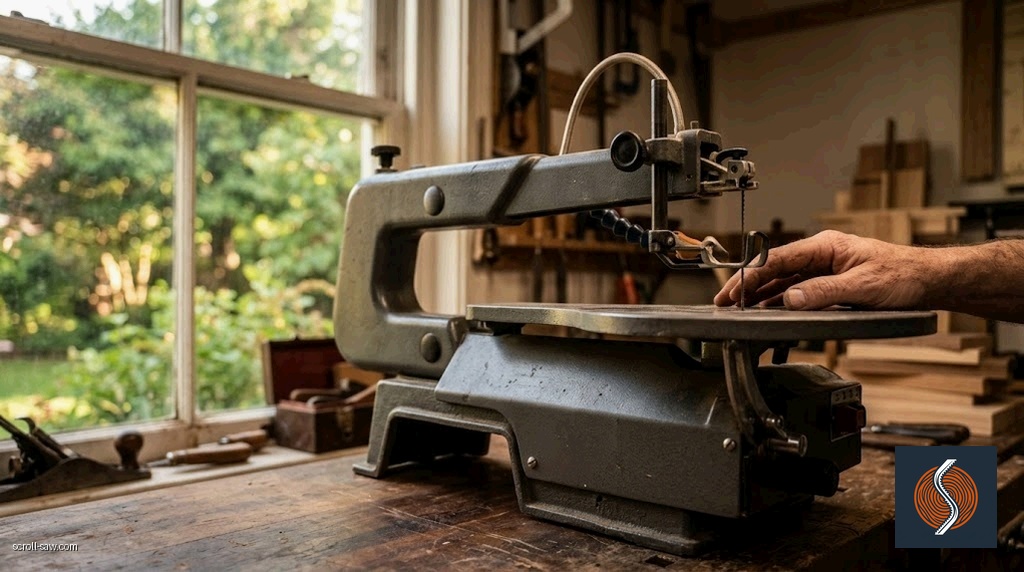
The Craftsman 20-inch Contractor Series scroll saw represents the heavier-duty end of Sears’ scroll saw line. Positioned above the standard 20-inch Craftsman scroll saw, Contractor Series 20-inch units featured heavier motors, more rigid frames, and additional features aimed at serious hobbyists and small shops.
On the used market, Contractor Series 20-inch Craftsman scroll saws show up occasionally at higher prices than standard 20-inch units, and for good reason: the heavier construction and larger throat make them capable of work that lighter benchtop scroll saws struggle with.
This guide covers what to check on a used Craftsman 20-inch Contractor Series scroll saw before buying, and what to check when repairing one already owned.
What to check before buying
Motor condition: plug in and run the motor briefly. Start smooth, no unusual noise, no burning smell. The Contractor Series motor is larger than standard 20-inch motors; repair costs on a burned motor are proportionally higher.
Arm mechanism: pivot the arm by hand with the power off. Smooth motion without binding. No play at the pivot point.
Table condition: flat, not warped. Tilts and locks reliably. Blade slot in reasonable condition.
Clamps: gripping surfaces without deep grooves. Minor grooves clean up.
Tension mechanism: moves smoothly, holds firmly.
Power cord: not frayed or repaired with tape.
Switch: functions reliably.
Vibration: run briefly at operating speed. Heavier Contractor Series units still produce some vibration; excessive vibration indicates motor mount issues, arm bearing wear, or missing dampening.
Speed controller function (variable-speed models): verify smooth speed adjustment through the full range.
Blower function: dust obscures the cut line without a working blower.
Dust extraction port: not clogged.
Missing components: table insert, blade guard, tension knob, dust chute. Small components are replaceable; missing motor or castings are dealbreakers.
Stand condition: many Contractor Series 20-inch units came with dedicated stands. Verify the stand is present, structurally sound, and complete.
What to check when repairing
Arm bearing wear: play at pivot indicates bearing replacement.
Clamp grooves: restore or replace grooved clamps.
Motor mount tightness: check bolts, tighten if loose.
Motor brush wear (brushed motors): inspect and replace if worn.
Motor bearing condition: rough sound or excessive heat indicates bearing wear.
Speed controller degradation: erratic speed adjustment or failure to reach full range indicates controller replacement.
Blower motor: aftermarket replacements available.
Tension spring: weakness over time may require replacement.
Table tilt lock wear: bevel adjustment slipping indicates hardware replacement.
Dust chute clogging: clear and clean.
Power cord and switch: standard replaceable components.
Belt condition (belt-drive Contractor Series models): cracking or stretching indicates replacement.
Common Contractor Series 20-inch features
Heavier motor: 1/3 to 1/2 horsepower, more than the 1/4 horsepower typical of standard 20-inch Craftsman scroll saws.
Rigid frame: heavier casting, less vibration under load.
Variable speed: standard.
Larger table: sometimes larger than standard 20-inch tables.
Foot pedal switch (some models): for hands-free start and stop.
Dedicated stand: many Contractor Series 20-inch units shipped with a matching stand.
Better dust extraction: larger ports or integrated dust management on some models.
Cutting capacity: usually 2.5 to 3 inches soft wood, 1.5 to 2 inches hardwood.
Blade selection
#5 skip-tooth (workhorse): general pattern work.
#3 skip-tooth or reverse-tooth (fine): fine fretwork.
#7 skip-tooth (thicker material): hardwood or thick soft wood.
#9 skip-tooth (aggressive): thick soft wood.
#12 skip-tooth (very thick): at the Contractor Series capacity.
Reverse-tooth in appropriate size: plywood work.
Precision-ground #5, #7, or #9: hardwood pattern work with clean finish. Contractor Series’ extra motor power makes precision-ground blades a good match.
Modified geometry (MGT): hardwood pattern work.
Spirals: sign interiors and sculpted work.
Metal-cutting: thin non-ferrous sheet.
A dozen pack of Olson skip-tooth blades covers general work.
Speed and material matching
Soft wood pattern work: 1,200 to 1,500 SPM.
Hardwood pattern work: 800 to 1,100 SPM.
Plywood fretwork: 1,100 to 1,400 SPM.
Plastic (cast acrylic): 500 to 800 SPM.
Thin non-ferrous metal: 400 to 600 SPM.
Very thick material near capacity: reduce speed slightly. Contractor Series handles thick material better than lighter scroll saws.
Setup for a Contractor Series 20-inch
Bolt to the dedicated stand (if present) or a heavy shop-built stand.
Check table square to blade after every blade change.
Unplug for every blade change.
Detension between sessions.
Brush clamps clean.
Connect dust extraction port to a shop vacuum.
Set up dedicated task lighting.
Use zero-clearance table insert for thin material.
Small habits
Match blade to material.
Break in new blades with a minute of slow cutting.
Watch chip clearance.
Rotate partially worn blades to lighter work.
Store blades flat.
Inspect arm bearings periodically.
Empty dust extraction.
When a Contractor Series 20-inch is worth the higher used price
Yes: work regularly includes thicker hardwood or larger panels. The extra motor power and rigid frame pay off.
Maybe: general pattern work in 1/4 to 1/2 inch stock. A standard 20-inch or 16-inch may serve as well.
No: work is small and simple. A 16-inch is enough and easier to move.
Parts availability for Contractor Series 20-inch
Sears Parts Direct: some parts available.
Rexon and Ryobi service networks: for Contractor Series units made by these manufacturers.
Independent Craftsman parts specialists: variable coverage.
Bearing suppliers: universal by dimension.
Aftermarket universal parts: switches, cords, blowers.
Salvaged Contractor Series units: parts sources.
FAQ
What makes Contractor Series different? Heavier motor, more rigid frame, variable speed, larger cutting capacity.
Best blade for a Contractor Series 20-inch? #5 skip-tooth for general work; precision-ground for hardwood.
Cutting capacity? 2.5 to 3 inches soft wood, 1.5 to 2 inches hardwood.
Weight? With stand, often 100 pounds or more.
Are parts available? Some, through multiple sources.
Is a Contractor Series 20-inch worth the higher used price? Depends on the type of work.
What to check before buying? Motor condition, arm play, table flatness, clamp condition, speed controller function.
References
-
Craftsman parts and manual archive via ManualsLib.
-
Olson Saw Company. Scroll saw blade catalog.
-
Scroll Saw Woodworking & Crafts forum. Craftsman 20-inch Contractor Series discussions.
Title tag: Craftsman 20 Contractor Scroll Saw: Buyer Checks Meta description: What to check before buying or repairing a Craftsman 20-inch Contractor Series scroll saw. URL slug: craftsman-20-inch-scroll-saw-contractor-series Excerpt: What to check before buying or repairing a Craftsman 20-inch Contractor Series scroll saw. Heavier construction, features, and common wear.


