
Craftsman Scroll Saw Model 113 Guide
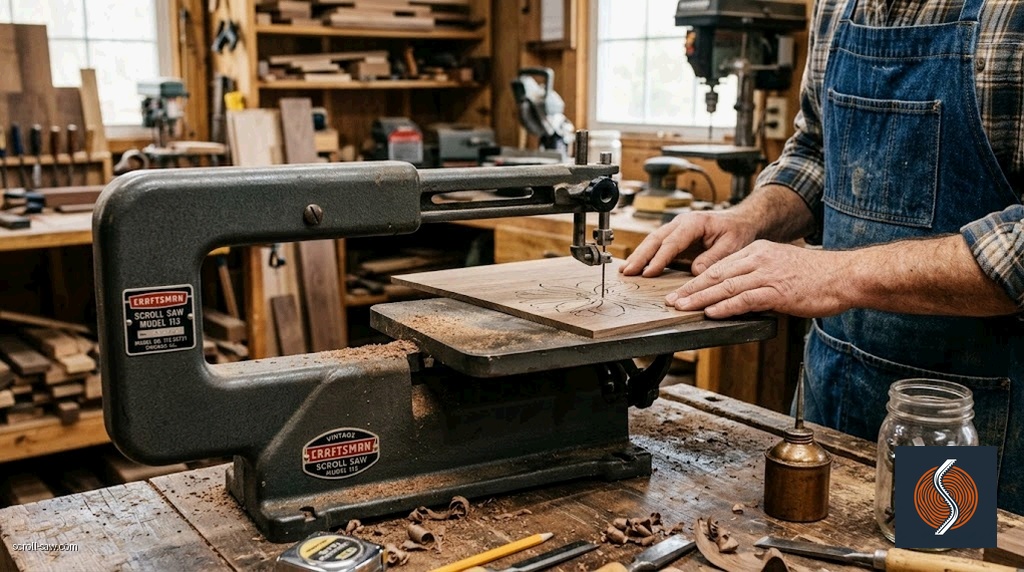
Craftsman Scroll Saw Model 113 Guide
There is a specific moment in a workshop where the question about the craftsman scroll saw model 113 stops being abstract. You have watched a video, you have read a forum thread, someone in the neighborhood is selling one, and now you need to decide whether the craftsman scroll saw model 113 is the right scroll saw for what you actually build. This is a verdict piece, not a spec dump. It answers whether the craftsman scroll saw model 113 deserves the space on your bench, and it tells you who should skip it and buy something else.
The craftsman scroll saw model 113 is a 16 inch scroll saw from Craftsman that was made during the 1970s and 1980s. It runs pin-end 5 inch on most 113 series scroll saws and is aimed at fret work, pattern cutting, and general fine sawing.
The craftsman scroll saw model 113 is the right scroll saw for you if three things are true. Your project stock is under two inches thick, your patterns need turns tighter than a band saw can hold, and you either already own the machine or you can find one where the frame, motor, and blade clamp are all in serviceable shape. If any of those are wrong, the craftsman scroll saw model 113 is not the right pick, and pushing through anyway costs you time and money that a currently produced machine would give back on day one.
The one question that decides this
This machine belongs to the 1970s and 1980s of scroll saw production, so ownership is usually a used market question rather than a new box purchase. That single fact controls everything about whether the craftsman scroll saw model 113 deserves your bench time. A machine from the 1970s and 1980s lives or dies by the used market. If a serviceable craftsman scroll saw model 113 is available near you at a fair number, the value case works. If it needs to be shipped freight or rebuilt from a parts machine, the case gets much harder.
Who the craftsman scroll saw model 113 is right for
Hobbyists cutting under two inch stock, pattern cutters working with three quarter inch and half inch hardwood, and anyone who wants a scroll saw that will still cut in twenty years with basic maintenance. the 113 prefix identifies Emerson Electric as the Sears OEM, cast aluminum table. The cast construction on machines of this class outlasts every plastic hobby saw at the current price tier, which is the honest reason vintage scroll saws still sell.
Who should skip the craftsman scroll saw model 113
Anyone cutting a lot of thick hardwood, anyone who needs quick blade changes for production work, and anyone without the patience for a used market machine. If you plan to do inside cuts constantly, you want tool free blade clamps and a hinged upper arm, and older versions of the craftsman scroll saw model 113 often lack one or both.
What the craftsman scroll saw model 113 actually does well
The blade system uses pin-end 5 inch on most 113 series scroll saws, which is the single most important detail to confirm before you spend a cent on replacements. The 16 inch lets you reach into the center of larger panels for portraits and geometric pattern work. Vibration on a well tuned example of this class is genuinely low, which matters for detail cuts at the tip of a five inch blade.
Where the craftsman scroll saw model 113 falls short
Blade changes on 1970s and 1980s scroll saws are slower than on a modern DW788 style saw. Dust collection at the throat is limited to a blower nozzle on most examples, and there is no dust port under the table. Lighting is not built in. Those are real limitations, not deal breakers, and they are cheap to work around.
The straight comparison
The craftsman scroll saw model 113 against the DeWalt DW788 comes down to whether you value the older machine’s build or the newer machine’s convenience. The DW788 gives you tool free blade clamps, a front mounted variable speed dial, a dust blower, and current parts support. The craftsman scroll saw model 113 gives you cast construction and, if you buy well, a lower total.
For pin end saws that take a 5 inch blade, the Olson FR41001 seven TPI pin end pack is the safe universal buy.
The verdict
Buy the craftsman scroll saw model 113 if you find a clean example locally, if the blade clamp still holds tension, and if the motor spins up smoothly under load. Pass on the craftsman scroll saw model 113 if the seller cannot show the model plate, if the arm has been welded, or if the table has been drilled for a fence that is no longer there. Those last three are the tells that separate a working scroll saw from a project machine.
Concrete takeaways
Prioritize the local pickup on any used scroll saw in this class. Confirm the blade clamp type against the assortment you plan to buy. Photograph the model plate before you commit. Compare the total against a currently produced saw before you commit.
FAQ
Is the craftsman scroll saw model 113 good for beginners? Yes, provided the used example is in serviceable condition.
How thick can the craftsman scroll saw model 113 cut? Two inches of softwood is the practical ceiling on most scroll saws in this class. Hardwood at that thickness is possible but slow.
Is the craftsman scroll saw model 113 still supported by the manufacturer? The manufacturer service portal still hosts most documentation, but new original parts are rare.
What blades does the craftsman scroll saw model 113 take? pin-end 5 inch on most 113 series scroll saws
Can the craftsman scroll saw model 113 handle metal cutting? Thin non ferrous metals like brass and aluminum sheet, yes, with a fine tooth blade. Steel plate is out of scope for any scroll saw.
Does the craftsman scroll saw model 113 have variable speed? No, most examples are single or two speed.
Should I choose the craftsman scroll saw model 113 over the DeWalt DW788? Choose the craftsman scroll saw model 113 only if you find a genuinely clean used example. Otherwise the DW788 is the sensible modern buy.


