
Scroll Saw Shelf Patterns: Building Functional Decorative Shelves
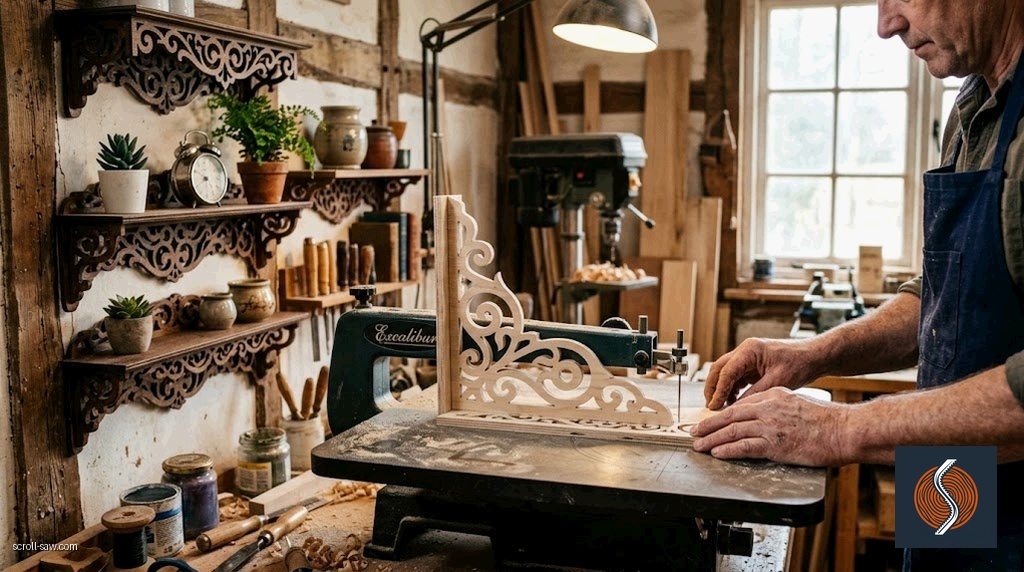
Scroll Saw Shelf Patterns: Building Functional Decorative Shelves
A scroll saw shelf pattern is a shelf design that includes scroll-cut decorative elements—typically on the sides, back, or apron of the shelf. Common styles include Victorian gingerbread shelves, country-style shelves with cut-out patterns, and craftsman shelves with restrained fretwork.
The design combines two concerns: the shelf must be structurally sound (holding weight without sagging or racking) and visually appealing (the fretwork carries the character).
Short answer: 3/4-inch hardwood for structural components, 1/4-inch or 1/2-inch for decorative fretwork panels, joinery-based construction (screws or dowels), matching finish across all components.
Shelf styles
Victorian gingerbread. Elaborate fretwork on side brackets and apron. Reads as ornate historical.
Country cottage. Simple heart or star cutouts on side panels. Reads as folk art.
Craftsman/mission. Restrained geometric fretwork. Reads as fine woodworking.
Farmhouse. Simple rectangular shelves with distressed finish and minimal fretwork accent.
Contemporary. Modern shapes with minimal fretwork, more emphasis on wood species selection.
Corner shelves. Triangular shelves for room corners. Scroll-cut backing panels.
Wall shelves with backing. Shelf attached to a decorative scroll-cut back panel.
Structural design
A functional shelf must:
Support intended weight. Books are heavy; decorative items are light. Plan for the intended contents.
Attach to wall securely. Screws into wall studs, or heavy-duty anchors for hollow walls.
Prevent racking. Side-to-side wobble. Prevented by backing panel or corner braces.
Prevent sagging. Middle of shelf drooping under load. Prevented by adequate thickness (3/4 inch minimum for shelves over 24 inches) and by having short spans between supports.
Level top surface. Items placed on the shelf must sit level. Verify horizontal after installation.
Stock selection
Shelf top and sides: 3/4-inch hardwood. Oak, cherry, maple, pine. Structural components.
Fretwork panels (side brackets, apron): 1/2-inch stock. Structural + decorative. Matches shelf material.
Backing panel (if used): 1/4-inch stock. Non-structural decorative.
Match wood species across all components. Mixing species produces inconsistent visual reading.
Blade choice
Fretwork on 1/2-inch stock: #7 skip-tooth. Olson FR49400 Skip Tooth.
Fine detail on decorative panels: #5 reverse-tooth. Olson FR49202.
Very fine detail (Victorian gingerbread): #3 reverse-tooth.
Extended cutting on multiple components: Pegas Modified Geometry #12.
Cutting sequence
-
Prepare all blank stock. Cut all components to rough size before starting scroll saw work.
-
Apply patterns. 3M Super 77. ScotchBlue Painter’s Tape 2090 underneath for clear-finish work.
-
Cut fretwork panels first. Side brackets, apron, backing panel decorative elements.
-
Cut shelf top and shelf platform separately. These are usually simple rectangles; cut on table saw or bandsaw rather than scroll saw.
-
Sand all components while patterns are still attached to fretwork.
-
Peel patterns.
Assembly
-
Dry-fit all components. Verify fit before glue or fasteners.
-
Wall-mount plan. Decide how the shelf attaches to the wall (French cleat, keyhole slots, screws through backing).
-
Attach fretwork panels to shelf top. Screws through top into panel edges. Or dado-joined for cleaner appearance.
-
Attach backing panel (if used). Screws or nails from the back into the shelf edges.
-
Sand assembly seams. Any glue squeeze-out or slight misalignment cleaned up.
-
Finish. Stain and clear or paint per style.
Finishing
Match to intended room style:
-
Victorian: dark walnut or mahogany stain with high-gloss clear.
-
Country: distressed white paint or aged wood stain.
-
Craftsman: medium brown stain (fumed oak look) with satin clear.
-
Farmhouse: chalk paint with dry-brush accents.
-
Contemporary: clear finish showing wood grain, or high-gloss solid color.
Finish all components before assembly for easier access to details. Touch up seams after assembly.
Common shelf configurations
Single shelf with side brackets. Simple wall-hung shelf, decorative side brackets support the shelf. 12-36 inches wide.
Shelf with backing panel. Rectangular back panel with decorative cutout, shelf platform extending out.
Multi-tier shelf. Two or three shelves connected by side panels. Complex fretwork on the sides.
Corner shelf. Triangular shelf for room corners. Decorative backing.
Plate rack shelf. Shelf with rear rail to hold plates upright. Traditional country design.
Curio shelf. Shelf with small compartments for displaying figurines. Complex fretwork throughout.
Where to source patterns
Steve Good’s blog has shelf patterns as free downloads.
Big Book of Scroll Saw Woodworking includes shelf pattern sections.
Specialty scroll saw books focus on Victorian or craftsman-style shelves.
Woodworking magazines periodically feature shelf projects.
Common problems and fixes
Shelf racks under load. Insufficient bracing. Add corner braces or backing panel.
Fretwork breaks during handling. Design too fragile for the stock. Thicken stock or simplify pattern.
Components don’t fit. Cutting error or measurement drift. Verify dimensions before final assembly.
Shelf isn’t level after installation. Wall not vertical, or shelf attachment not square. Use a level during installation.
Finish looks inconsistent across components. Different stains or different application. Finish all components in one session with same materials.
Wood species mismatch. Different boards from different lots. Buy all stock at once from same lot.
Frequently asked questions
How much weight can a scroll saw shelf hold? Depends on construction. A 24-inch shelf in 3/4-inch hardwood with proper wall mounting holds 25-50 pounds. Longer shelves hold less per linear foot.
Can I sell scroll saw shelves? Yes. Handmade shelves have strong markets in country/farmhouse and Victorian décor. Prices typically $60-300 depending on size and complexity.
What’s the best wood for a shelf? Oak, maple, or cherry for hardwood shelves. Pine for country-style shelves. Match wood to room style.
Do I need special hardware to hang a shelf? Heavy shelves need proper wall anchors—screws into studs preferred. French cleats work well for larger shelves. Standard picture-hangers only for light shelves.
How do I finish the fretwork? Same finish as the rest of the shelf. Apply thin coats; fretwork gaps trap thick finish.
Can I make a scroll saw shelf without a table saw? Yes, but harder. A table saw or bandsaw makes cutting shelf stock to size much faster. All scroll-saw cutting is possible but slow.
Should I mount the shelf before or after finishing? After. Mount hardware attaches to finished shelf. Handling during mounting can scratch or scuff finish.
References
-
Fox Chapel Publishing, Big Book of Scroll Saw Woodworking.
-
Steve Good, Scrollsaw Workshop (blog).


