
Scroll Saw for Metal Jewelry: What Works and What Doesn
Scroll Saw for Metal Jewelry: What Works and What Doesn
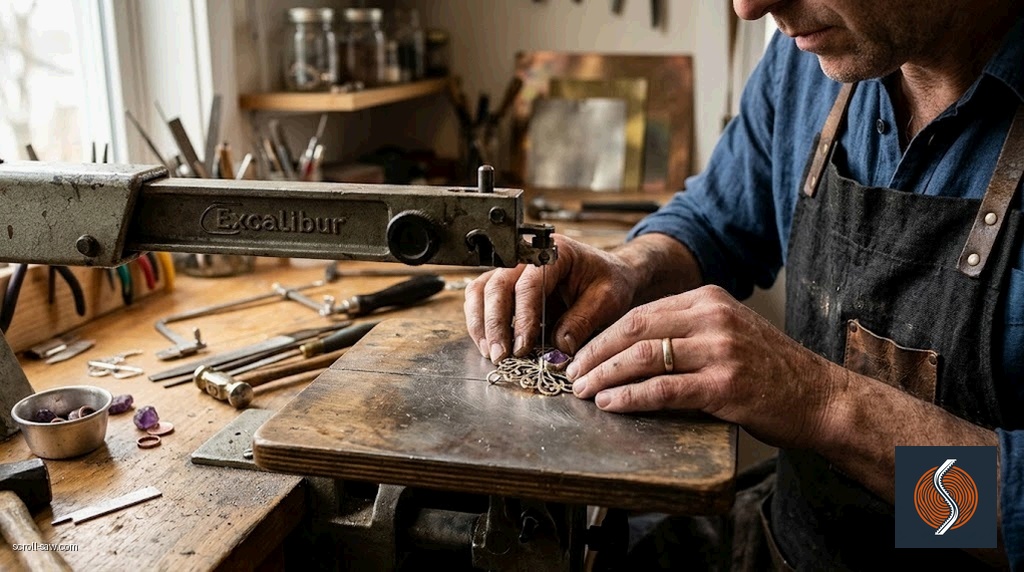
A scroll saw designed for wood can cut some non-ferrous metal for jewelry making—brass, copper, aluminum, silver, and gold in thin gauges. It’s not a substitute for a jeweler’s saw for fine work, but for larger jewelry pieces and metal art, it’s capable.
The key limits are metal thickness, blade choice, and the scroll saw’s tolerance for the extra stress metal cutting places on the mechanism.
Short answer: use metal-cutting scroll saw blades or fine jeweler’s blades, cut brass/copper/aluminum up to 1/16 inch thick, use cutting fluid, slower speeds, and light feed pressure. Steel is possible but hard on the saw.
What a scroll saw can cut in metal
Thin brass, copper, aluminum sheet. Up to 1/16-inch (16 gauge) reliably. Thicker with careful technique.
Silver and gold sheet. For jewelry making. Same thickness limits.
Thin steel. Possible with metal-cutting blades but hard on the saw. Not recommended for regular use.
Aluminum plate. Up to 1/8-inch with slow feed and appropriate blade.
Sterling silver, gold-filled, base metal jewelry stock. Standard jewelry-thickness materials.
What a scroll saw can’t cut well
Thick steel or iron. The saw isn’t designed for hardened metal cutting. Use a metal-cutting bandsaw or plasma cutter.
Very fine jewelry detail. A jeweler’s saw with a jeweler’s V-block gives more control for fine work. Scroll saws work for larger pieces.
Thick brass or bronze plate. Above 1/8-inch, cutting is very slow and blade life is short.
Wire or rod material. Not appropriate—use a jewelry saw or file.
Blade choice for metal
Special metal-cutting scroll saw blades exist. Alternatively, use fine jeweler’s saw blades (available in various sizes) with proper clamp adjustment.
Metal-cutting scroll saw blades: available from Olson, Pegas, and other manufacturers. Sold specifically for metal.
Jeweler’s saw blades in scroll saw: with proper clamps, fine jeweler’s blades work in a scroll saw for metal cutting. Common sizes for jewelry: 2/0 to 4/0 for thin material.
Standard wood blades: don’t work for metal. The tooth geometry is wrong and edges dull rapidly.
Cutting fluid
Metal cutting generates heat that dulls blades quickly and can distort the workpiece.
Beeswax: apply to blade before cutting. Reduces friction and heat.
Cutting oil: dab or spray on cut line. Extends blade life significantly.
Beeswax + cutting oil combination: for extended cuts. Standard jeweler’s practice.
Don’t cut metal dry. Blade dulls within minutes and cut quality is poor.
Setup and technique
Speed setting: slower than for wood. 400-800 SPM typical. Higher speed heats the metal.
Feed pressure: light. Let the blade cut; don’t push.
Support the metal from below. Metal sheets can vibrate against the saw table causing chatter. Some jewelers cut on a wooden auxiliary board that provides zero-clearance support.
Bird’s mouth / V-block support: small wooden block with V-notch clamped to the table. Provides close support for the workpiece near the blade. Standard jeweler’s technique.
Blade tension: tighter than for wood. Loose blade wanders and breaks.
Jewelry applications
Pendants. Cut shape from silver or brass sheet. Sanded and polished.
Earrings. Matched pair cut with careful technique.
Bracelets. Individual links cut and connected.
Charm-scale figures. Small animal or symbol shapes cut from metal sheet.
Metal art. Larger decorative metal pieces cut from brass or copper sheet.
Custom hardware. Cabinet pulls, decorative brackets cut from brass.
Signage: small metal signs cut from brass or copper.
Pattern attachment to metal
Layout fluid or Dykem. Blue layout fluid applied to metal, pattern scribed through with a scribe. Traditional metalworker’s method.
Adhesive pattern. Print pattern on paper, adhere to metal with contact cement or spray adhesive. Cut through paper and metal simultaneously.
Marker. Direct drawing on metal surface. Works for simple shapes.
For scroll saw metal cutting, adhesive pattern is often easiest.
Finishing metal
Deburr edges. File or sand to remove sharp burrs left by cutting.
Sand progressively. 220-grit, then 400-grit, then 600-grit and finer for polished appearance.
Polish. Metal polish (Simichrome, Flitz) with a rag or buffing wheel.
Patina. Chemical patinas (liver of sulfur for silver, various patinas for copper and brass) add color.
Sealer. Clear lacquer or wax to prevent tarnish on silver and copper.
Jump rings and findings. Attach chains, hooks, and other jewelry hardware after finishing.
Safety considerations
Eye protection required. Metal chips are sharper and more dangerous than wood chips. Wear safety glasses.
Dust collection. Metal cutting produces fine metal dust. Some metals (especially beryllium copper) are toxic. Adequate ventilation.
Sharp edges. Cut metal has burrs and sharp edges. Handle carefully during cutting and deburr promptly.
Blade breakage. Broken metal-cutting blades throw sharper shrapnel than wood blades. Protective screens on the saw are prudent.
Heat management. Metal parts get hot during cutting. Don’t touch immediately after cutting.
Comparison: scroll saw vs. jeweler’s saw for jewelry
Scroll saw advantages: power (no manual cutting), consistent stroke, can cut larger pieces, faster for medium-size work.
Jeweler’s saw advantages: finer control, better for very fine detail, portable, no electricity required, blade change is faster.
Choice: most jewelers own both. Scroll saw for larger and medium pieces; jeweler’s saw for fine detail.
Where to source patterns and materials
Metal: Rio Grande, Otto Frei, hobby shops, Amazon. Sold by gauge (thickness) and metal type.
Blades: Rio Grande, jewelry supply houses. Metal-cutting scroll saw blades from Olson, Pegas.
Patterns: design your own for jewelry (most jewelry is custom design), or use scroll saw patterns adapted for metal.
Common problems and fixes
Blade dulls quickly. Cutting dry, or blade wrong for material. Use cutting fluid; verify blade rated for metal.
Metal chattering. Insufficient support near the blade. Use V-block or auxiliary table.
Metal warping. Cut too fast or too much heat. Slow down; use more cutting fluid.
Edge burrs. Normal in cutting. Deburr with file or sandpaper after cutting.
Blade wandering. Blade too loose, or feed pressure too high. Tighten blade; reduce feed.
Pattern paper burning. Blade heat too high, or cutting too slowly. Increase feed speed or reduce blade tension slightly.
Frequently asked questions
Can I cut steel on a scroll saw? Thin steel (16 gauge or thinner) yes, with metal-cutting blade and cutting fluid. Not efficient; a hacksaw or bandsaw is better for regular steel cutting.
Can I cut sterling silver on a scroll saw? Yes with metal-cutting blade or fine jeweler’s blade. Standard practice for larger silver jewelry pieces.
What thickness of metal can I cut? Brass, copper, aluminum: up to 1/16 inch reliably, up to 1/8 inch with care. Steel: 20-16 gauge (0.032-0.062 inch). Silver: standard jewelry thicknesses (18-22 gauge).
Do I need a special scroll saw for metal? No. Any variable-speed scroll saw handles metal cutting with appropriate blades and technique. Metal cutting is harder on the saw than wood; expect slightly more maintenance.
Can I cut aluminum plate? Up to 1/8-inch aluminum with metal-cutting blade and slow feed. Thicker aluminum is a job for a bandsaw or router.
Should I clamp thin sheet metal? Double-stick tape to a wooden auxiliary board helps prevent sheet flex during cutting.
Can I make copper roof caps for scroll saw work? Yes. Copper sheet is workable for decorative metal art. Cut, patina, seal.
References
-
Rio Grande jewelry supply, technical resources.
-
Various jewelry-making guides on scroll saw metal cutting.


