
Nautical Scroll Saw Patterns: Anchors, Ships, and Ocean Life
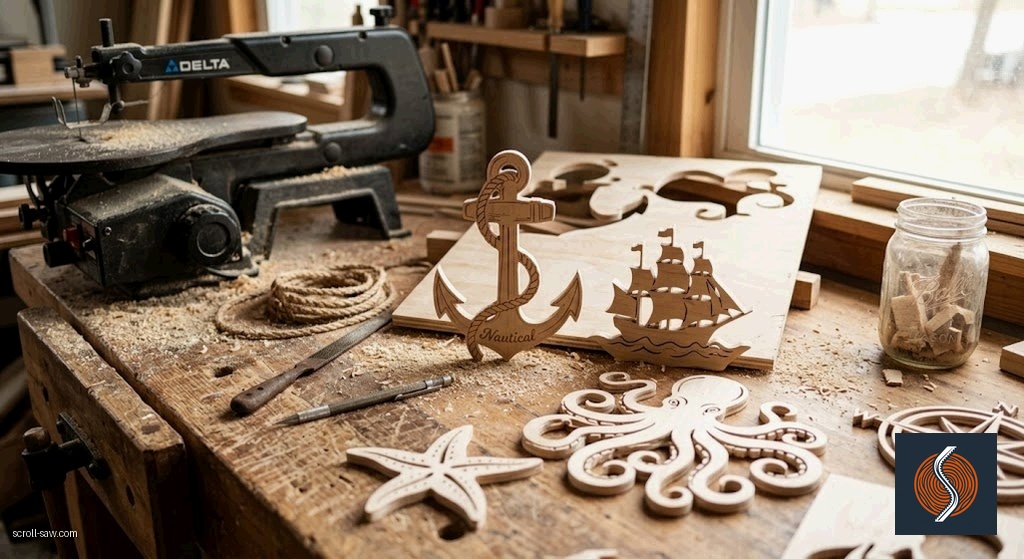
Nautical Scroll Saw Patterns: Anchors, Ships, and Ocean Life
A nautical scroll saw pattern is a pattern with ocean, ship, or coastal subject matter. Common subjects include anchors, sailing ships, lighthouses, marine life (whales, dolphins, sea turtles), coastal buildings, and nautical-themed décor (compass roses, ship wheels, ropes).
The category has strong appeal for coastal-region markets, marine hobbyists, and anyone with nautical interests. Nautical décor sells consistently at coastal craft markets.
Short answer: 1/4-inch to 3/4-inch stock depending on scale, weather-resistant finish for pieces near water, cedar or teak for pieces exposed to marine environment, standard hardwoods for indoor pieces.
Common nautical subjects
Anchors. Universal nautical symbol. Various styles (traditional stockless anchor, admiralty anchor, decorative variants).
Sailing ships. From simple silhouettes to detailed multi-mast schooners.
Lighthouses. With or without light detail. Coastal-region favorite.
Whales. Humpback, orca, sperm whale. Large-scale wall art common.
Dolphins. Playful curves, jumping poses.
Sea turtles. Shell detail interesting. Popular Hawaiian/Pacific motif.
Marine mammals. Seals, sea lions, otters.
Fish. Bass, marlin, sailfish. Sport-fishing motif.
Nautical hardware. Ship wheels, compass roses, ropes and knots.
Coastal buildings. Lighthouses, boathouses, seaside cottages.
Marine flora. Kelp, coral (though these are less common as scroll saw subjects).
Stock selection
Indoor décor: any hardwood or Baltic birch plywood.
Coastal home décor (bathroom, kitchen with moisture): closed-grain hardwood with good finish.
Outdoor coastal décor (porches, exterior): cedar, teak, or exterior plywood with marine-grade finish.
Marine environment (dock décor, boat interiors): teak or specifically marine-graded stock.
Painted rustic pieces: pine or Baltic birch, weathered finish.
Heirloom pieces: cherry, walnut, or teak with clear finish.
Wood species considerations
Teak. The traditional marine wood. Naturally water-resistant. Expensive but appropriate for pieces intended for marine environments.
Cedar. Rot-resistant. Standard for outdoor nautical work. Weathers to silver-gray without deterioration.
Mahogany. Traditional boatbuilding wood. Reads as marine-appropriate. Some varieties expensive or restricted.
Oak. Traditional sailing ship wood. Good for interior nautical pieces.
Baltic birch plywood. For painted pieces or interior use. Widely available and forgiving.
Blade choice
Standard nautical work: #5 reverse-tooth. Olson FR49202.
Fine detail (ship rigging, compass rose text): #3 reverse-tooth.
Thick stock (larger pieces, 3/4-inch+): #7 skip-tooth. Olson FR49400.
Extended production: Pegas Regular Scroll #7.
Pattern-specific technical notes
Anchor patterns. Body of the anchor is substantial; flukes (arms) can be thin. Grain along the shank length.
Sailing ship patterns. Rigging and masts are fragile. Detailed patterns may need enlargement to achieve adequate line width. Baltic birch plywood for detailed work.
Lighthouse patterns. Tall vertical form. Grain vertical (base to top). Light section at top may have interior cutouts requiring bridges.
Whale patterns. Large solid form. Fins and flukes are fragile—grain planning matters.
Compass rose patterns. Symmetric, often with pointed features. Baltic birch plywood handles the symmetry well.
Rope and knot patterns. Interwoven curves. Fine detail. Bridge planning essential.
Cutting sequence
-
Attach pattern with 3M Super 77.
-
Drill interior entry holes.
-
Cut interior detail first.
-
Cut perimeter last.
-
Sand while pattern attached.
-
Peel pattern.
Finishing for marine environments
Interior pieces (no moisture exposure):
- Standard finishes: satin polyurethane, oil finish, paint.
Bathroom, kitchen, or humid interior:
-
Multiple coats of polyurethane.
-
Waterproof paint if painting.
Covered outdoor (porches, garages):
-
Exterior-grade polyurethane.
-
Spar varnish (traditional marine finish; requires yearly touch-up).
Full outdoor exposure:
-
Marine-grade varnish or paint.
-
Cedar or teak stock reduces finish requirements.
-
Expect annual maintenance for exposed pieces.
Marine environment (salt exposure):
-
Teak wood with tung oil finish, or marine varnish over any wood.
-
Salt is corrosive; verify all hardware is marine-grade.
Common finishes for nautical décor
Clear satin. Shows wood grain. Reads as fine woodworking.
Whitewash or driftwood gray. Weathered coastal look. Popular for beachy décor.
Navy blue paint. Classic nautical color. Anchors, ship silhouettes, decorative elements.
Aged brass paint. For decorative hardware simulations (mock ship wheels, compass details).
Multi-color painted. Bright colors for children’s nautical pieces (cartoon whales, colorful fish).
Stained darker. Walnut or ebony stain reads as fine ship interior style.
Where to source patterns
Steve Good’s blog has nautical patterns.
Big Book of Scroll Saw Woodworking has nautical pattern sections.
Specialty pattern books focus on marine subjects.
Sue Mey and various pattern designers offer nautical collections.
Coastal-region craft magazines feature nautical scroll saw projects.
Mounting and display
Wall-hung. Standard for anchor, ship, and lighthouse décor. Wire or picture hangers on the back.
Freestanding. Small nautical pieces mounted on wooden bases for shelf display.
Ceiling-hung. Ship models or decorative pieces suspended from beam mounts. Requires substantial hanging hardware.
Table centerpieces. Larger nautical pieces as focal points. Combined with candles, seashells, or coastal accessories.
Framed pictorial pieces. Landscape-format nautical scenes in wooden frames. Reads as fine art.
Common problems and fixes
Ship rigging broke during cutting. Detail too fine for stock. Enlarge pattern or use plywood.
Piece warped in humid environment. Solid wood or single-face finish. Finish both sides; use plywood for humid areas.
Paint bubbled or peeled outdoors. Wrong finish for exposure. Use marine-grade paint or exterior polyurethane.
Anchor flukes broke. Grain direction wrong or design too thin. Reorient grain or thicken design.
Wood cracked along grain. Solid wood with unfavorable grain direction. Use Baltic birch or reorient.
Finish yellowed on white nautical pieces. Oil-based polyurethane yellows on light colors. Use water-based polyurethane on white or painted pieces.
Frequently asked questions
What’s the most popular nautical pattern subject? Anchors are universal. Lighthouses have strong appeal in coastal regions. Whales are popular for larger wall art.
Can I sell nautical pieces? Strong market in coastal regions. Craft fairs and beach-town gift shops. Prices vary; typical $20-150 depending on size and complexity.
What wood is best for outdoor nautical décor? Cedar (rot-resistant, widely available) or teak (marine-grade, expensive). Exterior plywood with marine finish works for larger pieces.
Should I paint or clear-finish nautical pieces? Coastal/farmhouse: painted (navy blue, white, weathered). Fine woodworking: clear-finished hardwood. Both markets exist.
Can I make furniture-scale nautical pieces? Yes. Anchor-shaped shelves, ship wheel wall art, lighthouse table lamps. Combine scroll saw with other woodworking.
What paint colors work for nautical décor? Navy blue, white, weathered gray, brass/gold accent. Occasionally red for accent details.
How do I make a piece read as marine rather than generic? Subject choice + appropriate wood + appropriate finish. Anchor pattern in cedar with weathered finish reads as marine. Anchor pattern in pine with country-style paint reads as farmhouse décor.
References
-
Fox Chapel Publishing, Big Book of Scroll Saw Woodworking.
-
Steve Good, Scrollsaw Workshop (blog).


