
Understanding the Dremel Scroll Saw Model 571 5: Setup, L...
Understanding the Dremel Scroll Saw Model 571 5: Setup, L…
There is a moment in every used-tool sale when you look past the price tag and start asking whether the machine is worth the space it will take in your shop. That moment is where this article starts.
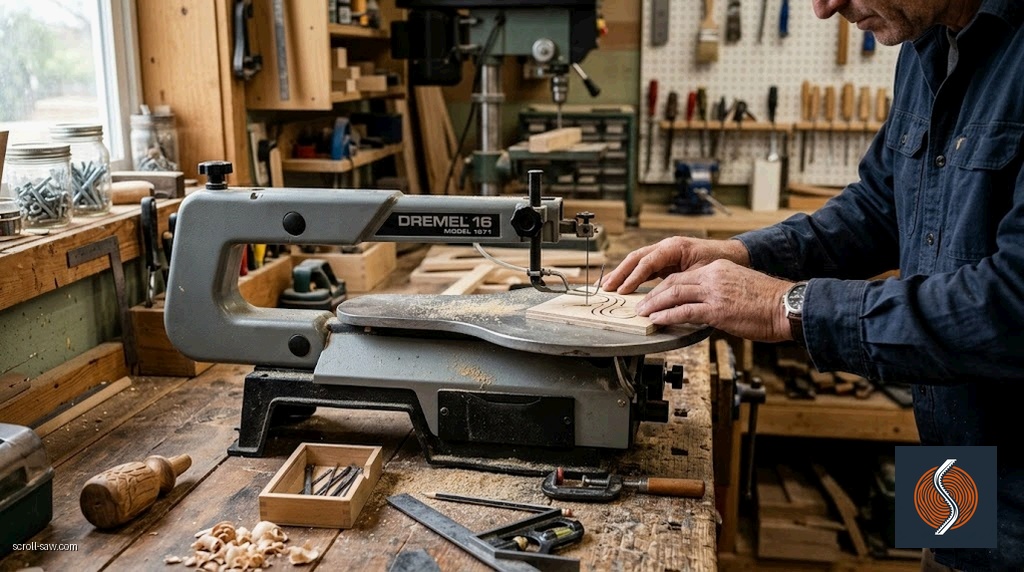
A scroll saw is a benchtop saw that uses a fine, short blade moving up and down at high speed to cut curves and interior shapes in wood, plastic, and thin non-ferrous metal. The Dremel Scroll Saw Model 571 5 sits within that category, and the question this article answers is how the machine actually behaves in a home or small-production shop.
The direct answer is this. Dremel scroll saws were built for the home shop. Compact cast bases, quiet single-speed or two-speed motors, and a friendly footprint that fit on a folding workbench. If your work fits the machine’s character, it will serve you well. If it does not, no amount of tuning will make the saw feel right in your hand.
What the Dremel Scroll Saw Model 571 5 actually is
The Dremel scroll saw line grew out of the classic Moto-Shop combination unit and evolved through a series of stand-alone models (57, 571, 1571, 1671, 1672, 1680, 1695, 1800, 1830) before Dremel exited the category.
Dremel scroll saws were built for the home shop. Compact cast bases, quiet single-speed or two-speed motors, and a friendly footprint that fit on a folding workbench.
Setting the saw up right
A scroll saw earns or loses your trust in the first hour on the bench. Setup matters more than the price tag on the box.
Start with the machine level. A scroll saw on a wobbly bench will show every bit of that wobble in your cut line. Shim it if you have to. Then run through these four steps in order:
-
Zero the table to the blade. Use a small engineer’s square, not a speed square. A degree off at the table shows up as a wedge on any thick stock.
-
Set the blade tension. On most platforms in this class, correct tension is a light musical ping when you flick the blade. Too loose and the blade wanders. Too tight and you break blades on every turn.
-
Adjust the hold-down foot so it just kisses the workpiece. Any more and it fights you. Any less and thin stock lifts.
-
Aim the dust blower at the cut line, not at your face. Most machines let you rotate the tube by hand.
Where the Dremel Scroll Saw Model 571 5 shows its limits
Every scroll saw has a natural sweet spot. Push past it and you find the ceiling fast. On a platform in this class the practical limits look like this:
-
Stock thickness beyond about 2 inches on hardwood asks more of the arm and motor than the design targets. You can do it, but slow the feed and expect blade heat.
-
Aggressive cuts in oily or resinous woods will glaze the blade. Keep a bar of paraffin at the bench and touch it to the blade every few minutes.
-
Tight radius work in figured hardwood asks for a spiral blade or a smaller reverse-tooth. Do not try to force a wide skip-tooth into a curve tighter than a nickel.
The service side
Dremel discontinued the scroll saw line, so factory parts are limited. Common wear items (blade holders, guards, dust blower tubing) show up through parts brokers, eBay estate lots, and cross-references to Delta and Skil parts that share tooling.
Routine service on any scroll saw in this family comes down to five things: keep the pivot pins clean, watch the motor brushes on brushed machines, replace the blade-holder inserts before they round out, keep dust out of the switch, and check the belt or drive linkage yearly.
Verdict
After all of that, the call is fairly clear. The Dremel Scroll Saw Model 571 5 rewards owners who match the machine to their work and put in the small setup time it needs. It is not the newest platform, and for some buyers a current machine such as the WEN 3923 16-inch variable-speed scroll saw is the better call. But the platform under discussion has real strengths and a service story that keeps it useful.
Match the machine to the work you actually cut, and the decision usually makes itself.
Key takeaways
-
The Dremel Scroll Saw Model 571 5 fits owners who value a quiet home-shop machine with predictable service parts.
-
Blade choice matters more than most first-time owners expect. Start with a variety pack and settle on two or three geometries for the work you actually do.
-
On any used purchase, spend fifteen minutes on inspection before you spend a dollar on the price.
-
Accessories change the day-to-day experience more than the spec sheet does. A good light and a foot switch pay back within a week.
Frequently asked questions
What blades fit the Dremel Scroll Saw Model 571 5?
Most platforms in this family run 5-inch pinless blades. A few earlier units used pin-end holders that also accept pinless with a small adapter. When in doubt, remove the current blade and measure. If it is 5 inches with a plain end, run a set of Olson FR49202 reverse-tooth 5-inch blade pack or Flying Dutchman 60-piece pinless variety pack and you will not have to think about it again.
Is the Dremel Scroll Saw Model 571 5 still in production?
Dremel discontinued the scroll saw line, so factory parts are limited. Common wear items (blade holders, guards, dust blower tubing) show up through parts brokers, eBay estate lots, and cross-references to Delta and Skil parts that share tooling. If your saw is discontinued, plan around universal blades and cross-referenced replacement parts. If you need a current machine on the same footprint, the WEN 3923 16-inch variable-speed scroll saw is the closest match in most cases.
How do I identify the exact model and revision?
Look for the metal serial plate on the back of the base casting. It lists the model number, the type or revision number, and the electrical spec. Match all three lines before you order any part.
Do I need a stand?
Not required, but a stand pays back the space it takes. The WEN MSA1621 adjustable scroll saw stand adjusts in height and dampens the bench-top vibration that makes long detail cuts drift.
How much noise does a scroll saw make?
Well-tuned scroll saws run quietly. Most of the noise you hear from an older machine comes from worn arm bearings or a loose motor mount, not the motor itself. If the saw is loud, that is a service item, not a design feature.
Can I use spiral blades on it?
Yes, on any platform that accepts pinless blades. A pack of Olson SP46500 spiral blade set or Flying Dutchman New Spiral #1 pinless pack is what you want for tight radius work and for cutting figured shapes without turning the workpiece.
How do I keep the blade square to the table?
Loosen the blade tension, remove the blade, and check the clamp jaws for even wear. Reinstall a fresh blade, tension it, and check square with a small engineer’s square. If the blade still tilts, the clamp housing is worn and needs replacement or a shim.
Is a foot switch worth it?
For anyone who cuts more than an hour at a time, yes. The WEN WA0392 15-amp momentary foot pedal switch or the DCT 115V maintained foot switch lets you start and stop the saw without lifting your hands off the workpiece, which is a real safety improvement on tight cuts.
References
-
U.S. Consumer Product Safety Commission, safety guidance on stationary power tools and blade guards: cpsc.gov
-
OSHA 29 CFR 1910.213, machine guarding for woodworking machinery: osha.gov/laws-regs/regulations/standardnumber/1910/1910.213
-
National Institute for Occupational Safety and Health, wood-dust exposure guidance: cdc.gov/niosh/topics/wooddust
-
Scroll Saw Woodworking & Crafts, print magazine of record for scroll saw technique: scrollsawer.com
-
Manufacturer service documentation and parts diagrams for the specific model. Search the exact model and type number printed on the serial plate.


