
Southwest Scroll Saw Patterns: Desert Motifs and Regional Style
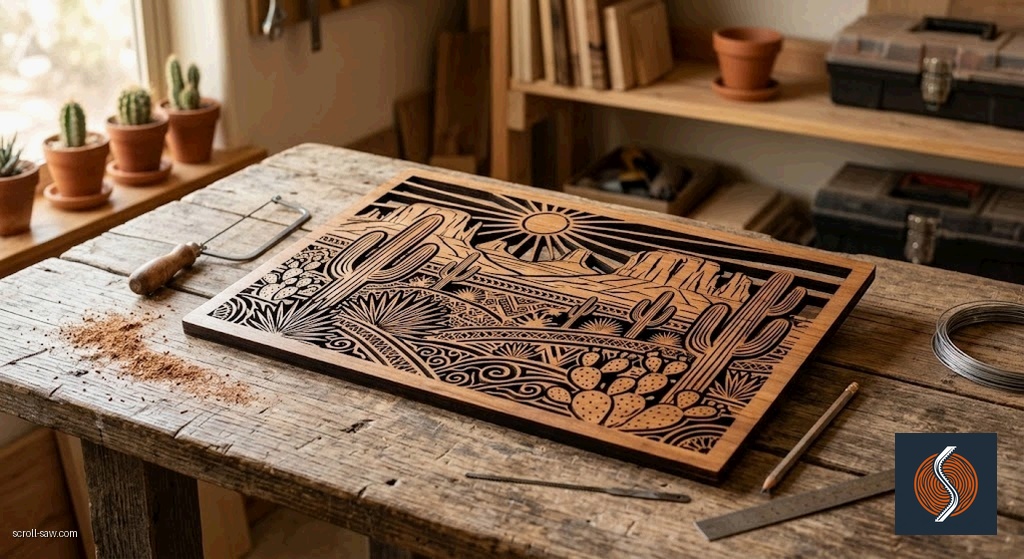
Southwest Scroll Saw Patterns: Desert Motifs and Regional Style
Southwest scroll saw patterns capture the visual vocabulary of the American Southwest: desert wildlife, cacti, adobe architecture, Native American motifs, and regional wildlife. The style has strong regional identity and specific pattern elements that read as “Southwest.”
Common subjects include howling coyotes, kokopelli figures, saguaro cacti, roadrunners, adobe dwellings, geometric Native American designs, and desert landscapes.
Short answer: 1/4-inch to 1/2-inch stock, warm earth tones for finish (rust, sand, terracotta, brown), oak or mesquite hardwoods read as regional, silhouette style works well for outdoor décor.
Common Southwest subjects
Wildlife:
-
Howling coyote (iconic silhouette against moon)
-
Roadrunner (regional bird)
-
Desert tortoise
-
Rattlesnake (stylized)
-
Bighorn sheep
-
Jackrabbit
-
Lizards (gecko, horned lizard)
Plants:
-
Saguaro cactus (multi-arm)
-
Barrel cactus
-
Prickly pear (paddles)
-
Yucca
-
Desert flowers
Cultural motifs:
-
Kokopelli (flute-playing figure)
-
Native American geometric patterns
-
Storyteller figures
-
Katsina (kachina) figures (stylized)
-
Sun symbols (Zia sun)
Architecture:
-
Adobe silhouettes
-
Pueblo profiles
-
Mission-style crosses
Landscape:
-
Mesa and butte silhouettes
-
Desert scenes with cacti and mountains
-
Sunset over desert (with sun cutout)
Stock selection
Regional hardwoods:
-
Mesquite: quintessential Southwestern wood. Dark warm brown. Reads as regional.
-
Oak: readily available, warm tone, region-appropriate.
-
Walnut: rich dark tone for premium pieces.
Painted-finish stock:
-
Baltic birch plywood: takes paint well, cost-effective.
-
Pine: budget option for painted rustic pieces.
Stock thickness:
-
1/4-inch: silhouette wall art and hangable pieces.
-
1/2-inch: substantial pieces, freestanding.
-
3/4-inch: heirloom pieces or thick wall art.
Blade choice
Silhouettes and standard detail: #5 reverse-tooth. Olson FR49202.
Fine detail (kokopelli features, geometric patterns): #3 reverse-tooth.
Thick stock: #7 skip-tooth. Olson FR49400.
Production: Pegas Regular Scroll #7.
Pattern-specific notes
Kokopelli. Distinctive humpbacked flute-player. Simple silhouette that must read clearly. Not too small (features become unreadable) and not so large that the simple shape looks empty.
Howling coyote. Silhouette against moon or open sky. Coyote profile with head tilted back howling. Moon behind is often a separate piece or cutout.
Saguaro cactus. Multiple arms make the pattern distinctive. Grain direction along cactus body (vertical). Arms can be delicate—use plywood or thicker stock.
Geometric Native American patterns. Precise geometry required. Symmetric patterns benefit from careful pattern preparation and steady technique.
Storyteller figure. Seated figure with children on lap or shoulders. Complex silhouette. Advanced pattern.
Zia sun symbol. Four rays in four directions from central sun. Symmetric geometric pattern.
Cutting sequence
-
Attach pattern with 3M Super 77. ScotchBlue Painter’s Tape 2090 underneath for clear-finish stock.
-
Drill interior entry holes.
-
Cut interior details first.
-
Cut perimeter last.
-
Sand while pattern attached.
-
Peel pattern.
Finishing for Southwest style
Southwest color palette:
-
Rust/terracotta
-
Sand/tan
-
Turquoise (accent)
-
Deep brown
-
Burnt orange
-
Cream/off-white
Natural hardwood finish:
-
Clear satin polyurethane over mesquite, oak, or walnut.
-
Wood color does the work.
-
Reads as premium regional craft.
Painted finish:
-
Base coat in earth tone.
-
Accent details in complementary Southwest colors.
-
Distressed edges for aged appearance.
Turquoise inlay accent:
-
Small turquoise cabochons or resin epoxy accents added to Southwest pieces.
-
Reads as authentic Native American craft.
-
Advanced technique.
Rustic/weathered:
-
Multiple color coats + sanding through to reveal underlying colors.
-
Aged patina.
-
Popular for country Southwest style.
Display and application
Wall décor: Southwest wildlife silhouettes, cactus profiles.
Freestanding décor: Cactus or kokopelli figures on wooden bases.
Garden art: Weather-treated Southwest silhouettes for outdoor placement.
Home décor accents: Southwest pieces on shelves, mantels, in wall arrangements.
Furniture inlays: Small Southwest motifs inlaid into wooden furniture.
Signage: Southwest silhouettes combined with regional text (ranch names, welcome signs).
Where to source patterns
Steve Good’s blog has Southwest patterns.
Big Book of Scroll Saw Woodworking includes Southwest patterns.
Specialty Southwestern pattern collections exist from various pattern designers.
Etsy has Southwest scroll saw patterns available for download.
Regional scroll saw magazines in Southwestern states feature Southwest-themed patterns.
Common problems and fixes
Coyote silhouette doesn’t read as coyote. Head tilt too subtle or body proportions wrong. Study reference coyote silhouettes; exaggerate the howling pose.
Kokopelli features unclear. Pattern too small or too simplified. Ensure hump, flute, and figure proportions all read.
Saguaro arms too fragile. Grain across arms or arms too thin. Reorient grain; enlarge arms.
Geometric pattern asymmetric. Cutting drift. Cut carefully, checking against pattern line.
Color palette looks off. Wrong earth tones. Study authentic Southwest color palettes.
Finish inconsistent. Different application techniques or dry times. Standardize application process.
Cultural sensitivity considerations
Southwest patterns often incorporate Native American cultural motifs. Considerations:
Kokopelli. Widely used in commercial Southwest décor. Consider whether specific tribal contexts matter for your work.
Katsina/kachina figures. These are sacred figures for Hopi and Puebloan peoples. Stylized versions in commercial décor are common but some cultural considerations apply.
Storyteller figures. Cochiti Pueblo tradition; widely commercialized.
Geometric patterns. Many are generic geometric designs; some are specific tribal patterns. Understanding the difference matters if selling to knowledgeable buyers.
Respect and attribution: if using specific tribal designs, understanding and acknowledging their origin is appropriate.
Frequently asked questions
What’s the most iconic Southwest scroll saw pattern? Howling coyote silhouette is the most widely recognized Southwest scroll saw motif. Kokopelli is a close second.
Can I sell Southwest pieces? Strong markets in Southwestern states and at Native American cultural events. Prices $15-100 for smaller pieces, $50-300 for larger detailed work.
What wood is most Southwestern? Mesquite is the quintessential Southwestern hardwood. Oak and walnut also read as regional.
Should I paint or clear-finish Southwest pieces? Both work. Clear-finished mesquite reads as fine regional craft. Painted earth-tone pieces read as country Southwestern décor.
Are Native American patterns copyrighted? Generic geometric patterns are not copyrighted. Specific tribal designs may have cultural significance even if not legally protected. Research before commercial use.
Can Southwest pieces be used indoors? Absolutely. Southwest décor is popular in home interiors nationwide, not just in the Southwest region.
How do I make a piece read as “authentic” Southwest rather than generic? Use recognizable regional motifs (specific wildlife, cacti, geometric patterns) + regional wood or earth-tone finish + appropriate display context.
References
-
Fox Chapel Publishing, Big Book of Scroll Saw Woodworking.
-
Steve Good, Scrollsaw Workshop (blog).


