
Proxxon 37088 DS 115 E Scroll Saw: Buy or Repair Checklist
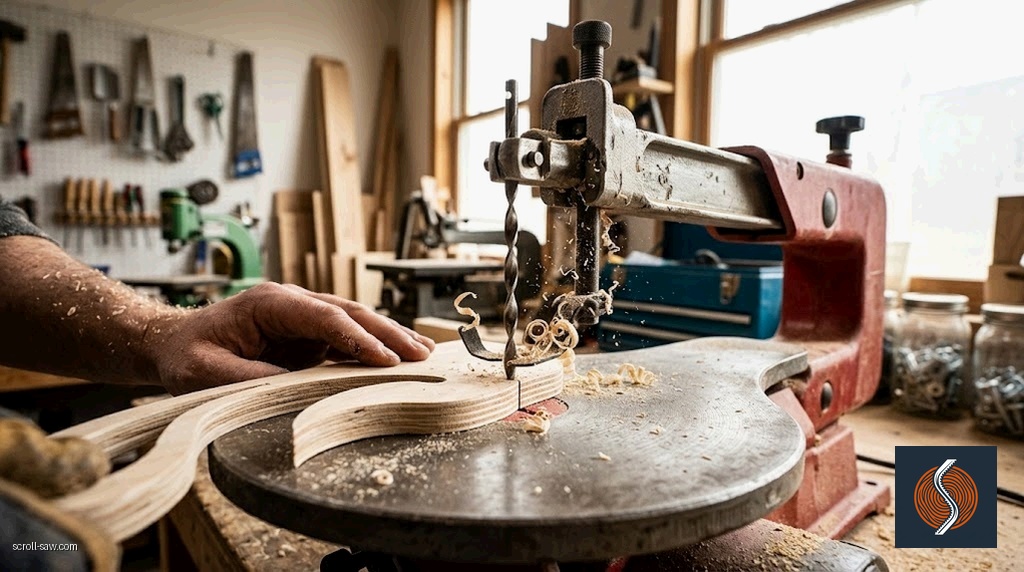
Proxxon 37088 DS 115 E Scroll Saw: Buy or Repair Checklist
Someone’s selling a Proxxon 37088, sometimes listed as the DS 115 E, sometimes just “Proxxon mini scroll saw,” and the price is tempting. Or you already own one and it’s making a noise it wasn’t making last month. Either way, the diagnosis path is the same short walk: look, listen, and measure before you spend money.
This is a well-built saw and it earns its price when it’s healthy. It’s an expensive doorstop when it isn’t.
What you’re actually looking at
The Proxxon 37088 is the North American SKU for the DS 115 E, a variable-speed benchtop scroll saw in Proxxon’s Micromot precision line. Small motor, short arm, purpose-built for fine work in thin stock. It uses pin-end scroll blades from the factory and, with the appropriate holder, plain-end jeweler’s blades. Its natural jobs are marquetry, model work, jewelry, and miniature woodworking. It is not a puzzle-blank or 3/4-inch-hardwood machine.
The short answer
Before buying used or committing to a repair, verify five things: the arm bushings for play, the blade holders for wear, the motor for smooth run-up and shutdown, the cord and switch for cracks or burning, and the table for flatness and square. If any of those five fails and the seller hasn’t priced accordingly, walk. Repairs are possible on all of them, but stacked repairs on a benchtop saw at Proxxon prices don’t math out.
Pre-purchase checklist
1. The arm. With the saw unplugged, grab the upper arm near the blade holder and try to move it side to side. There should be almost no play. Any perceptible slop means the pivot bushings are worn. Bushings are replaceable; a wobbly arm is not something to accept at full price.
2. The blade holders. Look at the seats where the pins on the blade rest. If they’re gouged, oval, or have wallowed out, tension will never sit right. Replacement holders are available and cheap, but factor it in.
3. The motor. Plug in, switch to low speed, and listen for the first three seconds. A healthy motor spins up smoothly with a rising hum. A bad motor grinds, buzzes, or hesitates on start-up. Then run it at full speed with no blade for thirty seconds. Uneven noise means bearings on the way out or the eccentric worn.
4. The cord and switch. Look at the entry point where the cord goes into the housing. Cracked insulation there means the strain relief failed and the cord has been flexing at the entry, which eventually shorts. Check the switch face for any brown or black around the throw. A discolored switch has been overheated and is on borrowed time.
5. The table and blade alignment. Set a small engineer’s square on the table against the blade. There should be no visible gap. If there is, the table is either warped (uncommon on this saw), the tilt lock is worn (fixable), or the arm is bent (walk away).
A seller who lets you do this walkthrough is a seller you can probably trust. A seller who won’t is telling you what you need to know.
Repair economics
A healthy 37088 sells used for a meaningful fraction of its new price. That number sets your repair ceiling. If the total repair cost, parts plus your time, exceeds about half of a used working unit’s price, you’re better off selling the broken saw for parts and buying a working one.
The repairs that usually pencil out:
-
Bushing and blade-holder replacement. Cheap parts, straightforward job.
-
Cord and switch replacement. Ten dollars and an hour on the bench.
-
Belt replacement, if your revision has one. Under $20 and a screwdriver’s worth of work.
The repairs that often don’t:
-
Motor replacement on a mid-life unit. Proxxon motors are available but not cheap. On a saw that already has other wear, one big repair rarely revives it enough to justify the spend.
-
Arm assembly replacement. Rare, expensive when available, and usually a sign the saw has been abused.
Common problems and what they mean
Blade won’t hold tension. Almost always worn blade holders or a stretched tensioning spring. Sometimes a bent pin. Replace parts in order of cheap-first.
Saw vibrates more than it used to. Either the base isn’t bolted down (start there) or a bushing is worn. Vibration usually gets worse under load; if it’s fine at idle and terrible when you touch wood to the blade, it’s the arm side, not the motor side.
Motor smells hot after light use. Cooling louvers are packed with dust, or the brushes are worn. Blow it out. If the smell persists after cleaning, pull the brush covers and inspect.
Cut wanders on straight lines. Blade tension, first. Table not square, second. Feed rate too high, third. Bad blade fourth. Diagnose in that order; it’s usually the first one.
Erratic speed at the dial. The speed controller board or the potentiometer. On this generation of Proxxon, both are user-serviceable if you’re comfortable inside a benchtop tool.
Where to get parts and manuals
Proxxon USA (prox-tech.com) is the North American service arm and stocks parts for the current and recent Micromot line. For older units, check the European Proxxon site and cross-reference the exploded diagram to your unit before ordering, since revisions did happen. eReplacementParts and a couple of specialty tool parts dealers carry Proxxon inventory as well.
A note on “barely used” listings
Benchtop scroll saws in this class often come to market with the same story: “only used a few times, bought for a project that never happened.” Sometimes that’s true. More often, the saw was used enough to develop one specific annoyance the seller couldn’t fix and gave up on. Do the checklist anyway. If the saw is genuinely lightly used, the checklist takes five minutes and confirms it. If it isn’t, the checklist tells you before you hand over money.
FAQ
Is the 37088 and DS 115 E the same tool? Yes. 37088 is the Proxxon North American SKU; DS 115 E is the model name used in Proxxon’s European catalog and service literature. Parts and manuals apply to both.
Where is the serial and model plate? On the base, usually on the rear or underside. It’s a small silver adhesive label.
Can I convert a pin-end 37088 to accept plain-end jeweler’s blades? Proxxon offers a blade holder variant that accepts plain-end blades. Confirm compatibility with your specific revision before ordering.
Are Proxxon parts expensive compared to bigger scroll saws? Per part, usually similar. The frustration is that some specialty parts are backordered longer because Proxxon ships in smaller volume than the big US brands.
How long should a 37088 last with normal use? With light hobby use and periodic maintenance, decades. These saws are built well. Neglected or run hard, five to ten years before major service.
Should I buy one from an unknown seller sight unseen? Only at a price that assumes it needs work. Anything else is a gamble.
What tools do I need to service it? A small metric hex key set, small Phillips and flat drivers, a multimeter for switch and cord checks, and some Proxxon parts patience.
References
-
Proxxon GmbH product literature (proxxon.com) — DS 115 E specifications, service documents, and exploded diagrams.
-
Proxxon USA / Prox-Tech (prox-tech.com) — North American parts, service, and warranty support.
-
eReplacementParts (ereplacementparts.com) — alternate parts source with model lookup for Proxxon Micromot line.
-
Fine Woodworking magazine (finewoodworking.com) — scroll saw setup, tensioning, and diagnostic guides that apply across brands.


