
Proxxon DS 115 E Scroll Saw: Speed, Arm, and Ownership
Proxxon DS 115 E Scroll Saw: Speed, Arm, and Ownership
A lot of scroll saw shopping happens on comparison charts, and comparison charts obscure the two things that decide what a saw feels like to use: how slowly it can go, and how the arm carries the blade. On the Proxxon DS 115 E, both are unusual for the size class, and both are part of why the saw has such a loyal audience.
What the DS 115 E is
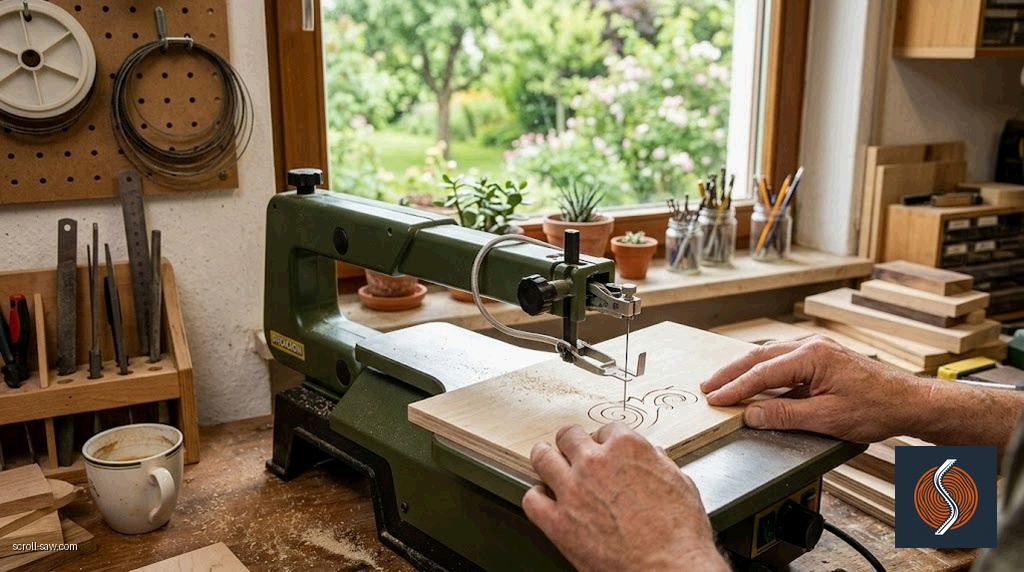
The DS 115 E is Proxxon’s smallest scroll saw, sold in North America as the 37088. Benchtop footprint, variable speed, short arm, small motor, pinned-blade holders by default. Positioned squarely at model makers, jewelers, marquetry workers, and anyone whose scrollwork happens in thin stock at small scale.
The short answer
The DS 115 E’s speed range starts low, which is what makes it usable for fine work in delicate material. Its arm is short, which is what makes it precise but limits capacity. Own it for those two truths, and it’s an easy saw to live with. Own it hoping the numbers are wrong and you’ll be frustrated.
Speed range in practice
A variable-speed scroll saw’s usefulness lives more at the slow end than the fast end. Fine blades, thin metal, plastic, and detailed inlay all want slower strokes-per-minute than a hardwood puzzle blank does. The DS 115 E’s low end is genuinely low, and the speed control is smooth throughout the range.
What that means in ownership terms:
-
Cutting brass sheet with a jeweler’s-style blade at slow speed feels controlled. On a saw that only goes down to 700 SPM, the same blade would burn or snap.
-
Inlay work in veneer is manageable because you can feed slowly without the blade running away from you.
-
Long runs at the top speed are not what the saw is for; the motor will do it, but the geometry doesn’t reward it.
Match speed to material and blade. On thin softwood, high end. On brass, low end. On hardwood, middle. The saw responds well when the speed and blade match; it fights when they don’t.
Arm design in practice
The DS 115 E uses a parallel-arm layout with a short throw. Short arms have advantages and costs.
Advantages:
-
Precision. A short arm has less deflection than a long one, which means the blade tracks a line more reliably at low feed speeds.
-
Quiet running. Less mass moving through less distance means less vibration.
-
Fine work. Tight radii are easier because the blade stays vertical throughout the stroke.
Costs:
-
Capacity. The throat depth is what it is, small.
-
Chip clearance in thick cuts. Deep kerfs in stock over about 15 mm start to bind because the short stroke doesn’t clear chips well.
-
Long-line cutting. A short-arm scroll saw is never the best tool for a straight cut. Use a bandsaw.
On balance, if your work fits the arm’s geometry, the geometry is a feature, not a limit.
Ownership notes
What DS 115 E owners actually say after a couple of years:
-
It stays accurate. With basic maintenance (bushings, blade holders), the saw doesn’t drift out of trueness. That’s not universal across benchtop scroll saws in this price range.
-
It’s quiet enough to run late. In a shared home shop or apartment, this matters more than any spec on paper.
-
The blade holder set screws strip if you crank them. Snug is enough. Replacement screws are cheap; the annoyance of stripping one mid-project is not.
-
The dust blower is mediocre. Most experienced owners rig an auxiliary source or use a pen blower alongside.
-
Parts availability is fine. Not overnight, but reliable through Proxxon USA and eReplacementParts.
None of these are surprises to anyone who’s read the honest reviews. Buyers who skipped that step usually complain about the same three things.
Small workflow habits that matter
-
Keep the arm hinges clean. A puff of compressed air after each session is enough.
-
Retension the blade after the first minute of cutting. Blades stretch slightly under initial load.
-
Change blades more often than you think you should. Dull blades are the biggest single cause of wander and burning on this saw.
-
Keep the base bolted or clamped. An unbolted DS 115 E moves on the bench and takes accuracy with it.
Comparison points
Against the DS 230 E, the 115 is smaller and cheaper but gives up cutting capacity and throat depth. If your work sometimes edges into thicker stock, the 230 is worth the step.
Against a used Delta or Dewalt full-size scroll saw, the 115 is quieter and better at very fine work; the full-size saw is better at everything else.
Against a hand-powered jeweler’s saw, the 115 is faster and more consistent for productivity, but a hand frame in skilled hands still beats it on the tightest jewelry piercing.
Honest drawbacks
-
Set screws are the weak link. Cheap to replace, but they strip.
-
Dust blower is not the saw’s strong point.
-
Capacity is genuinely small; the saw does not grow into new roles over time. What it does when you buy it is what it does forever.
None are dealbreakers for the intended buyer. All are dealbreakers for someone hoping the saw is bigger than it is.
FAQ
Is the DS 115 E the same as the 37088? Yes. 37088 is the North American SKU; DS 115 E is the European model name.
Can it accept plain-end blades? With the appropriate blade holder configuration. Confirm your unit before ordering.
How slow does it actually go at the low speed setting? Slow enough to run jeweler’s blades in thin brass without snapping or burning. That’s the practical answer; exact SPM varies by revision.
Does it drift or slip under load? No, with a matched blade and reasonable feed rate. Overload it with a coarse blade in thick hardwood and it will slow down or bog.
How often does it need service? With light use, years between anything beyond a puff of compressed air. Under regular hobby use, inspect bushings and blade holders once a year.
Is it good value at full retail? For the intended buyer, yes. For a general-purpose scroll saw hunter, no; a full-size shop saw offers more capability per dollar.
Does Proxxon support last? Parts and service are available through Proxxon USA. Not as fast as a big US brand’s supply chain, but reliable.
References
-
Proxxon GmbH (proxxon.com) — DS 115 E specifications, service diagrams, and parts documentation.
-
Proxxon USA / Prox-Tech (prox-tech.com) — North American parts, service, and warranty.
-
Fine Woodworking (finewoodworking.com) — benchtop scroll saw category reviews and setup guides.
-
Scroll Saw Woodworking & Crafts (scrollsawer.com) — fine-detail scroll technique and blade selection.


