
RBI 220VS Scroll Saw: Setup, Limits, and Service
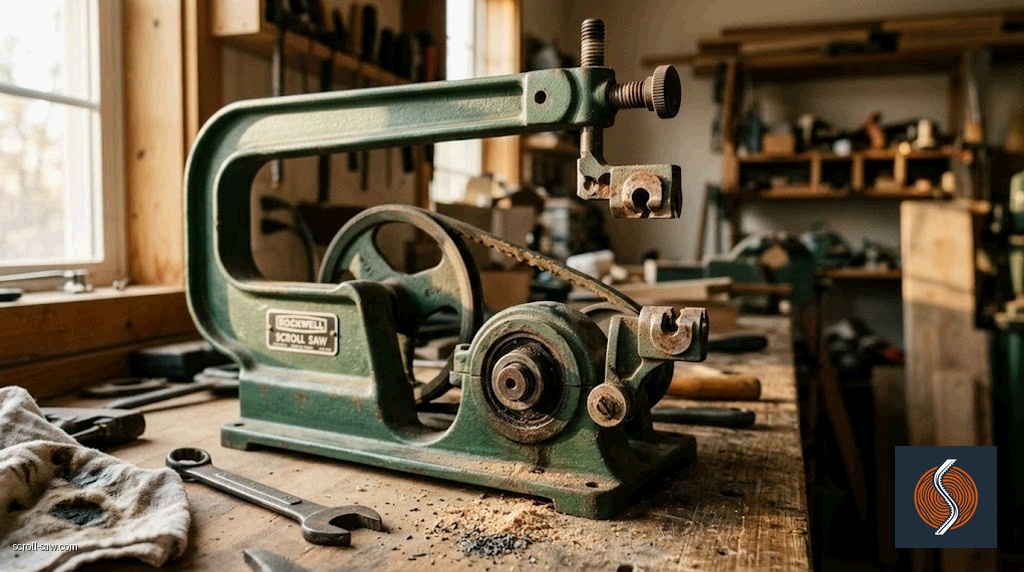
RBI 220VS Scroll Saw: Setup, Limits, and Service
If you’re reading about the RBI 220VS, you’re probably one of two people. Either you’ve been offered one used and you’re trying to figure out what you’re looking at, or you already own one and something is off. This machine has a specific reputation among long-time scroll sawyers: quiet, accurate, built to run for thirty years, and easy to misconfigure enough to hate.
What separates a happy 220VS owner from a frustrated one usually has nothing to do with the saw.
What the 220VS is
The RBI 220VS is a variable-speed parallel-arm scroll saw made by RBI Industries (later RBI Hawk), an American manufacturer that built a loyal following among serious hobbyists and pattern-makers before the brand’s production shifted. The 220 designation refers to the 20-inch throat class; VS is variable speed. Cast iron and steel construction, quiet motor, upper-arm dust blower, and blade holders that accept plain-end scroll blades.
Specific stroke length, exact throat measurement, table dimensions, and motor rating come from the plate on your machine. Between production years and revisions, small numbers changed.
The short answer
The 220VS rewards two things: a solid stand, and correct blade tension. Get those right, and you own a saw that outperforms most current benchtop machines and lasts longer than any of them. Get them wrong, and no amount of blade brand switching or speed tweaking will make the saw cut clean.
Setup that actually matters
Mount it on the right stand. The 220VS is heavy for a scroll saw, and it wants to stay put. RBI’s original stand was rock-solid. If yours is on an aftermarket stand or a shop-built base, verify the base doesn’t flex. A saw whose stand walks or wiggles ruins every cut, and no adjustment on the machine fixes a bad stand.
Square the table. Not by the scale. Set a small engineer’s square across the table, blade installed and tensioned, and confirm zero gap. Adjust the tilt lock hardware if needed. Every scroll saw needs this; the 220VS is more sensitive than most because it’s precise enough that a fraction of a degree shows in the cut.
Set blade tension by ear. Pluck the tensioned blade with a fingernail. A good tension gives a clear ringing note. A dull thud means loose; a strained high pitch means over-tensioned and short blade life. Once you learn what your saw sounds like at correct tension, you’ll set it faster than any thumb-feel guess.
Match the blade to the material. 5/0 to 2/0 for veneer inlay. Number 3 to 5 for typical detail work. Number 7 to 9 for stock over 15 mm hardwood. The 220VS has more torque than benchtop saws in the same price class; using it to bulldoze a fine blade through thick stock kills blades and quality both.
Where the saw stops
The 220VS is a general-purpose to advanced scroll saw. Its limits, compared to the modern replacements people compare it to, are practical:
-
No electronic soft-start on most units. It reaches speed quickly, which some blade-tensioning workflows prefer.
-
Blade change involves loosening upper and lower clamps. Faster than pinned-blade saws in some ways, slower than modern quick-change systems in others.
-
Parts support has narrowed as the brand has changed hands. Common wear items are still available; some assemblies are not.
What the saw is not: a quiet apartment-friendly benchtop. Sub-500 SPM is not its home; it likes the middle and upper part of its variable-speed range.
Service
The 220VS is a mechanically simple machine. Regular service consists of:
-
Blowing sawdust out of the arm hinges after each session.
-
Checking blade holders for wear every few months.
-
Inspecting the drive linkage and its bearings yearly.
-
Replacing brushes when the motor starts arcing or losing speed.
RBI Hawk parts channels have shifted over the years. Currently, direct support runs through the current brand owner; specialty scroll saw dealers and eBay parts sellers cover most wear items. Cross-reference exploded diagrams before ordering; some parts changed between production runs even within the 220VS designation.
The used-market reality
Most 220VS machines on the used market are 15 to 30 years old. That is not old for this saw, but it does mean two things:
-
Wear parts have probably been ignored. Bushings, blade holders, and brushes are the first suspects on any cut-quality complaint on a used 220VS.
-
Stands have often been separated. The saw comes with a homemade base or on a workbench because the original stand went somewhere else. Verify base stability before blaming the saw.
A 220VS with clean maintenance history is a bargain at almost any asking price for what it is. A neglected one is a project.
Comparison
Against a Dewalt DW788, the 220VS is heavier, quieter under load, and better at precise work in thick stock. The Dewalt is lighter, faster to blade-change with the tool-free system, and easier to find parts for today.
Against a Hegner Multimax, the 220VS is closer in character than most saws; both are serious American/European scroll saws built for the long haul. Hegner parts support is currently better; RBI’s is spottier.
Against a modern benchtop (Wen, Rikon, Rockwell), the 220VS is a different class of machine. Not a fair comparison in either direction.
FAQ
Is the RBI 220VS still in production? Production has changed hands over the years. Check current availability with the brand owner. The used market carries plenty of clean examples.
Where’s the model plate? On the machine base, usually on the back or side. Silver adhesive label with model, serial, and electrical ratings.
Are parts still available? Common wear parts, yes. Specific arm castings and less-common assemblies, sometimes. Cross-reference before ordering.
Can it use pin-end blades? Plain-end is the primary configuration. Verify your specific unit’s blade holders before ordering pin-end stock.
Does it need a special stand? A stable heavy stand. RBI’s original stand works well; an aftermarket or shop-built base is fine if it doesn’t flex.
How long will one last? With basic maintenance, decades. These are American-built industrial-grade hobby saws.
Is it worth buying used? At the right price, absolutely. Skip anything with visible arm slop, obvious motor issues, or a wobbly stand unless the price accounts for the repairs.
References
-
RBI Hawk Tools (current brand owner service and parts channel) — direct support and parts availability.
-
eReplacementParts (ereplacementparts.com) — parts lookup and exploded diagrams for RBI scroll saws.
-
Fine Woodworking (finewoodworking.com) — long-form scroll saw comparisons and setup guides.
-
Scroll Saw Woodworking & Crafts (scrollsawer.com) — patterns and technique for advanced scroll work.


