
RBI Hawk 220VS Scroll Saw: Speed, Arm, and Ownership Notes
RBI Hawk 220VS Scroll Saw: Speed, Arm, and Ownership Notes
There are two ways to shop for a scroll saw. One is by spec sheet. The other is by asking someone who’s owned one for a decade. If you ask the second question about the Hawk 220VS, you’ll hear the same short list every time: the speed range is genuinely useful across its span, the parallel arm holds its geometry as it ages, and the saw needs a serious stand to earn its reputation.
All three matter. None of them are on the spec sheet in a way that captures the ownership experience.
What the 220VS is
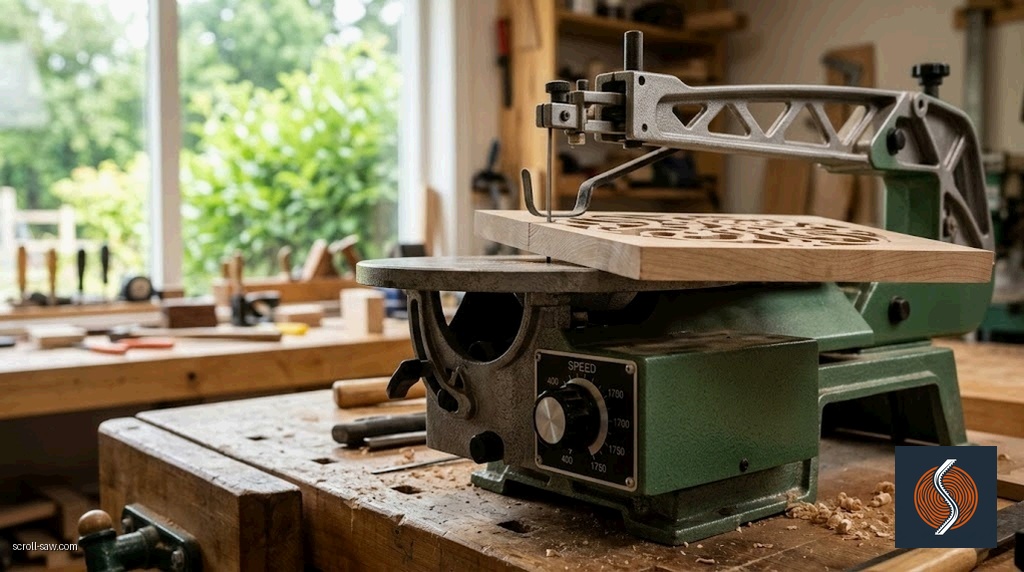
The RBI Hawk 220VS is the variable-speed 20-inch throat parallel-arm scroll saw from RBI Hawk. American-built, cast-and-steel construction, upper-arm dust blower, plain-end blade holders. The VS designation separates it from earlier fixed-speed or two-speed Hawk 220 configurations.
The short answer
The 220VS’s speed range is useful from top to bottom, which not every variable-speed scroll saw manages. The parallel-arm design means the blade stays vertical throughout the stroke, which is why cuts stay clean at low feed rates. Long-term ownership rewards a stable stand, regular maintenance, and matching blades to material. Skip any of those and the saw underperforms.
Speed range in practice
A lot of variable-speed scroll saws technically go slow but don’t feel usable at the low end. The 220VS’s low end is actually usable. That matters for:
-
Thin brass and non-ferrous sheet with a fine blade at low SPM, controlled and cool.
-
Detailed inlay in veneer, where fast blade motion would overwhelm fine feed control.
-
Beginner practice runs in scrap, where slower feels safer.
The upper end is normal scroll saw territory: fast enough for coarser blades in softwood at production feed rates. The middle is the daily driver for most work.
Transitions between speeds are smooth on units with a functional speed control. If your speed dial feels notchy or the SPM hunts around, that’s usually a worn potentiometer or a speed controller board on the way out. Both are user-serviceable on this generation.
Arm design in practice
The parallel-arm layout is what separates the 220VS’s cut quality from the C-arm scroll saws that dominated the low end of the market for years. Two practical differences show up:
-
Blade motion. A parallel arm keeps the blade vertical throughout the stroke. A C-arm rocks the blade slightly forward and back. That rocking is visible in the cut on hardwood, especially at low feed rates. The 220VS doesn’t do it.
-
Blade stress. Parallel-arm designs distribute load more evenly across the blade’s teeth, which extends blade life on precision work. Cheaper C-arm saws burn through fine blades faster on the same material.
The practical cost of parallel-arm design is complexity and mass. The 220VS is heavier and more expensive to build than a comparable C-arm saw. On this specific saw, the cost is paid up front and never bothers you again.
Ownership over years
What 220VS owners consistently report after five or ten years:
-
The saw stays true. With basic maintenance, a 220VS doesn’t drift out of trueness. The blade-to-table relationship, once set, holds.
-
Bushings wear. Not fast, but they do. Cheap fix; inspect every couple years.
-
Blade holders wear. The pin seats and set screws are wear items. Replace before they cause tension problems, not after.
-
The dust blower is mediocre. Common complaint; common fix is a small auxiliary blower or a shop-vac tap at the throat.
-
Motor lasts. Brushes need replacing eventually; the motor itself outlives most owners’ interest in the hobby.
Almost nothing about the ownership experience is a surprise if you talked to a current owner before buying.
Setup that matters most
Repeated across every Hawk piece because it’s genuinely the difference-maker:
-
Stand rigidity. Not optional. Original RBI stand or a heavy shop-built base.
-
Table square. Engineer’s square, not the tilt scale.
-
Blade tension by ear. Pluck; ringing note is right, thud is loose, strained pitch is over-tensioned.
-
Blade sized for material.
-
Feed rate matched to material and blade.
Once these are dialed in, the 220VS gives you what it’s known for.
Small habits worth adopting
-
Blow the arm hinges out with compressed air after each session.
-
Retension after the first minute of cutting; blades stretch slightly under initial load.
-
Change blades before they’re actually dull; a slightly worn blade wastes more time in wandering cuts than the price of a fresh blade.
-
Keep the table clean. Pitch buildup drags fine work.
Comparison notes
Against the RBI 220 (non-VS), the VS adds meaningful low-end control for delicate materials. Worth the difference if you cut varied stock.
Against the RBI 226VS, the 220 gives up throat depth in exchange for a smaller footprint. If you don’t need 26 inches, 20 is easier to fit.
Against a Dewalt DW788, the Hawk is heavier, quieter under load, and better at precise fine work. The Dewalt is cheaper used and easier to service.
Against a Hegner Multimax, close in character. Owner preference and current used-market price usually decide.
FAQ
How slow does the 220VS actually go? Slow enough for jeweler-style blades in thin brass without burning. Exact minimum SPM varies by revision; verify against your unit’s spec plate.
Does the speed dial affect torque? Some loss of torque at the lowest speeds, which is normal for a brushed variable-speed motor. In practice, the saw still cuts what it’s asked to cut at low speed when the blade matches the material.
Is the 220VS still made? Production has shifted with brand ownership. Check the current Hawk channel for new machine availability.
Where are parts today? Current Hawk brand channel, eReplacementParts, specialty scroll saw dealers, and eBay parts sellers. Common wear items are available; less common assemblies require patience.
Are 220VS and 220-3 parts interchangeable? Some yes, some no. Verify against exploded diagrams for both revisions before ordering.
What’s the maintenance schedule? After-session dust blow-out. Yearly inspection of bushings, blade holders, and belt. Brushes as needed. That’s it.
How much should I pay used? Strong prices reflect the saw’s reputation. A clean example with original stand is worth its ask; a neglected one isn’t.
References
-
RBI Hawk Tools — current brand owner service and parts channel.
-
eReplacementParts (ereplacementparts.com) — exploded diagrams and cross-reference for RBI Hawk scroll saws.
-
Fine Woodworking (finewoodworking.com) — scroll saw category reviews and long-form comparisons.
-
Scroll Saw Woodworking & Crafts (scrollsawer.com) — owner community, pattern work, and technique resources.


