
A Closer Look at the Sears Craftsman 13 Scroll Saw
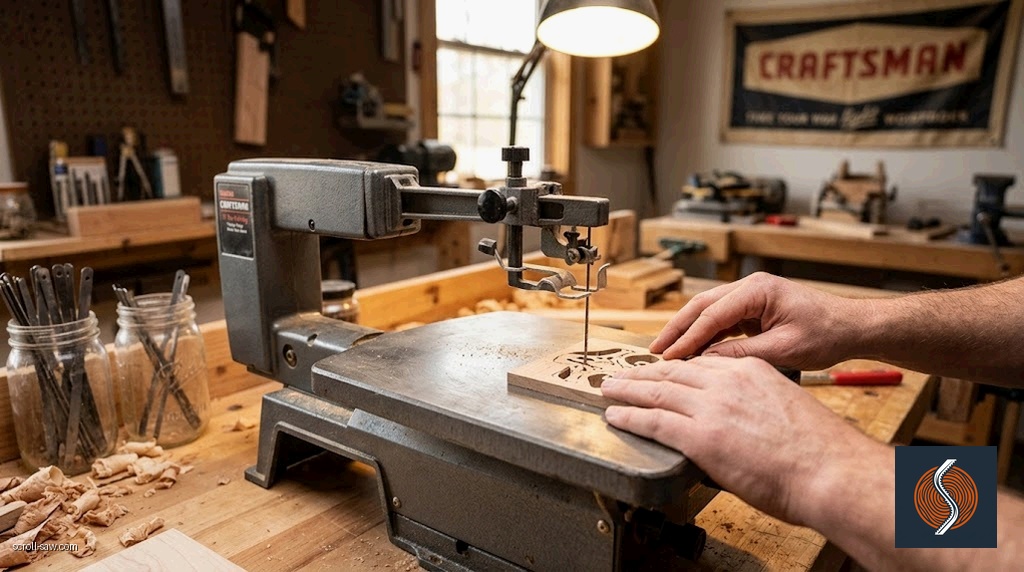
A Closer Look at the Sears Craftsman 13 Scroll Saw
Walking through a garage sale and finding a Craftsman 13 scroll saw is one thing. Knowing what you’re looking at is another. Sears sold Craftsman-badged scroll saws for decades from multiple manufacturers, and the specific machine in front of you might be an Emerson-built unit from 1975 or a Rexon-built unit from 2005. Same brand name, meaningfully different tools.
What Craftsman 13 covers
“Craftsman 13” is not a single scroll saw. It’s a Sears retail category that covered 13-inch throat scroll saws sold under the Craftsman name. Different production years used different makers, different motor configurations, and different blade holder styles. Model number prefixes on the data plate identify which maker built your specific unit.
The short answer
A Craftsman 13 scroll saw ranges from legitimately good hobby saws (some Emerson-era units) to marginal budget scroll saws (some later imports). Identification by model number prefix, followed by an inspection of the physical machine, tells you where on that range your unit lands. Parts availability varies by maker and era.
Reading the model number
Craftsman tool model numbers use a prefix that identifies the manufacturer:
-
113.xxx: Emerson Electric (many older Craftsman power tools)
-
137.xxx: Various makers including Rexon in later years
-
315.xxx: Ryobi and others
-
103.xxx: King-Seeley and other older makers
-
Other prefixes: additional makers across production eras
Woodworking forums (owwm.org and general vintage tool communities) maintain updated prefix lookup lists. Match your prefix to the maker.
What the maker tells you
Emerson-era Craftsman 13s. Generally well-built cast-and-steel construction. Motor character is durable. Parts are harder to source today but common wear items sometimes cross-reference to other Emerson tools.
Rexon-built Craftsman 13s. Modern benchtop construction. Parts channel overlaps with other Rexon-built scroll saws sold under other brand names.
Late-production import Craftsman 13s. Varies by specific model. Some are respectable hobby saws; some are entry-level budget builds.
Physical inspection
Regardless of maker:
Arm play. Rock the upper arm side to side. Slop is bushings.
Motor. Run at low speed and listen for smoothness.
Blade holders. Check for wallowing and stripped hardware.
Cord and switch. Age-related electrical wear.
Table. Check for flatness with a straightedge, and for corrosion.
Setup habits
Every Craftsman 13 scroll saw benefits from:
-
Bolting to a heavy bench (unless it came with a stand and the stand is stable)
-
Squaring the table with an engineer’s square
-
Correct blade tension by plucked note
-
Blade sized for the material
-
Controlled feed rate
Older Craftsman scroll saws sometimes lack detailed setup instructions in the original manual. Modern scroll saw setup principles apply the same way.
Where a well-preserved Craftsman 13 wins
-
Cast iron table (on many older units) gives a stable feel
-
Motor character on well-built older units is durable
-
Simple mechanical design that a home mechanic can service
-
Low used-market prices
Where it loses
-
Parts availability declines with age
-
No modern conveniences (tool-free blade change, integrated work light)
-
Speed control is often fixed or step-pulley
-
Wear on hard-used units can be extensive
Honest drawbacks worth naming
Craftsman quality has varied dramatically across production years. Some units are legitimately worth restoring. Some are worth zero even for free. Identification and inspection separate the two.
Comparison
Against a Ryobi entry-level, similar class of tool with better current parts channel on the Ryobi.
Against a Rikon or Dewalt DW788, class-up options with modern conveniences and current warranty.
Who should buy or keep one
Casual hobbyists finding a clean one at a low price, users comfortable with maintenance on older tools, and owners of an already-working Craftsman 13 that fits their scroll work.
Who should skip it
Serious scroll sawyers, buyers who want current warranty, and anyone unwilling to inspect and identify the specific unit before committing.
FAQ
Who made my Craftsman scroll saw? Model number prefix identifies the maker. Woodworking forums maintain lookup lists.
Are Craftsman scroll saw parts still available? Some yes, through Sears PartsDirect and third-party retailers. Rarer items require donor machines or vintage tool sources.
Where’s the data plate? On the base or column, usually with model number, serial, and electrical ratings.
Are old Craftsman scroll saws worth restoring? Depends on the specific unit. Well-built older units, yes. Lower-quality later imports, sometimes no.
How much should I pay for a used Craftsman 13? Condition and maker dependent. Clean well-built units justify their ask; worn or lower-quality units should be very cheap.
Is a Craftsman 13 good for a beginner? At a low price with basic setup, yes.
Where’s the manual? Sears PartsDirect and Craftsman archive sites. Match by model number.
References
-
Sears PartsDirect (searspartsdirect.com) — Craftsman parts and manuals.
-
eReplacementParts (ereplacementparts.com) — Craftsman parts diagrams.
-
OWWM (Old Woodworking Machines) community (owwm.org) — vintage tool identification.
-
Fine Woodworking (finewoodworking.com) — scroll saw category reviews.


