
Changing Blade on Ryobi Scroll Saw: Practical Guide
Changing Blade on Ryobi Scroll Saw: Practical Guide
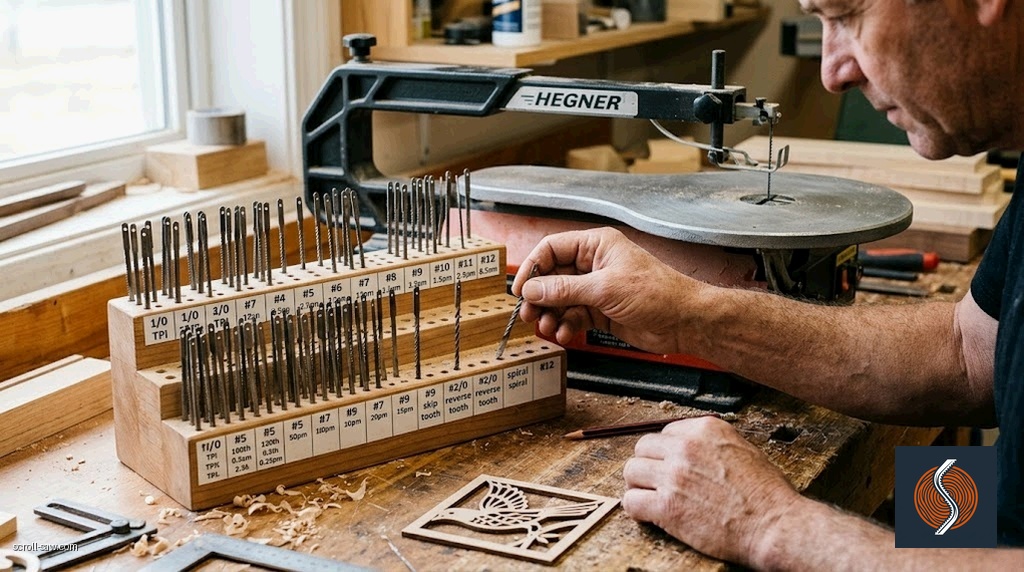
Blade change on a Ryobi scroll saw is a routine operation that owners repeat dozens of times across the life of the saw. Getting it right the first time saves frustration; getting the blade selection right in addition saves cut quality complaints later. Here’s the practical guide.
What Ryobi scroll saws use
Ryobi scroll saws across current and older production use standard 5-inch scroll blades. Blade holder configurations vary:
-
Older Ryobi scroll saws (SC-series and similar) often accept both pin-end and plain-end blades with the appropriate holder adjustment
-
Current Ryobi scroll saws typically accept both configurations on most models
Verify against your specific Ryobi scroll saw’s manual.
The short answer
Before changing a blade: unplug the saw, pick the right blade for the work, note the blade orientation (teeth down). During: release tension, remove old blade, install new blade in correct orientation, tighten holders, re-tension to a ringing pluck. After: verify tracking with a low-speed test cut on scrap.
Before the blade change
Unplug the saw. Always.
Pick the right blade. Standard 5-inch scroll blade in TPI matched to material:
-
Fine (18 to 30 TPI) for detail in thin stock
-
Medium (10 to 14 TPI) for typical scroll work in hardwood or softwood
-
Coarse (7 to 9 TPI) for thicker softwood
-
Very coarse (4 to 6 TPI) for thick softwood only
Verify blade type. Pin-end or plain-end depending on your holder configuration.
Note blade orientation. Teeth face down toward the table.
The blade change sequence on a Ryobi scroll saw
Step 1: Release tension. Ryobi scroll saws use a tension lever or knob. Loosen until the blade goes slack.
Step 2: Remove old blade. Loosen the holder set screws (typically small hex hardware). Slide the blade out.
Step 3: Install new blade. For edge cuts, feed the blade in from above. For interior cuts, thread the blade through the pilot hole in the workpiece from below.
Step 4: Orient the blade. Teeth face down toward the table.
Step 5: Tighten the holders. Firm hex-hardware pressure. Don’t over-tighten (set screws strip on many Ryobi scroll saws if forced).
Step 6: Re-tension. Apply tension until the blade rings when plucked with a fingernail.
Step 7: Test. Plug in, run at low speed briefly, verify the blade tracks straight.
Interior cut technique
For cutting a pattern that doesn’t start at an edge:
-
Drill a pilot hole in the workpiece
-
Loosen tension on the saw
-
Remove the blade from the upper holder only (leave the lower holder engaged)
-
Thread the free end of the blade up through the pilot hole in the workpiece
-
Re-engage the upper holder
-
Re-tension
-
Cut the interior pattern
-
Reverse the process to remove the blade from the finished cut
Common Ryobi blade change issues
Set screws strip. Ryobi blade holder hardware is standard but sized for hobby use. Firm pressure is enough; forcing strips threads.
Blade won’t hold tension. Holder jaws wallowed from wear, or wrong blade size for the holder configuration.
Blade breaks quickly after change. Over-tensioned, wrong blade for material, or blade orientation reversed (teeth up).
Blade slips in holder. Set screw insufficiently tight, or wallowed holder jaws.
Blade tension: the pluck test
Install the blade. Tension the mechanism. Pluck the blade with a fingernail:
-
Ringing note: correct tension
-
Thud: under-tensioned; the blade will wander and produce rough cuts
-
Very high pitch or immediate break: over-tensioned; the blade will fail quickly
The pluck test is the universal check.
Blade selection for common Ryobi scroll saw work
Softwood hobby projects (birdhouses, ornaments, plaques). Medium TPI (10 to 14) standard scroll blade.
Hardwood pattern work. Fine TPI (15 to 20) for detail; medium for larger patterns.
Fine ornament work in thin hardwood. Very fine TPI (20 to 30).
Thick softwood cutting. Coarse TPI (7 to 9).
Plywood. Medium TPI (10 to 14). Feed slowly to reduce splintering.
Plastics. Fine TPI (18 to 30). Slow feed to prevent melting.
Recommended blade brands
Olson Saw. Widely available, reliable quality, pin-end and plain-end configurations.
Flying Dutchman. Specialist scroll saw blade brand.
Pegas. Swiss specialist brand, primarily plain-end.
Ryobi-brand blades. Fine for initial use; upgrade to Olson or Flying Dutchman for better cut quality.
Setup after blade change
Blade change is the moment to verify other setup:
-
Squared table (engineer’s square)
-
Correct blade tension (pluck test)
-
Blade matched to material
-
Feed rate controlled
Where Ryobi scroll saws + good blade practice wins
-
Ryobi scroll saws are capable enough that blade quality shows up meaningfully in cut quality
-
Blade change is straightforward on most Ryobi scroll saws
-
Standard 5-inch blade compatibility means access to any quality brand
Where the system stops
-
Cast quality of the scroll saw limits cut quality regardless of blade
-
Vibration control depends on the mount
-
Motor sized for hobby use
FAQ
What blades fit my Ryobi scroll saw? Standard 5-inch scroll blades. Pin-end or plain-end depending on your holder configuration.
How often should I change blades? Before they’re actually dull.
Where do I buy replacement blades? Amazon, Home Depot, Ryobi direct, and woodworking retailers.
Can I use Olson or Flying Dutchman blades in my Ryobi? Yes, if the blades match your holder configuration (pin-end or plain-end) and standard 5-inch length.
How do I know the tension is right? Pluck the blade. Ringing note is right.
Where’s the blade change guidance in the manual? Ryobi manuals include a blade change section. Match against your specific model.
Can I use spiral blades? Standard plain-end spiral blades fit plain-end holders. Verify your specific configuration.
References
-
Ryobi Tools (ryobitools.com) — official product literature and manuals.
-
Olson Saw Company (olsonsaw.com) — quality replacement blades.
-
Fine Woodworking (finewoodworking.com) — scroll saw blade change guides.
-
Scroll Saw Woodworking & Crafts (scrollsawer.com) — owner community.


