
Christmas Nativity Scroll Saw Patterns: Planning and Cutting the Full Scene
Christmas Nativity Scroll Saw Patterns: Planning and Cutting the Full Scene
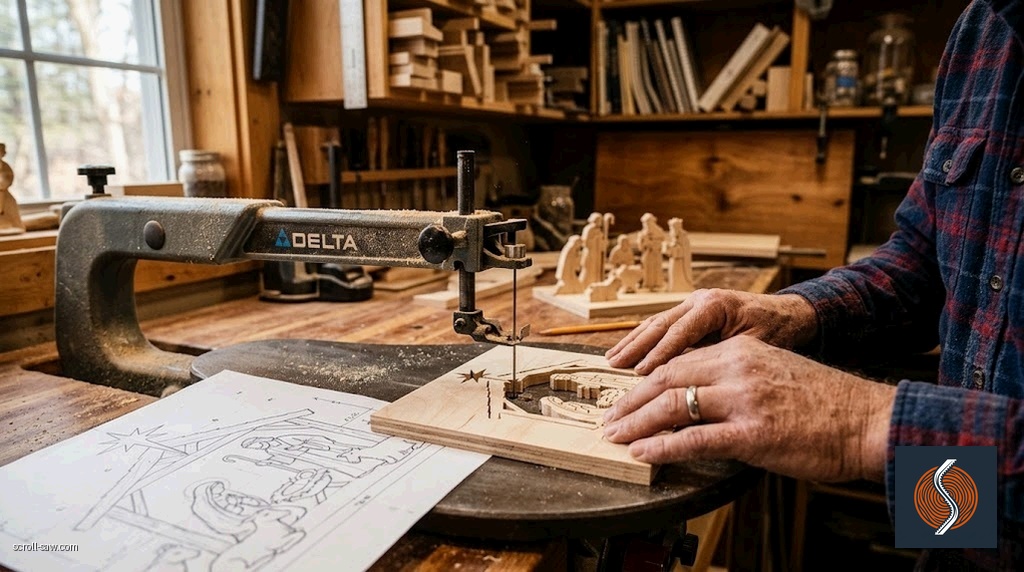
A Christmas Nativity scroll saw set is a multi-piece project producing the characters and elements of the Nativity story. The core set is Mary, Joseph, and the Christ Child in a manger. The extended set adds the shepherds, wise men (Magi), angels, star, stable, and animals.
Nativity sets have strong gift and craft fair markets. Handmade wooden Nativity sets have lasting value and consistent year-to-year demand.
Short answer: 1/2-inch to 3/4-inch closed-grain hardwood for freestanding figures, consistent scale across all pieces, food-safe finish for pieces children may handle, matching finishes for cohesive set appearance.
Nativity set components
Core set (minimum):
-
Mary
-
Joseph
-
Baby Jesus in manger
Standard set:
- Core + three wise men + two or three shepherds
Extended set:
- Standard + angel + star + stable
Complete set:
- Extended + animals (camel, donkey, ox, sheep), stable with roof, secondary angels
Silhouette-style Nativity:
-
All figures as flat silhouettes arranged in order.
-
Simpler cutting; dramatic grouped presentation.
Dimensional Nativity:
-
Compound-cut figures for 3D appearance.
-
Freestanding individual pieces.
Pictorial Nativity:
-
All characters in one panel scene (stable, star, all figures).
-
Fretwork rendering of the complete scene.
-
Wall-hung rather than freestanding.
Design styles
Traditional. Realistic proportions, period-appropriate clothing, detailed faces.
Folk art. Simplified proportions, stylized features, painted in traditional folk colors.
Modern/minimalist. Simplified geometric forms. The figures are recognizable by form rather than detail.
Cathedral/stained-glass. Figures designed to suggest stained glass windows.
Compound-cut. Each figure is a dimensional compound-cut piece.
Silhouette. Each figure is a flat silhouette.
Multi-cultural. Nativity figures in various cultural clothing traditions (African, Hispanic, Asian, etc.).
Stock selection
Freestanding figures (individual pieces):
-
3/4-inch closed-grain hardwood.
-
Maple, cherry, walnut, or basswood.
-
Substantial thickness for stability.
Flat silhouette Nativity:
-
1/4 to 1/2-inch Baltic birch plywood or hardwood.
-
All pieces same thickness.
Compound-cut figures:
-
Basswood blocks (1.5x1.5x4 inches typical for standard figures).
-
Matched block sizes across the set for consistent scale.
Stable structure:
-
1/4 to 1/2-inch plywood or hardwood.
-
Flat construction; multiple panels assembled.
Animals:
-
1/2 to 3/4-inch hardwood.
-
Grain along animal length.
Scale consistency
All figures in a Nativity set should be at consistent scale:
Figure height. Mary and Joseph same height. Shepherds and wise men same or slightly shorter. Angels larger. Baby Jesus appropriately smaller.
Block scale for compound cutting. Use same block dimensions for all standing figures. Different for larger figures (angels).
Animals. Camels larger than donkeys. Donkeys larger than sheep. Consistent within species.
Scale reference. A 4-inch stable with 2-inch figures. Or a 12-inch stable with 5-6-inch figures. Match stable to figures.
Blade choice
Silhouette figures in 3/4-inch hardwood: #7 skip-tooth. Olson FR49400.
Detail work on faces and clothing: #5 reverse-tooth. Olson FR49202.
Compound-cut Nativity figures in basswood: #7 skip-tooth.
Pictorial fretwork Nativity panel: #3 or #5 reverse-tooth.
Production runs: Pegas Modified Geometry #12 for extended cutting.
Cutting a standard Nativity set
-
Cut the stable first. Establishes the set’s scale and visual anchor.
-
Cut the manger. Scale to fit Baby Jesus figure.
-
Cut Mary and Joseph. Core figures. Grain direction vertical (head-to-foot).
-
Cut Baby Jesus. Smallest, most delicate figure. Cut last among core.
-
Cut Shepherds. Simpler figures. Grain vertical.
-
Cut Wise Men. More detailed clothing. Grain vertical.
-
Cut Angel. Wings may require plywood for structural integrity.
-
Cut Star. Star shape with pointed tips. Baltic birch plywood handles multi-direction cuts.
-
Cut Animals. Grain along animal length. Simple silhouettes or detailed profiles.
Finishing the Nativity
Painted folk art finish (traditional):
-
Primer on all figures.
-
Base colors: blue for Mary’s robe, brown for Joseph, earth tones for shepherds, rich colors (purple, gold) for wise men.
-
Skin tones for faces and hands.
-
Multiple thin coats.
-
Clear sealer.
Clear-finish hardwood (contemporary):
-
Satin polyurethane.
-
All figures matching wood tone.
-
Simple, modern appearance.
Multi-wood Nativity:
-
Dark walnut for wise men’s robes, lighter maple for Mary, cherry for Joseph.
-
Different woods read as different garments without painting.
-
Advanced approach.
Woodburned detail:
-
Burn facial features, clothing detail before finishing.
-
Adds depth without paint.
Display considerations
Arrangement. Traditional arrangement: Mary and Joseph with manger center, wise men to one side, shepherds to other, animals surrounding, angel above stable, star at top.
Stable integration. Stable can be a simple architectural backdrop or a three-dimensional structure enclosing the core figures.
Multiple display areas. Large sets split across a mantel: stable center, wise men at one end, shepherds at other.
Progressive display. Some families add figures across the Advent season, with wise men arriving on Epiphany (January 6).
Storage. Individual padded bags or compartmented box for off-season storage. Protects delicate painted or natural-finish figures.
Where to source patterns
Big Book of Scroll Saw Woodworking includes Nativity patterns.
Steve Good’s blog has Nativity patterns, often released in November-December.
Sue Mey designs religious scroll saw patterns including Nativity sets.
Specialty Christmas and religious scroll saw pattern books cover Nativity sets.
Compound cutting books (Diana Thompson) include compound-cut Nativity figures.
Common problems and fixes
Scale inconsistent across set. Different patterns at different scales. Verify all patterns printed at same height before cutting.
Figures won’t stand upright. Base too narrow. Widen base; cut from thicker stock.
Angel wings fragile. Wing span requires cross-grain cuts. Use Baltic birch plywood for angel.
Star tips broke. Star points too thin. Use plywood; increase tip width.
Figures look generic. Missing specific costume detail. Refine costume patterns; add robes, crowns, shepherd’s crooks.
Painted figures look inconsistent. Different paint sessions or materials. Finish entire set in one series of sessions.
Stable too small for figures. Stable and figures at different scales. Design stable to match figure heights before cutting.
Frequently asked questions
How long does a full Nativity set take? 20-40 hours for a full compound-cut set. 10-20 hours for silhouette set. Multi-week project.
What’s the minimum Nativity set? Three pieces: Mary, Joseph, Baby Jesus in manger. Recognizable as Nativity; significantly less work.
Can I sell Nativity sets? Strong market at Christmas craft fairs, church bazaars, and religious gift shops. Prices $40-300 depending on set size and complexity.
Should I paint or clear-finish Nativity figures? Both strong markets. Painted traditional folk art sells broadly. Clear-finished hardwood sells as fine woodworking to a different customer. Choose based on your skills and market.
Can I make a Nativity as a first scroll saw project? Simple silhouette Nativity (flat figures) is feasible as a beginner project. Compound-cut Nativity or detailed figure work is intermediate to advanced.
What’s the most challenging piece in a Nativity set? The angel (wings require careful planning) and Baby Jesus (small, delicate). Mary and Joseph are the most visually important figures.
Should Nativity figures be same size or varied? Same height for most standing figures is standard. Angels traditionally larger. Baby Jesus appropriately small. Some designers make wise men and shepherds slightly varied in height for visual interest.
References
-
Fox Chapel Publishing, Big Book of Scroll Saw Woodworking.
-
Steve Good, Scrollsaw Workshop (blog).
-
Sue Mey, religious scroll saw pattern designs.


